
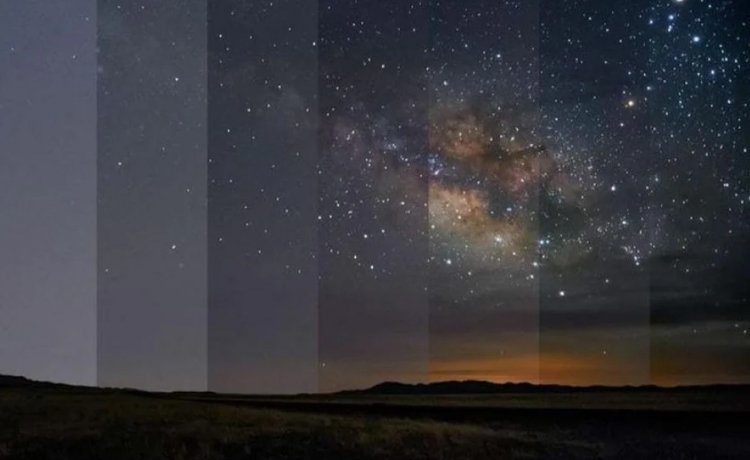
The Indian night sky changes with the seasons. So the stars overhead in January are not the ones you see in July. In fact, knowing the seasonal constellations turns a blank sky into a map you can read.
Here is the plan. First, this guide walks you through all four seasons. Winter brings Orion and the Dog Star. Then spring belongs to Leo and the Big Dipper. Next, summer opens up the Milky Way core. Also, autumn delivers a whole galaxy you can see with your own eyes.
So you will learn how to find each one. Along the way, we point out the bright stars and naked-eye objects nearby. We are also honest about the monsoon, when clouds win. By the end, you can step outside on any clear night and name what you see.
Winter: Orion Rules the Sky
Winter is the prize season for Indian stargazers. So the air is crisp. Also, the nights run long. Best of all, the sky fills with bright stars.
Now the star of the show is Orion. Look south after dark. Then you will see a tall figure marked by three stars in a neat row. That row is Orion’s Belt. In fact, it is the easiest pattern in the whole sky.
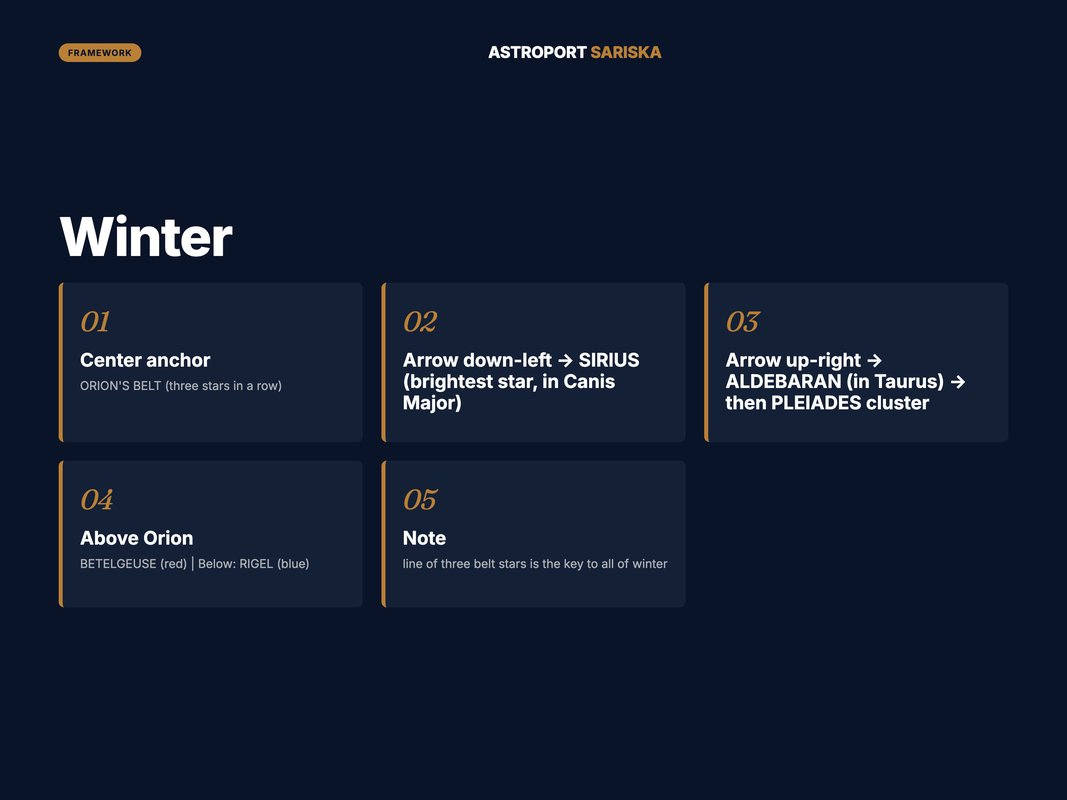
So Orion is a signpost. First, follow the belt down and to the left. Then you reach Sirius, the brightest star in the night sky. Sirius marks Canis Major, the big dog. In fact, it sits only 8.6 light-years away (Source: EarthSky, 2024 — Canis Major and Sirius).
Now follow the belt the other way, up and to the right. Here you meet orange Aldebaran. It is the fiery eye of Taurus the Bull (Source: EarthSky, 2024 — Aldebaran in Taurus). Just past it sits the Pleiades, a tiny dipper of stars.
Next, high and left of Orion, you will find Gemini. These are the twins Castor and Pollux. Together these stars form a huge ring called the Winter Hexagon. So from a dark sky, the whole scene glows.
Q: What is the easiest winter constellation to find?
A: Orion, without question. Its three belt stars sit in a straight row. No other pattern looks like it. Once you spot the belt, you can find Sirius, Taurus and the rest.
Spring: Leo and the Big Dipper
As winter fades, Orion drops west. Then new stars rise in the east. So spring nights feel softer and warmer.
Now look high in the north for the Big Dipper. It looks like a giant ladle. Still, it is not a full constellation. Instead, it is a bright piece of Ursa Major, the Great Bear.
So the Big Dipper is your spring compass. First, find the two stars at the front of its bowl. They are Dubhe and Merak, known as the Pointers. Then draw a line through them, and it leads straight to Polaris, the North Star (Source: EarthSky, 2024 — Big Dipper points to Polaris).
Now use the Dipper again. Follow the curve of its handle, and you “arc to Arcturus,” a bright golden star in Bootes. Keep going to “speed on to Spica.” So it is a simple way to learn three stars at once.
Then turn south for Leo, the lion. Its head is a backward question mark called the Sickle. Also, at the base of that hook sits Regulus, a bright blue-white star. In fact, Leo is one of the few constellations that truly looks like its name.
Q: Why is the Big Dipper useful for beginners?
A: It is bright and easy to find on any clear spring night. It also points to other stars. From the Dipper you can hop to Polaris, Arcturus and Spica with no map.
Summer and Monsoon: The Milky Way Core
Summer brings the richest sky of all. Yet it also brings the monsoon. So we will cover both.
On a clear, dark summer night, the Milky Way arches overhead. Its brightest part sits low in the south. Indeed, that is the core of our galaxy.
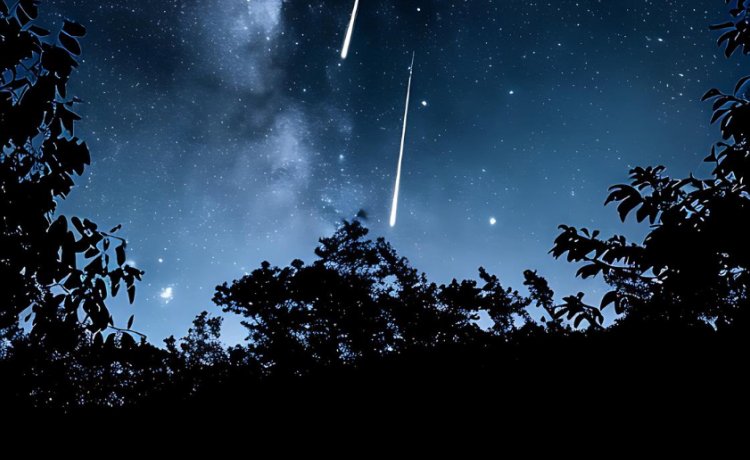
First, look for Scorpius. It really looks like a scorpion, with a curved tail and a red heart. So that heart is Antares, a huge red star (Source: EarthSky, 2024 — Scorpius constellation).
Next, just east of Scorpius, sits Sagittarius. Its bright stars form a shape like a teapot. Also, the spout of the teapot points to the galaxy’s center. So when you look toward Sagittarius, you look toward the heart of the Milky Way (Source: EarthSky, 2024 — Sagittarius and the Milky Way core).
Then, high overhead, three bright stars form the Summer Triangle. They are Vega in Lyra, Deneb in Cygnus, and Altair in Aquila (Source: EarthSky, 2024 — Summer Triangle). In fact, these stars are so bright you can spot them near a city.
Now the catch. The monsoon arrives by July. Then clouds cover much of India through September. So clear nights grow rare. Still, the best summer sky comes in the dry weeks before and after the rains.
Q: When can I see the Milky Way core from India?
A: On dark summer nights, roughly April to August. It sits in Scorpius and Sagittarius, low in the south. You need a dark sky and a clear night, which is hard once the monsoon sets in.
Autumn: Pegasus and a Whole Galaxy
After the rains clear, autumn skies turn crisp again. So a new cast of stars takes over the east.
Here the big landmark is the Great Square of Pegasus. Four stars mark a large, near-empty box high in the sky. Still, it is easy to spot once you know its size.
So the Square is your gateway to something special. From its top-left corner, two short streams of stars curve out. These belong to Andromeda. Then follow them to the stars Mirach and Mu Andromedae (Source: EarthSky, 2024 — Star-hop from Pegasus to Andromeda).
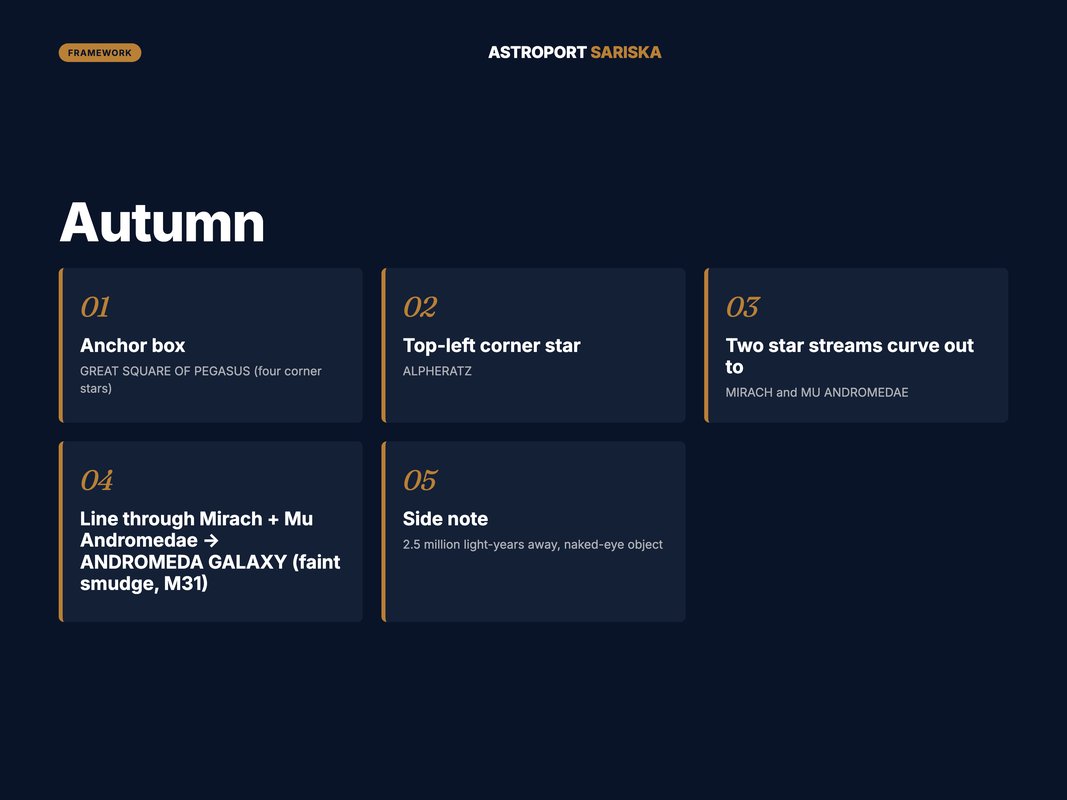
So a line through those two stars points to the Andromeda Galaxy. It is a faint, blurry patch to the eye. But it sits 2.5 million light-years away. In fact, it is the most distant thing most people ever see (Source: NASA, 2024 — Messier 31, the Andromeda Galaxy).
Next, to the north, look for a bright W or M shape. That is Cassiopeia, the queen. Also, it points toward Andromeda. So from a city, the galaxy hides. Yet from a dark site, it glows softly. Indeed, dark skies make all the difference here.
Q: Can I really see another galaxy with my naked eye?
A: Yes. The Andromeda Galaxy is visible without any gear. You need a dark, moonless night. It looks like a faint smudge, but that smudge is a trillion suns far away.
How to Star-Hop: A Simple Process
Star-hopping means using one bright pattern to find the next. In fact, it is the oldest trick in stargazing. So here is how to do it.
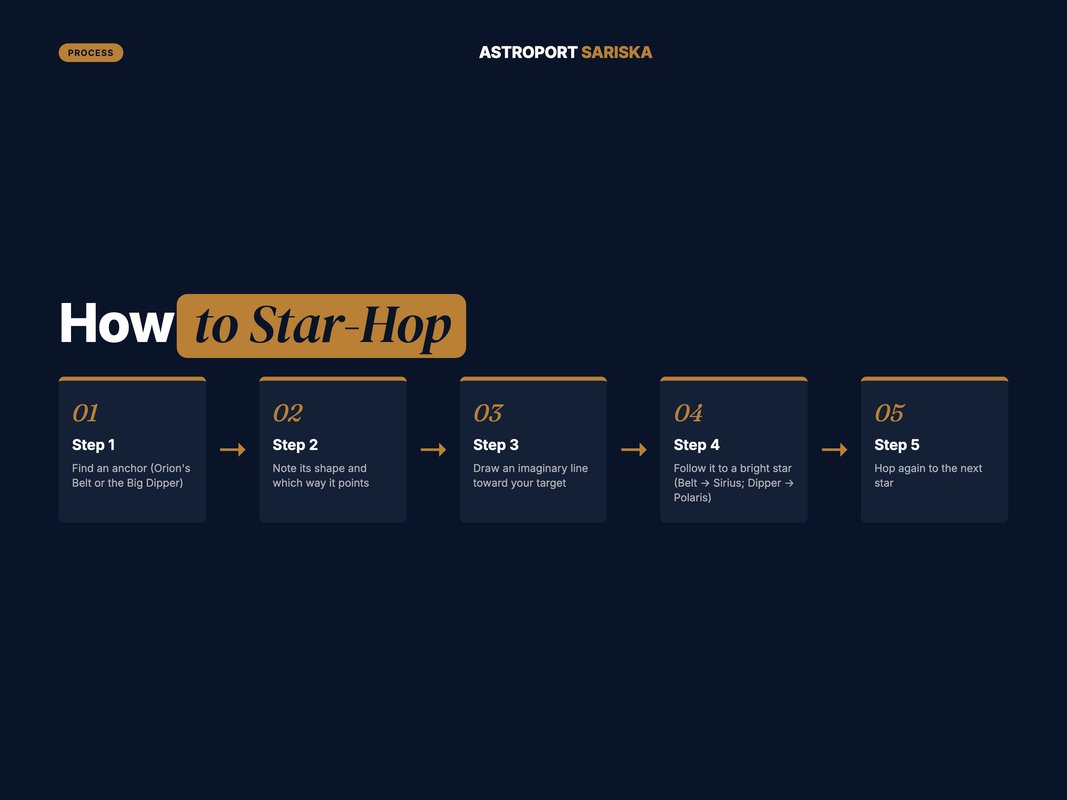
- Find an anchor. First, pick a bright, easy pattern. In winter, use Orion’s Belt. In spring, use the Big Dipper instead.
- Note its shape. Then burn the pattern into your memory. Also, notice which way it points.
- Draw a line. Next, stretch an imaginary line from the anchor toward your target.
- Follow it to a bright star. So from Orion’s Belt, that line reaches Sirius. Likewise, from the Dipper, it reaches Polaris.
- Hop again. Then use the new star to find the next one. As a result, each hop teaches you more sky.
First, try it with Orion. Trace the belt down-left to Sirius. Then trace it up-right to Aldebaran. So in two hops you have named three patterns.
Likewise, the Big Dipper works the same way. First, use the Pointers for Polaris. Next, use the handle to arc to Arcturus. So with practice, the whole sky links together.
Q: Do I need an app to star-hop?
A: No, but it helps at first. A simple sky app shows you what is up tonight. After a few sessions, you will know the bright anchors by heart and can hop on your own.
A Season-by-Season Sky Map
So here is the whole year in one view. In short, use this table to plan when to look for what.
| Season | Months | Headline Constellations | Star / Object Highlight |
|---|---|---|---|
| Winter | Dec – Feb | Orion, Taurus, Gemini, Canis Major | Sirius, the brightest star, plus the Pleiades |
| Spring | Mar – May | Leo, Ursa Major, Bootes | Regulus, and the Big Dipper pointing to Polaris |
| Summer | Jun – Aug | Scorpius, Sagittarius, Cygnus, Lyra | Antares and the bright Milky Way core |
| Autumn | Sep – Nov | Pegasus, Andromeda, Cassiopeia | The Andromeda Galaxy, 2.5 million light-years away |
A few notes on this map. First, seasons blend at the edges. So a late-winter star lingers into spring. Likewise, the Summer Triangle stays visible deep into autumn.
Still, the monsoon is the real limit. From July to September, clouds rule many nights. So plan your serious sky trips for the clear, dry windows. In addition, a dark site raises your odds even more.
Q: Which season is best for stargazing in India?
A: Winter, for most people. The air is clear and dry. Nights are long and bright with stars. Autumn is a close second once the monsoon clouds have gone.
A Beginner’s Sky-Watching Checklist
New to all this? So run through this list before your first night out. In short, it keeps things simple.

- Pick a clear, moonless night. Indeed, a dark sky shows far more stars.
- Get away from city lights. So a dark site like Sariska beats a rooftop.
- Give your eyes 20 minutes. Then they slowly adjust to the dark.
- Use a red light, not white. In fact, it saves your night vision.
- Learn one anchor first. Orion or the Big Dipper works best.
- Bring a sky app and warm layers. After all, nights get cold, even in summer.
So start small. Then name one pattern per night. Still, the sky is patient, and it returns each season with the same old friends.
Q: What gear do I need as a beginner?
A: Almost none. Your eyes, warm clothes and a dark sky are enough. A red torch and a free sky app help. Save the telescope for later, once you know the patterns.
Why Astroport Sariska
Knowing the constellations is one thing. Still, seeing them in full is another. Of course, that needs a truly dark sky.
So Astroport Sariska is India’s first astronomy resort. It sits in the Aravalli hills, near the Sariska Tiger Reserve. Also, it runs fully on solar power. Yet the sky here is the real draw.
From this dark site, guests can see more than 4,000 stars on a clear night. But from inside Delhi, you might see about 20. Indeed, that gap is the whole reason to come.
Meanwhile, resident astronomers lead the way. They run telescope sessions and constellation tours. Then you can join an astrophotography class or build your own telescope. By day, there are safaris in the tiger reserve and farm-to-table meals.
So it all sits about 200 km from the capital. The drive is 4 to 5 hours from Delhi NCR. As a result, it makes an easy weekend trip into a darker sky.
So you can do more than read about Orion or Andromeda. Instead, you can stand under them. Also, you can watch the Milky Way rise with an expert beside you. Meanwhile, the seasons turn overhead, and you finally see the whole show.
Conclusion
So the Indian sky tells a different story every season. First, Orion blazes through winter. Then Leo and the Big Dipper own the spring. Next, summer opens the Milky Way core, while autumn brings a galaxy into view.
So you now have the tools to read it. First, pick an anchor. Then star-hop to its neighbours. Also, use the table to plan your nights. Still, remember the monsoon, when clouds take over for a while.
Finally, the last piece is a dark sky. So the darker the site, the more stars you see. Indeed, that is where a place like Astroport Sariska changes everything.
Ready to meet the constellations in person? Plan a stay under the Aravalli stars and let the resident astronomers guide your first real night sky. Book your dark-sky escape.
FAQ
Q: What constellations can I see in India in winter? A: Winter is India’s best sky. Look for Orion, Taurus, Gemini and Canis Major. Orion is the easiest. Its belt of three stars points the way to most of its neighbours.
Q: When is the Milky Way core visible from India? A: The bright core sits in Sagittarius and Scorpius. It rises on summer nights, from about April to August. You need a dark sky to see it well, and clear skies before or after the monsoon.
Q: Can I stargaze in India during the monsoon? A: It is hard. Monsoon clouds cover much of the sky from July to September. You can still catch breaks between spells. Plan trips for the clear, dry months for the best odds.
Q: Do I need a telescope to see constellations? A: No. All the constellations in this guide are naked-eye targets. A telescope helps with faint objects like galaxies and clusters. Start with just your eyes and a dark sky.
Q: Why do I see more stars from Sariska than from a city? A: Cities glow with light. That glow hides faint stars. From a dark site like Astroport Sariska, guests can see over 4,000 stars on a clear night, against about 20 from inside Delhi.
Q: What is the best beginner constellation to learn first? A: Start with Orion in winter or the Big Dipper in spring. Both are bright and simple. Once you know them, you can star-hop to find many other constellations and stars.
Q: How far is Astroport Sariska from Delhi? A: It sits about 200 km away, near Sariska Tiger Reserve in Alwar, Rajasthan. The drive takes about 4 to 5 hours from Delhi NCR. That makes it an easy weekend dark-sky escape.