
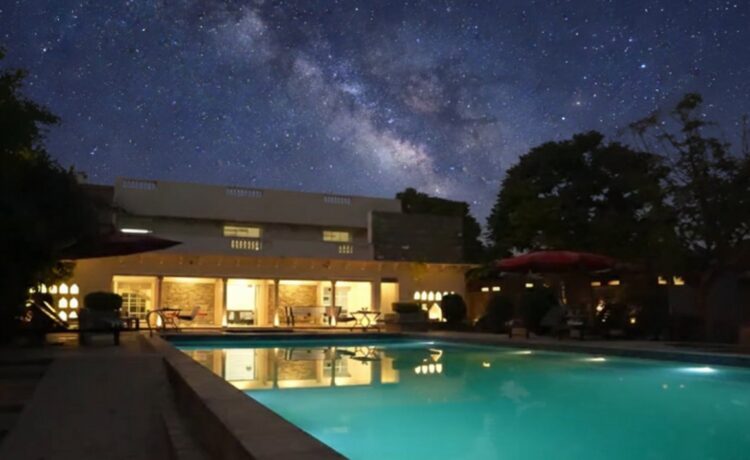
You booked the trip. You packed warm layers. Then you look up and see grey. It is one of stargazing’s oldest worries. A cloudy stargazing night is simply what happens when nature does not read the plan.
Here is the honest part. No one controls the sky. Clouds roll in. But a good astro resort plans for exactly this, so a cloudy night is rarely a wasted one.
This guide walks you through it all. Why some nights cloud over. How to read the forecast and moon phase before you book. What Astroport Sariska does when the clouds win. And the best months for clear Aravalli skies. By the end, you will know how to plan around the weather, not fear it.
Why Do Nights Turn Cloudy?
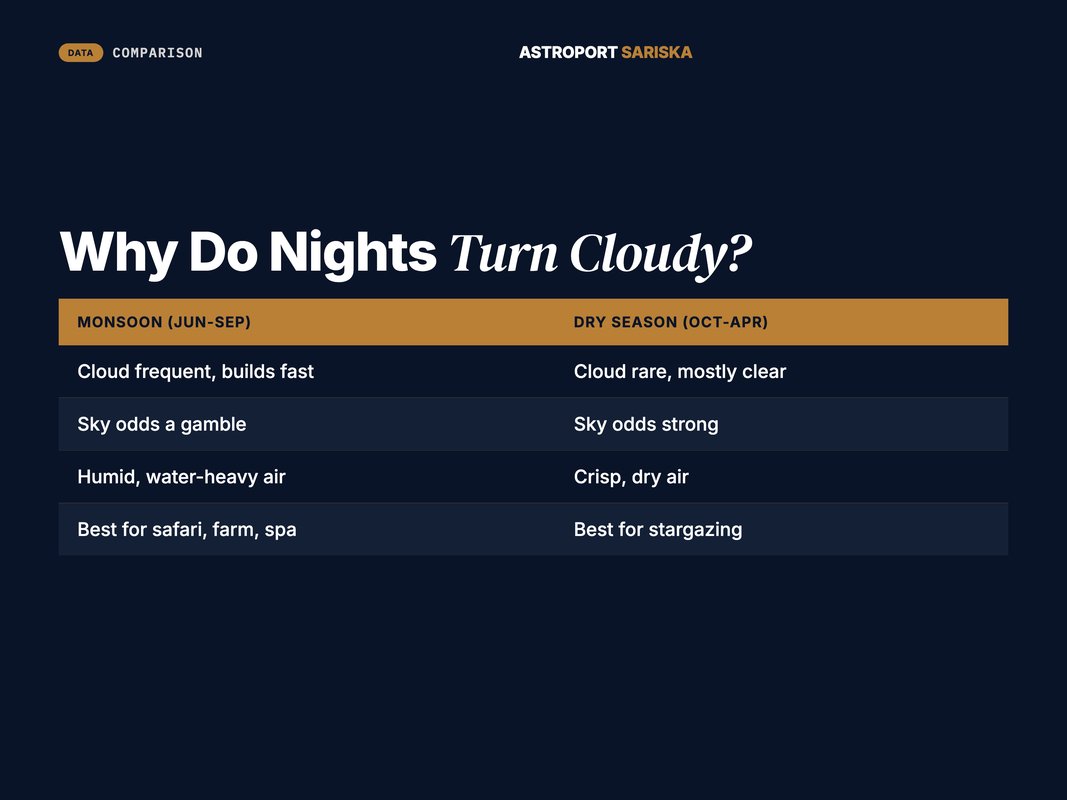
Cloud cover is mostly about the season. Basically, India runs on a strong monsoon cycle. So that cycle decides how clear your night sky will be.
The southwest monsoon sweeps the country from about June to September. It brings the rain, and it brings the cloud (Source: IMD, 2026 — Monsoon Information). The monsoon bursts onto India around early June and pulls back by early October (Source: Wikipedia, 2026 — Monsoon of South Asia).
So summer nights here are a gamble. Plus the air holds water. Clouds build fast after a hot day.
Still, the dry season is the opposite. From October, the rain leaves. Then the air over the Aravallis turns crisp and clear. Clear nights become the norm, not the exception.
Weather can still surprise you on any single night. A stray cloud bank can drift in even in winter. That is just sky doing its thing. The trick is to load the odds in your favour, which the next sections cover.
Q: Is cloud cover worse in summer in Rajasthan?
A: Often, yes. The monsoon runs from about June to September. Those months bring the most cloud across India. The dry months from October are far clearer for stars.
How to Check the Sky Before You Book
A little homework goes a long way. Two things matter most: the cloud forecast and the moon. Check both before you lock a date.
Skip the basic weather app for this. Instead, use an astronomy forecast. The Clear Sky Chart shows cloud cover, transparency and seeing, hour by hour, for the next few days (Source: Clear Sky Chart, 2026 — The astronomers’ forecast).
NASA puts it plainly. Even the best dark-sky spots are too cloudy sometimes, so you should always check the weather first (Source: NASA, 2024 — How to Find Good Places to Stargaze).
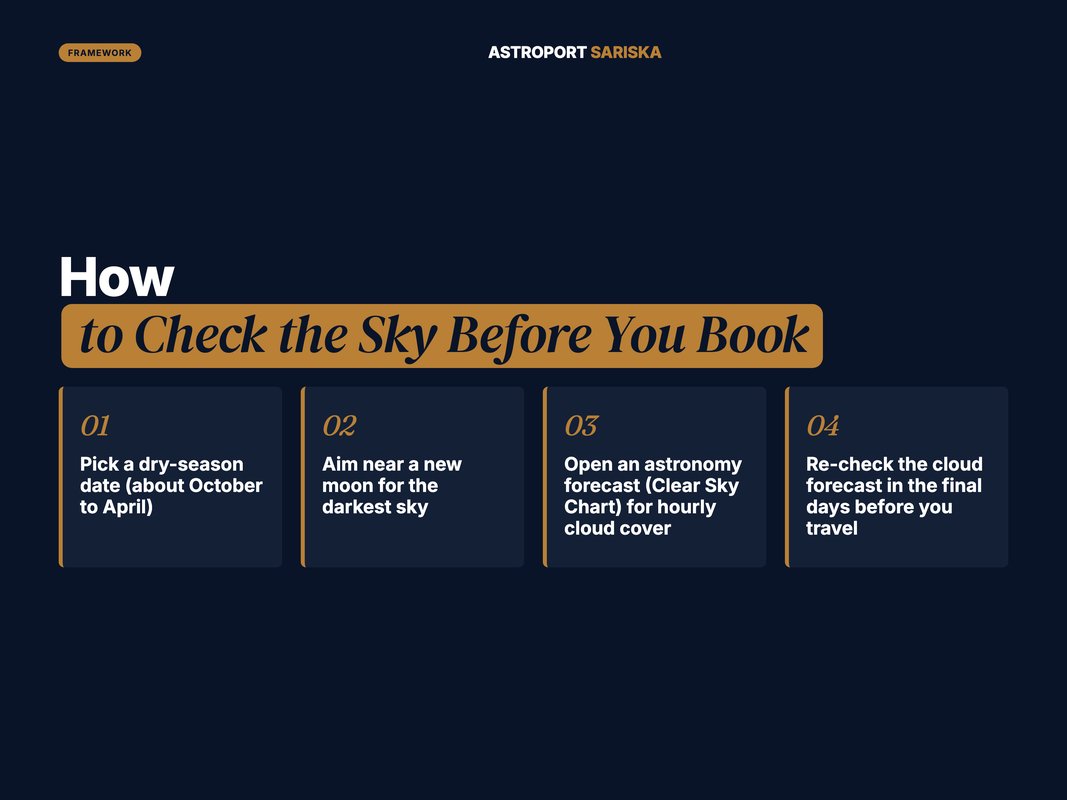
Next, the Moon. Also, a bright Moon washes out faint stars. The darkest skies fall around the new moon, when the Moon rises and sets with the Sun (Source: EarthSky, 2024 — Which moon phase is best for stargazing?). NASA suggests the two weeks before and after the new moon as the best window (Source: NASA, 2024 — How to Find Good Places to Stargaze).
Put it together. Aim for a dry-season date, near a new moon, then watch the cloud forecast in the final days. That is how you stack the deck.
Q: What tool shows cloud cover for stargazing?
A: An astronomy forecast like the Clear Sky Chart. It maps cloud, transparency and seeing by the hour. A normal weather app misses these astronomy details.
What Astroport Does When Clouds Roll In
This is the heart of it. A cloudy stargazing night at Astroport Sariska is not a dead night. Instead, the plan simply moves under a roof.
So the resident astronomers keep watching the sky live. The moment a clear gap opens, the telescopes come back out. Even a short break can frame the Moon, Jupiter or Saturn.
When the cloud holds, the learning carries on indoors. You can join an astronomy talk and learn how the night sky really works. The stories behind the constellations land just as well by lamplight.
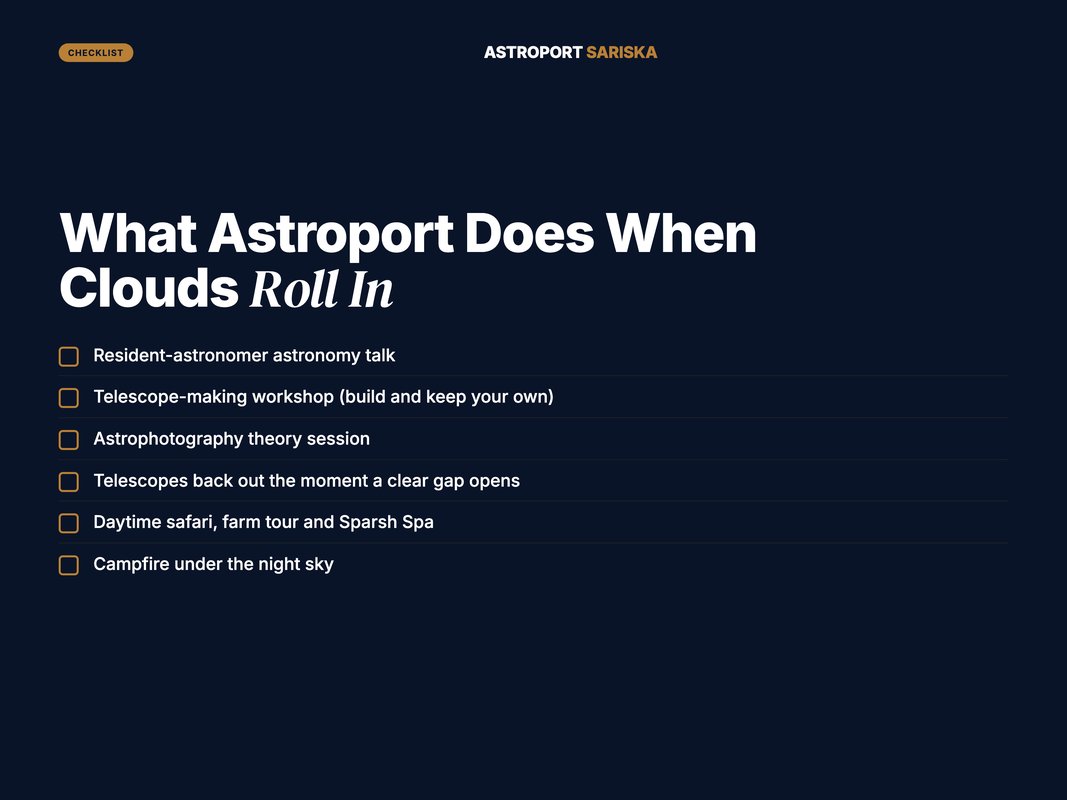
There is more to do than just talk. A telescope-making workshop lets you build and keep your own simple scope. An astrophotography session teaches the theory of shooting the stars, ready for your next clear night.
And the rest of the resort never stops. The Sariska tiger-reserve safari runs by day. So do the organic farm tour and farm-to-table meals. The Sparsh Spa stays open. The campfire still crackles after dark, cloud or no cloud.
One more safeguard helps most. A two-night stay gives you a second evening, and a second shot at clear skies. Skies often change a lot in a day. For their exact clear-sky and rebooking approach, ask the resort directly when you plan your trip.
Q: What can I do at the resort if it is cloudy?
A: Plenty. Join an astronomy talk, a telescope-making workshop or an astrophotography session. By day, enjoy the safari, farm tour and spa. The campfire runs at night too.
Clear vs Cloudy Stargazing Night: What You Still Get
First, it helps to set the expectation early. A clear night and a cloudy night are different. But neither one is empty.
On a clear night, the sky opens up, and what you can see at Sariska is staggering. Under dark, moonless skies you can see thousands of stars, with around 2,000 the common count for the naked eye (Source: EarthSky, 2024 — How many stars on a clear, moonless night?). At Astroport that figure climbs to 4,000-plus on a great night, versus about 20 from inside Delhi.
A cloudy night looks different. Then the deep-sky view pauses. But the experience does not.
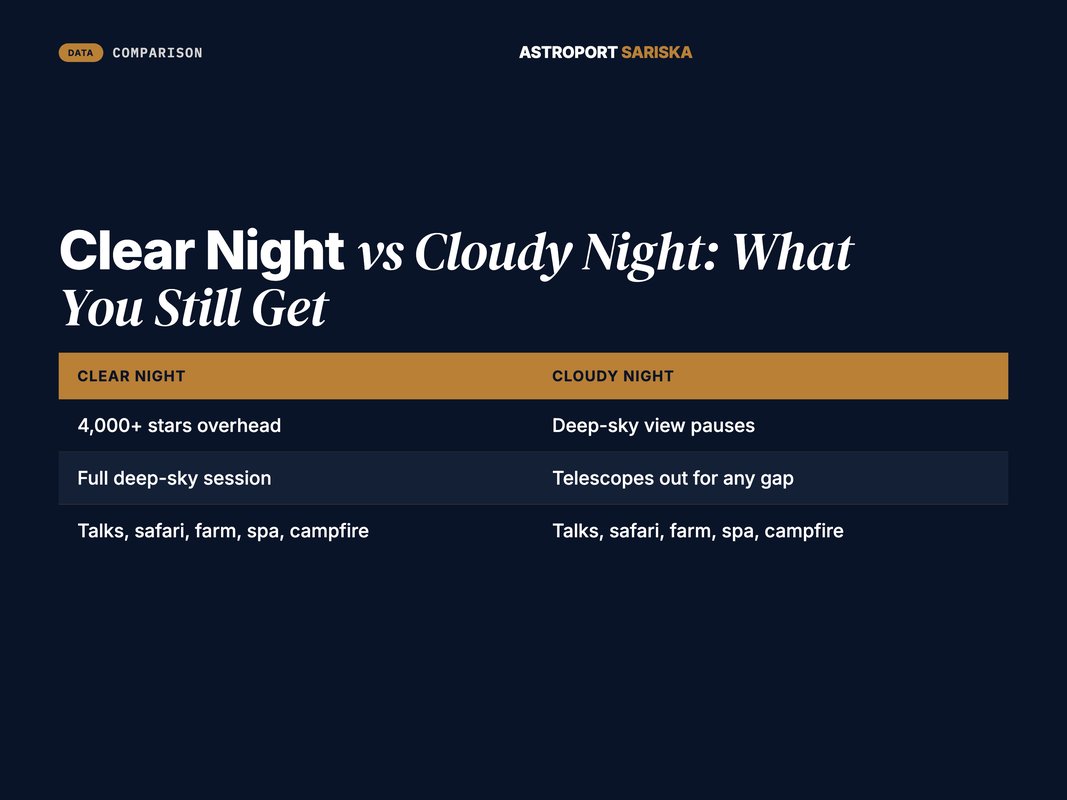
You still get the astronomy talks and hands-on workshops. Also, the safari, the farm, the spa and the campfire all carry on. You still sleep under quiet Aravalli skies, far from the city glow.
So the honest framing is simple. Still, clouds change the night. They do not cancel the trip. The stargazing is the star turn, but the supporting cast is strong on its own.
Q: Is a cloudy stargazing trip a waste?
A: No. The deep-sky view pauses, but little else does. Talks, workshops, the safari, farm and spa all run. A cloudy night still feels full and restful.
The Best Months for Clear Aravalli Skies
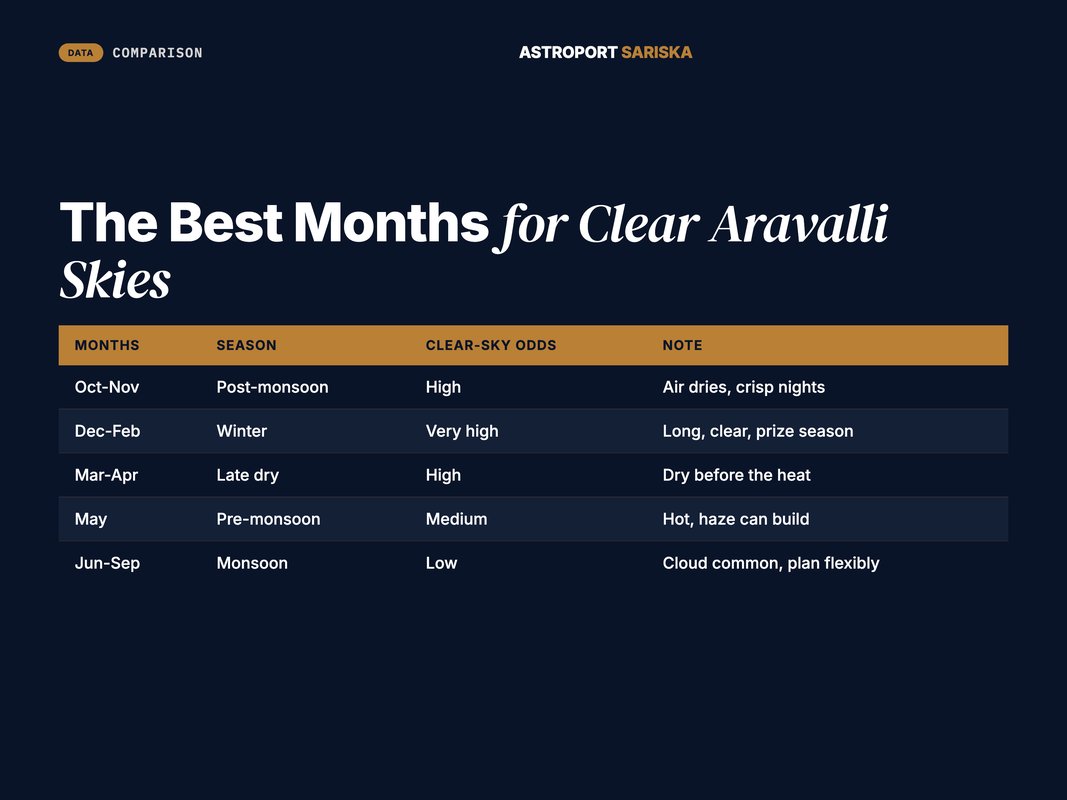
If clear stars are your goal, timing is everything. The Aravalli sky has a clear best season. Aim for it.
So the window runs from October to April, the best time to visit Sariska for stars. By late September the monsoon has pulled back from the region (Source: Wikipedia, 2026 — Monsoon of South Asia). Then the air dries out. Winter nights here are long, crisp and clear.
And winter is the prize for a reason. EarthSky notes that winter, with longer nights and clearer air, is the best time for stargazing (Source: EarthSky, 2024 — Top 10 stargazing tips). The dry desert air over Rajasthan only helps.
Monsoon and Shoulder Months
The monsoon months are the gamble. From about June to September, cloud is common. You can still visit for the safari, farm and spa. Just keep your star hopes flexible.
The shoulder weeks are a quiet secret too. Late September and early October can deliver crystal nights once the rain has gone. Pair any of these dates with a new moon, and you are planning like a pro.
Q: When is the best time to stargaze near Delhi NCR?
A: From October to April. The monsoon has cleared and winter skies are dry. These months give the most clear nights at a dark site like Sariska.
Why Astroport Sariska
Astroport Sariska is India’s first purpose-built astronomy resort. It also sits near Sariska Tiger Reserve in Alwar, Rajasthan. The drive is about 4 to 5 hours from Delhi NCR, or roughly 200 km. That makes it an easy dark-sky weekend.
Of course, the dark sky is the whole point. On a clear night, guests can see 4,000-plus stars overhead. From inside Delhi, you might catch about 20. The Aravalli darkness does the heavy lifting.
But the resort is built for cloudy nights too. Meanwhile, resident astronomers run the sessions and watch the sky live. So indoor astronomy talks, telescope-making and astrophotography fill any clouded evening. The professional telescopes return the second a gap appears.
Also, there is a full world beyond the eyepiece. Safaris track tigers, leopards and 200-plus bird species. An organic farm feeds the farm-to-table kitchen. The Sparsh Spa, yoga under the stars and nightly campfires round it out. The whole resort runs on solar power.
So the weather never decides your whole trip. Clear or cloudy, there is always something to do here. Plan your stay and let the sky surprise you.
Conclusion
Clouds are part of stargazing. Every seasoned sky-watcher has waited one out. The smart move is not to fear them, but to plan around them.
So do your homework first. Pick a dry-season date from October to April. Aim near a new moon. Watch an astronomy forecast in the final days before you travel.
Then relax. At Astroport Sariska, a cloudy night still holds talks, workshops, a safari, a farm and a campfire. A two-night stay buys a second chance at clear skies. And when the sky does open, thousands of Aravalli stars are waiting.
Ready to plan a trip the weather cannot spoil? Reach out to Astroport Sariska, ask about their clear-sky approach, and book your dark-sky escape near Delhi NCR.
FAQ
Q: What happens with stargazing in cloudy weather? A: Thick cloud hides the stars for that session. A good astro resort moves the evening indoors. You get astronomy talks, telescope-making and astrophotography theory instead. The sky watch resumes the moment a gap opens, often later the same night.
Q: Can you stargaze on a cloudy night at all? A: Light, broken cloud still lets bright stars and planets peek through. Solid overcast does not. Astronomers watch the sky in real time and grab any clear gap. Even a short break in the cloud can show the Moon, Jupiter or Saturn.
Q: How do I check the forecast before a stargazing trip? A: Use an astronomy forecast, not just a normal weather app. Tools like the Clear Sky Chart show cloud cover hour by hour for the next few days. Also check the moon phase. A night near the new moon gives the darkest sky.
Q: What is the best time of year for clear skies at Sariska? A: October to April is the sweet spot. The monsoon clears by late September. Winter air over the Aravallis is dry and crisp. These months give the most clear, star-filled nights of the year.
More Stargazing Trip Questions
Q: Should I avoid booking a stargazing trip in the monsoon? A: The southwest monsoon runs from about June to September across India. Skies are often cloudy then. You can still come for the safari, farm and spa. But for the best star odds, plan your visit between October and April.
Q: Is there a backup plan if it rains on a stargazing trip? A: Yes. At Astroport Sariska the night moves indoors. You join astronomy talks, a telescope-making workshop or an astrophotography session. The safari, farm tour, spa and campfire still run by day. A two-night stay also adds a second shot at clear skies.
Q: Will I get a refund if clouds block the stars? A: Policies vary by resort, so ask the team directly when you book. At Astroport Sariska the focus is on rebooking and clear-sky flexibility rather than a guaranteed view. Reach out to the resort about their clear-sky and rebooking approach before your trip.