
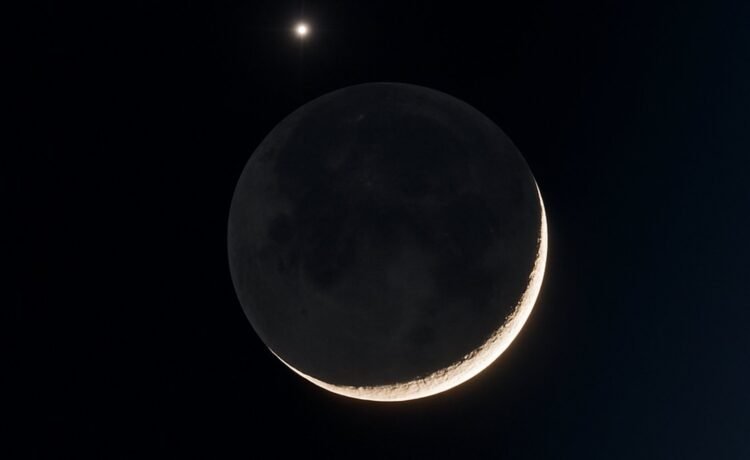
Somebody points west after dinner and says that must be a plane. It is not moving, though.
It is not blinking either. So it is Venus, and it is brighter than anything else up there.
Planets are the easiest win in astronomy. Because they are bright, you can find them from almost anywhere.
But they keep a schedule, and that is where people get stuck. So this guide sorts the planets visible India 2026 into a calendar you can plan around.
First, you will learn how to read a planet calendar. Then you will get the year in one table.
Also, you will get each planet in turn. Finally, you will learn how to actually find them.
How to Read a Planet Calendar
Three words do most of the work. So learn these and the rest follows.
Opposition. This is when a planet sits directly opposite the Sun from where we stand.
So it rises as the Sun sets and stays up all night. It is also nearest to Earth then, which makes it brightest and largest.
That makes opposition the best night of the year for any outer planet. Still, the weeks either side are nearly as good.
Elongation. Mercury and Venus orbit closer to the Sun than we do. So they never wander far from it in our sky.
Greatest elongation is the moment a planet reaches its widest gap from the Sun. That is when it is easiest to spot, either after sunset or before dawn.
Conjunction. This means two objects appearing close together. It also describes a planet passing behind or in front of the Sun, when it disappears from view.
Magnitude. One more term worth knowing. It measures brightness, and the scale runs backwards.
So lower numbers mean brighter. A magnitude of minus four is dazzling. Magnitude six is barely there.
That is the whole code. Learn it once and you are set.
Now you can read any sky chart. Because the same four words appear on all of them, nothing else is needed.
Q: Why does a planet look bigger at opposition?
A: Because it is genuinely closer. So Earth passes between it and the Sun, cutting the distance. As a result, the disc grows and the light doubles or better.
The 2026 Planet Calendar at a Glance
Here is the year in one place. Dates are given for observers in India.
| Date | Event | Why it matters |
|---|---|---|
| January 10 | Jupiter at opposition | Jupiter’s brightest and best night of the year |
| March 8 | Venus and Saturn in conjunction | The pair appear about one degree apart |
| April 4 | Mercury at greatest elongation | Best Mercury viewing window of the year |
| June 9 | Venus and Jupiter in conjunction | The two brightest planets, about one degree apart |
| August 27 | Mercury at superior conjunction | Mercury passes behind the Sun |
| August 4 | Mercury highest in the morning sky | Its best dawn window of the year |
| August 15 | Venus at greatest elongation east | Venus at its widest gap from the Sun in the evening |
| September 9 | Lunar occultation of Jupiter | The Moon passes in front of Jupiter before dawn |
| September 25 | Neptune at opposition | Brightest of the year, but still needs a telescope |
| October 4 | Saturn at opposition | The rings at their best, up all night |
| October 5 | Lunar occultation of Mars | The Moon passes in front of Mars |
| October 12 | Mercury at greatest elongation east | Its widest evening gap from the Sun |
| October 24 | Venus at inferior conjunction | Venus passes between us and the Sun |
| November 2 | Lunar occultation of Mars | A second Moon and Mars pairing |
| November 25 | Uranus at opposition | Best Uranus window, binoculars help |
| December 13 | Jupiter enters retrograde | Jupiter appears to reverse against the stars |
(Sources: The Planetary Society, 2026 — Calendar of space events 2026; In-The-Sky.org, 2026 — Saturn, Venus, Mars, Jupiter, Mercury)
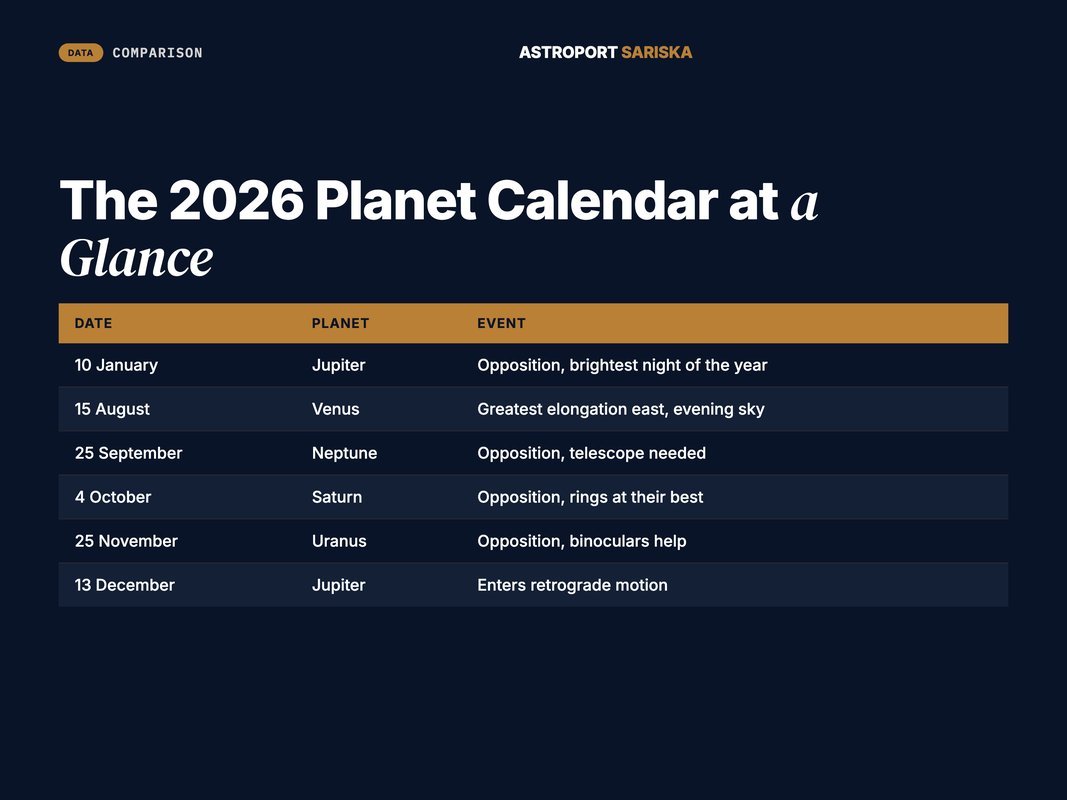
Reading the Table
Notice how the year is back-loaded. So the strongest run of planet events falls between September and December.
Spring was quiet. Summer took Jupiter away.
But the autumn pays it all back. Four big dates land in ten weeks.
So if you plan one trip, plan it late. The sky is on your side then.
Book early, though. Because October is peak season here, rooms go fast.
Pick a week with a thin moon. Then you get the planets and the faint stuff too.
Q: Which single date should I mark?
A: October 4, for Saturn’s opposition. Because the rings are the most reliably astonishing thing in a small telescope, it converts more first-timers than anything else.
Jupiter in 2026
Jupiter had its moment early. It reached opposition on January 10, its brightest and best night of the year (Source: The Planetary Society, 2026 — Calendar of space events 2026).
Then it slid west through spring. By midsummer it had gone entirely.
Right now it sits in Cancer at magnitude minus 1.80, low in the dawn sky (Source: In-The-Sky.org, 2026 — Jupiter).
So it is absent from the evening sky. Still, it is already back in the mornings.
Do not go hunting for it after dinner. You will only find empty sky.
Wait for the small hours instead. Then look east, low down, an hour before dawn.
Through autumn it climbs higher each week. Because it moves further from the Sun’s glare, it grows easier every time you look.
There is a bonus this month. The Moon passes directly in front of Jupiter on September 9, and again on October 6 and November 3 (Source: In-The-Sky.org, 2026 — Jupiter).
Then on December 13 it enters retrograde motion (Source: In-The-Sky.org, 2026 — Jupiter).
Retrograde simply means it appears to reverse direction against the background stars. So nothing physically changes, and it is a trick of our own orbit overtaking its.
Its next opposition falls on February 11, 2027 (Source: In-The-Sky.org, 2026 — Jupiter).
Jupiter is the best beginner target through a telescope. Its four bright moons show up even in small instruments, and they shift each night.
Draw them one night. Then draw them the next.
The change is obvious. So you have just watched moons orbit a world.
Q: Can I see Jupiter’s moons with binoculars?
A: Often, yes, if you brace them properly. So rest them on a wall or a car roof. Then the moons show as tiny points in a line beside the planet.
Saturn in 2026: The Highlight
If you plan one planet trip this year, plan it around Saturn.
Saturn reaches opposition on October 4, in the constellation Pisces (Source: In-The-Sky.org, 2026 — Saturn).
So on that night it rises at sunset, sits up all night, and shines at its brightest.
It is already at magnitude 0.32 and brightens a little further into October (Source: In-The-Sky.org, 2026 — Saturn).
It also stays in retrograde motion until December 11 (Source: In-The-Sky.org, 2026 — Saturn).
That means it lingers in the same patch of sky for months. So it is easy to find repeatedly.
Do not restrict yourself to October 4 itself. Because the geometry changes slowly, September and November are nearly as good.
Saturn is the one that makes people gasp. Through a telescope the rings resolve into a distinct band around a pale disc.
Almost nobody expects it to look real. So it usually reads as a picture stuck on the eyepiece.
Then the disc drifts, and the illusion breaks. Because the Earth turns, the view slides across the field.
That small movement is the proof. So people go quiet at that point.
Give each person two turns. The first look is a shock. The second is when they actually see it.
Kids need a nudge on this. Tell them to look, blink, and look again.
Then ask what colour it is. That makes them study it properly.
Q: Do I need a big telescope to see Saturn’s rings?
A: No, a modest one shows them clearly. Because the rings span a wide angle, even a small instrument separates them from the disc. So the bigger the telescope, the more detail in the gap.
Venus, Mercury and Mars
These three behave very differently from each other.
Venus is unmissable right now. It reached greatest elongation east on August 15, its widest evening gap from the Sun (Source: In-The-Sky.org, 2026 — Venus).
It is blazing at around magnitude minus four, far brighter than any star (Source: In-The-Sky.org, 2026 — Venus).
It reaches its greatest brightness of this evening run on September 22 (Source: In-The-Sky.org, 2026 — Venus).
So look west shortly after sunset through September. It sets a couple of hours after the Sun, so you have a decent window.
You cannot miss it. It is the first thing out, and by far the brightest.
Point a telescope at it. Then you see a phase, like a tiny moon.
Venus then dives towards the Sun. It reaches inferior conjunction on October 24, passing between us and the Sun (Source: In-The-Sky.org, 2026 — Venus).
After that it reappears before dawn. So the evening star becomes the morning star.
Mercury and Mars
Mercury is the hardest of the five. Because it hugs the Sun, it only appears briefly at dawn or dusk.
It was highest in the morning sky on August 4, its best dawn window of the year (Source: In-The-Sky.org, 2026 — Mercury).
Then it passed behind the Sun at superior conjunction on August 27 (Source: In-The-Sky.org, 2026 — Mercury).
Later in the year it climbs highest in the evening sky on October 10, reaching greatest elongation east on October 12 (Source: In-The-Sky.org, 2026 — Mercury).
You need a flat, clear horizon for Mercury. So a ridge-top site beats a city terrace by a wide margin.
Haze is the usual spoiler. Because you are looking through thick low air, dust matters.
Pick a windy evening. Then the air is cleaner near the ground.
Mars is having a quiet year. It has no opposition at all in 2026, and its next one is on February 19, 2027 (Source: In-The-Sky.org, 2026 — Mars).
Right now it sits in Gemini at magnitude 1.25, low in the dawn sky (Source: In-The-Sky.org, 2026 — Mars).
So it is visible but unremarkable. Still, two dates are worth catching.
The Moon passes directly in front of Mars on October 5, and again on November 2 (Source: In-The-Sky.org, 2026 — Mars).
Those events are called occultations. Mars simply vanishes behind the Moon’s edge, which is startling to watch.
It happens fast. One second it is there, the next it is gone.
Then it pops back out the far side. So watch both ends if you can.
Q: Why is Mars so disappointing this year?
A: Because Earth and Mars only line up every couple of years. So 2026 falls between those alignments. Mars will be worth a trip in early 2027 instead.
The Ice Giants: Neptune and Uranus
Two more planets are up there, and almost nobody looks for them.
Neptune reaches opposition on September 25 (Source: The Planetary Society, 2026 — Calendar of space events 2026).
That is its brightest for the year. Still, it remains dim and needs a telescope.
Uranus follows on November 25 (Source: The Planetary Society, 2026 — Calendar of space events 2026).
Uranus is the easier of the two. Under a genuinely dark sky, some observers pick it out with binoculars.
Neither looks impressive in the way Saturn does. So expect a small coloured dot rather than a disc.
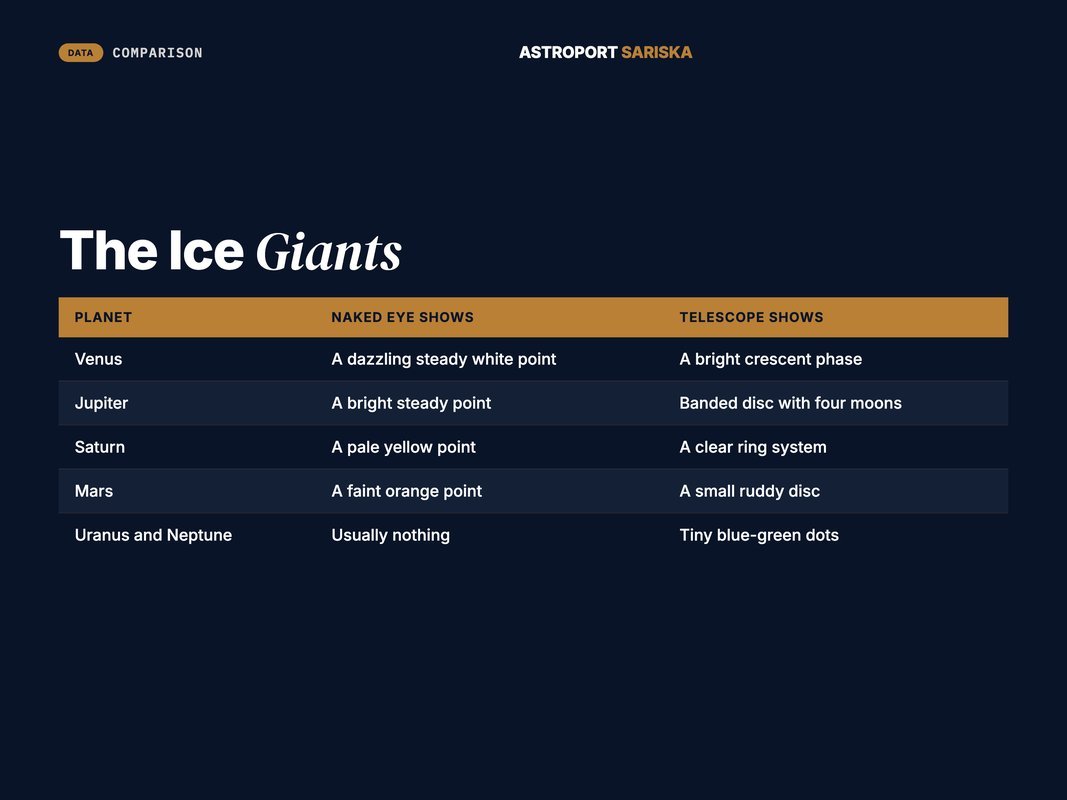
But the appeal is different. Because you are looking at a world roughly three billion kilometres away, the distance is the point.
So they are worth ticking off with an astronomer who can find them for you. Finding Neptune on your own is very hard.
There is no shame in that. Even keen amateurs use a chart and a guide.
Think of it as a checklist item. You are collecting worlds, not views.
Most people only do it once. Still, they remember that they did.
Q: Can I really see Uranus without a telescope?
A: Under a very dark sky, sometimes. Because it sits right at the edge of naked-eye brightness, it needs perfect conditions and a good chart. So binoculars make it far easier.
What Else the 2026 Sky Delivers
Planets are not the whole story. Four more dates round out the year.
A partial lunar eclipse falls on August 28, visible from Asia (Source: The Planetary Society, 2026 — Calendar of space events 2026).
Earlier in the year, a total lunar eclipse on March 3 was also visible from Asia (Source: The Planetary Society, 2026 — Calendar of space events 2026).
There was a total solar eclipse on August 12 as well, though its track ran across Iceland, Greenland and Spain (Source: The Planetary Society, 2026 — Calendar of space events 2026).
Then the Geminid meteor shower peaks on the night of December 13 into 14 (Source: American Meteor Society, 2026 — Meteor Shower Calendar).

So the last quarter of 2026 is unusually rich. Saturn, Uranus and the Geminids all land within ten weeks.
Q: Can I see planets and a meteor shower on the same night?
A: Easily, and December is ideal for it. So look at Saturn early in the evening, then lie back for the Geminids after midnight. Because they need no equipment, the two pair well.
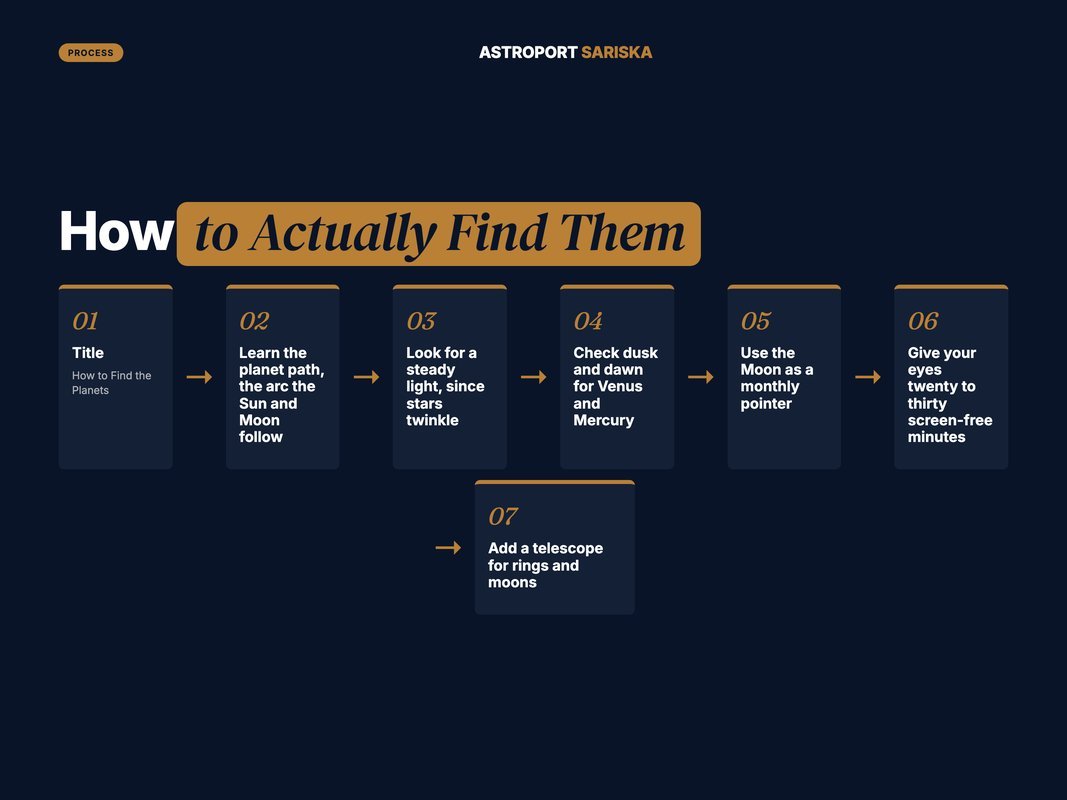
How to Actually Find Them
Knowing the dates is half of it. Here is the method.
-
Learn the planet path. First, planets always stay near the same arc across the sky, the one the Sun and Moon follow.
-
Look for a steady light. Then remember that planets shine steadily while stars twinkle.
-
Start at dusk or dawn for the inner planets. So Venus and Mercury only appear near sunrise or sunset.
Where to Stand
-
Use the Moon as a pointer. Also, the Moon passes close to each planet monthly, which flags them for you.
-
Give your eyes time. Meanwhile, allow twenty to thirty minutes with no screens (Source: NASA, 2026 — How to Find Good Places to Stargaze).
-
Add a telescope for the detail. Finally, the naked eye finds them, but the eyepiece shows the rings and moons.
Cities do work for planets, unlike faint objects. Because the bright ones punch through skyglow, a terrace is enough for Venus or Jupiter.
That is the easy on-ramp. Start on your roof this week.
Find Venus after sunset. Then find one more the week after.
Three planets in and you are hooked. So the trip out of town follows on its own.
But the difference is still large. So a dark site steadies the air and sharpens the view considerably.
Height helps as well. Because you look through less low air, a ridge beats a valley floor.
Wait for the planet to climb. Low down, the view wobbles badly.
An hour of patience changes everything. So let it rise before you judge it.
Q: Is a planet app worth using?
A: For your first few sessions, yes. Because identifying which bright dot is which takes practice, an app shortcuts it. So use a red-filtered night mode if the app has one.
Why Astroport Sariska
Planets are forgiving. So you can find them from a city, which is why they make such a good first step.
But the view improves enormously away from town. Because steadier, cleaner air holds detail better, the same telescope shows more.
Astroport Sariska is India’s first astronomy resort. It sits at Tehla in the Aravalli hills, beside the Sariska Tiger Reserve in Alwar, Rajasthan.
The drive is about four to five hours from Delhi NCR. So a Saturn opposition weekend is entirely doable.
Resident astronomers run the sessions with professional telescopes. So they can put Saturn’s rings, Jupiter’s moons and even Neptune in front of you without the hunting.
That matters for the harder targets. Because finding Uranus or Neptune unaided takes real practice, having someone point the instrument saves the evening.
The programme runs wider than planets too. There are constellation tours, astrophotography sessions, telescope-making workshops, comet observation and safe solar viewing by day.
One timing note. Astronomy activities pause through the rainy season, from June until August. So the October to March run suits this calendar perfectly.
Days fill easily with jeep safaris, farm walks and a spa. Plan your stay around Saturn’s October opposition.
Conclusion
So 2026 is a back-loaded year for planets.
Jupiter took January and then left the evening sky by midsummer. Mars is sitting this one out until 2027.
But the autumn is strong. Venus dominates the evening through September, then Saturn peaks on October 4.
Neptune and Uranus follow, on September 25 and November 25. Then the Geminids close the year in mid-December.
Three words unlock the whole calendar. Opposition means best, elongation means visible, and conjunction means gone.
Learn those and any year’s sky opens up. So mark October 4. Find a dark horizon and look east after sunset. Plan your planet-watching trip while the good dates remain.
FAQ
Q: Which planets are visible from India in 2026?
A: All five bright planets appear at some point in 2026. Jupiter was at its best in January. Saturn peaks on 4 October. Venus rules the evening sky through August and September. Mars sits low at dawn, and Mercury makes brief appearances.
Q: What does opposition mean in astronomy?
A: Opposition is when a planet sits directly opposite the Sun from our point of view. It rises at sunset, stays up all night, and is closest to Earth, so it looks biggest and brightest. It is the best night of the year to observe that planet.
Q: When is Saturn at opposition in 2026?
A: Saturn reaches opposition on 4 October 2026, in the constellation Pisces, at around magnitude 0.3. That is the year’s best window to see its rings, since it is up all night and at its closest. The surrounding weeks are almost as good.
Q: Is Mars visible in 2026?
A: Yes, but it is a poor year for it. Mars has no opposition in 2026 and its next one is on 19 February 2027. Through 2026 it stays faint and low in the dawn sky.
Q: Do I need a telescope to see the planets?
A: No. Venus, Jupiter, Saturn, Mars and Mercury are all visible to the naked eye when well placed. A telescope is what turns Saturn into a ringed disc and shows Jupiter’s four bright moons.
Q: How do you tell a planet from a star?
A: Planets shine with a steady light while stars twinkle, because planets show a tiny disc rather than a point. Planets also stay close to the same path across the sky. They shift slowly against the stars from week to week.
Q: What is the best planet event left in 2026?
A: Saturn’s opposition on 4 October. Neptune reaches opposition on 25 September and Uranus on 25 November, though both need optical help. Venus also puts on a strong evening showing through August and September.