
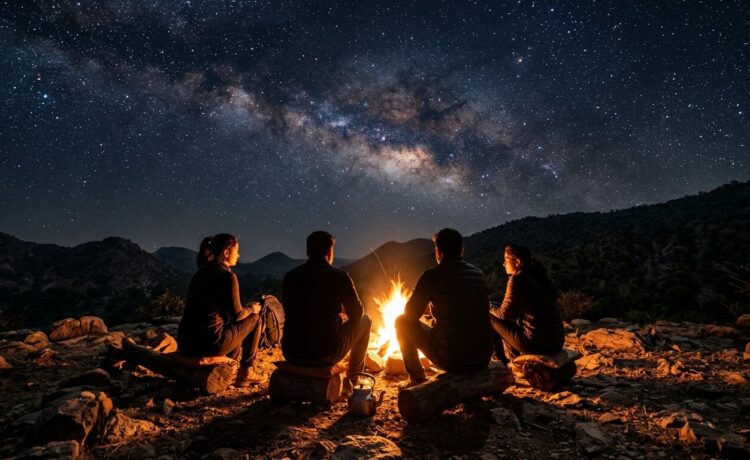
The world’s hottest trip starts after sunset. So it is called noctourism India night tourism, and it is changing how we travel. People are chasing the dark. But not city lights or late bars. Instead, they want stars, wildlife, and quiet.
The night sky used to be free for all. Yet most of us never see it. So we travel to find it again. In fact, Booking.com named “noctourism” a top trend for 2025. Indian travellers are leaning in fast.
This guide keeps it simple. First, we explain what noctourism means. Then we look at why it is booming. Next, we map its many forms, here and abroad. Also, we cover India’s dark-sky push. Finally, we show how a night-sky resort near Delhi fits in. So let us begin.
What Noctourism Really Means
Noctourism is travel built around the night. So the night is the main event, not an add-on. You plan your trip around what the dark has to offer.
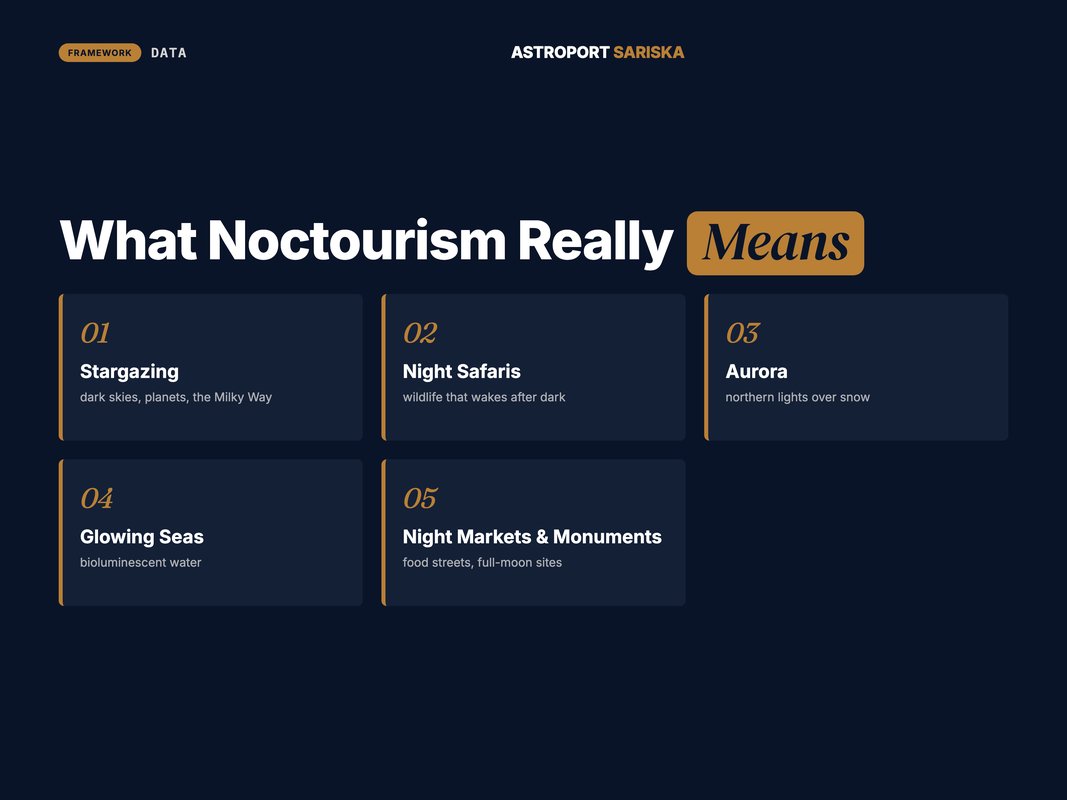
Also, it is a wide idea. For example, it covers stargazing under a dark sky. Then come night safaris in the wild. The aurora, glowing seas, and late food markets count too. The thread is simple. So you go to enjoy a place after dark.
National Geographic calls it “the recent trend of exploring the world after dark” (Source: National Geographic, 2025 — What is noctourism). Indeed, the word fuses “nocturnal” and “tourism.” Simple as that.
So this is not nightlife. Nor is it clubs or neon streets. Instead, it is the natural night. Stars. Animals. Stillness. A sky that feels endless.
Still, it is not new, really. People have watched the sky for ages. Yet what is new is the demand. More of us now travel just for the dark. So that shift has a name at last.
Q: Is noctourism the same as nightlife?
A: No. Nightlife means bars, clubs, and city buzz. Noctourism means the natural night. Think stars, safaris, and quiet skies. The two are very different things.
Why The Night Is Booming Now
Noctourism did not appear by chance. Indeed, real forces are driving it. Four stand out.
First, the stars are vanishing. City lights wash them out. In fact, over 80% of the world now lives under sky glow (Source: DarkSky International, 2016 — Skyglow study). Most of us never see the Milky Way at home. So we travel to find it.
Second, people want real moments. Not more stuff. Rather, they crave experiences over things. A night under the stars beats another souvenir. So it sticks with you for years.
Then comes the heat. Hot afternoons sap the fun. So travellers shift their plans. In fact, Booking.com found 61% want less time in the sun (Source: Booking.com, 2025 — 2025 Travel Predictions). The cool night becomes the prize.
Finally, dark skies feel like wellness. The dark calms the mind. It also slows you down. Then it brings a sense of awe. So that feeling is rare and worth the trip.
Put these together and the pull is clear. Still, the night is no longer empty time. So it is the reason to go.
Q: What is the biggest driver of noctourism?
A: Light pollution is huge. Most people can no longer see the stars from home. So they travel to dark places to find them. Heat and the hunt for real moments help too.
How Big Is This Trend, Really?
The numbers are striking. Indeed, this is not a niche idea. So it is going mainstream fast.
For example, Booking.com surveyed more than 27,000 travellers. Nearly two in three said they would consider a darker-sky trip (Source: National Geographic, 2025 — What is noctourism). So that is a lot of people chasing the dark.
The firm named noctourism a top trend for 2025. Indeed, it described it as travel “to experience the night in all its glory” (Source: Booking.com, 2025 — 2025 Travel Predictions). About 60% said they would seek out low-light spots to see the cosmos.
Tour operators feel it too. For instance, one luxury firm saw night excursions rise 25% in a single year (Source: National Geographic, 2025 — What is noctourism). The aurora trade alone was valued at £686m in 2023 (Source: National Geographic, 2025 — What is noctourism).
Meanwhile, noctourism India is part of this wave. Demand for stargazing trips near Delhi is climbing here too. So the night sky is a fresh draw for Indian travellers.
So the trend has real legs. Indeed, it is backed by big surveys and real bookings. The night is good business now.
Q: Is noctourism a real trend or just hype?
A: It is real. Big surveys back it up. Tour firms report rising night bookings year on year. Booking.com ranked it a top trend for 2025. The data is solid.
The Many Forms Of Noctourism
The night offers more than stars. Indeed, noctourism comes in many shapes. Here are the main ones.
First, stargazing leads the way. You sit under a dark sky and look up. Then you spot planets, shapes, and the Milky Way. A guide makes it richer.
Next come night safaris. Many animals only stir after dark. So a night drive shows a wild new side of nature. Sounds replace sights.
Then there is the aurora. People fly far north to see it. Green and pink light dances over the snow. So it is a bucket-list sight.
Also, glowing water draws crowds. Tiny life makes the sea shine blue. You can swim or paddle through it. It feels like magic.
Finally, night markets and monuments beckon. Late food streets buzz with life. Meanwhile, some sites open under a full moon. The Taj Mahal does this on select nights (Source: National Geographic, 2025 — What is noctourism).
So the night is full of choice. Still, each form has its own magic. You can mix many on one trip.
Q: What are the main types of noctourism?
A: There are five big ones. Stargazing, night safaris, the aurora, glowing seas, and night markets or monuments. Each shows a different side of the dark. You can blend them on one trip.
Day Tourism Vs Noctourism
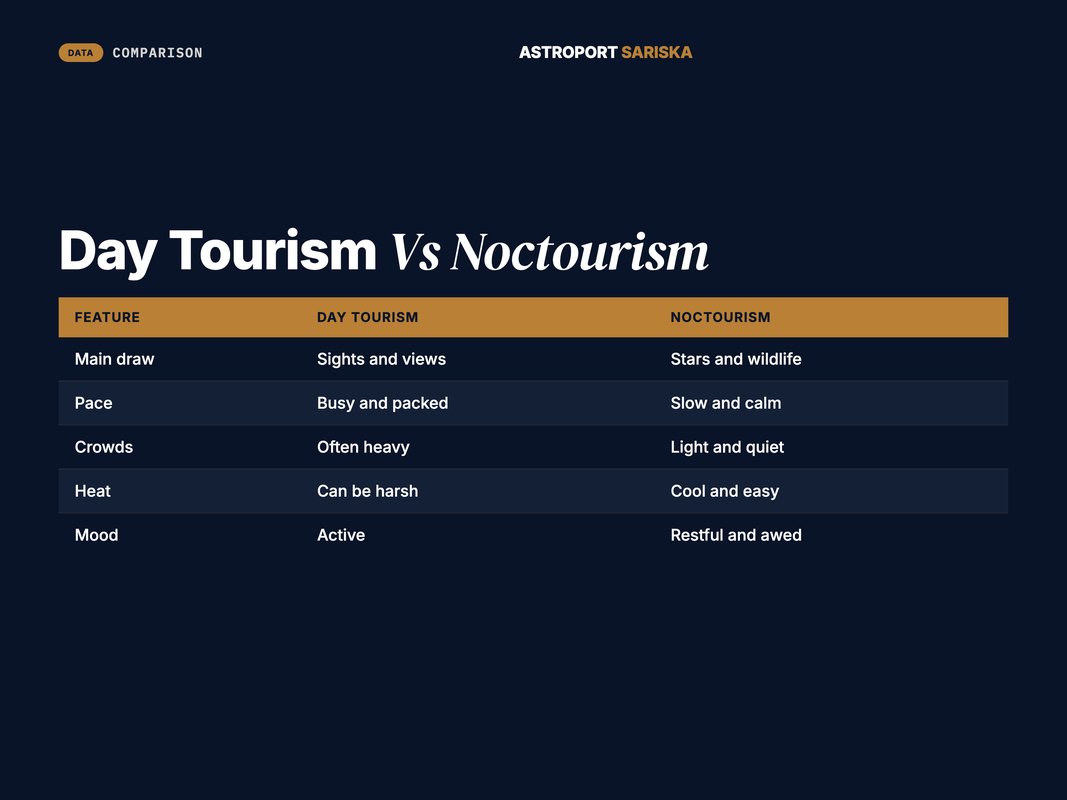
Day trips and night trips feel worlds apart. Indeed, the shift changes everything. So the table below makes it clear.
| Feature | Day Tourism | Noctourism |
|---|---|---|
| Main draw | Sights and views | Stars and wildlife |
| Pace | Busy and packed | Slow and calm |
| Crowds | Often heavy | Light and quiet |
| Heat | Can be harsh | Cool and easy |
| Mood | Active | Restful and awed |
Day travel is great, of course. But it can be rushed. So you race from sight to sight. The heat and crowds wear you down.
Night travel flips the script. Instead, it slows you right down. You look up, not around. So the pace soothes rather than drains.
So that contrast is the appeal. Indeed, noctourism offers calm and awe. It feels rare in a busy world. The night gives back what the day takes.
Q: Why pick a night trip over a day trip?
A: Night trips are calmer and cooler. The crowds thin out. You trade busy sights for quiet skies. For many, that swap is the whole point.
India’s Dark-Sky Push For Noctourism
India is waking up to the night. Indeed, the country now protects dark skies on purpose. So this is big news for noctourism here.
First, take Hanle in Ladakh. It is India’s first dark sky reserve. It sits high on the Changthang plateau. In fact, the reserve spans about a 22 km radius (Source: Indian Institute of Astrophysics, 2022 — Hanle Dark Sky Reserve). Local villagers guide guests through telescopes.
Next comes Pench. It became India’s first Dark Sky Park in 2024. Also, it is Asia’s fifth (Source: The Week, 2024 — Pench Dark Sky Park). The reserve swapped over 100 lights for downward ones (Source: The Week, 2024 — Pench Dark Sky Park).
Why It Matters For Travellers
Why does this matter? Because these spots cut light pollution. They keep the night truly dark. So that lets the stars shine through again. It also draws astro-tourists.
Meanwhile, the Aravalli belt near Delhi NCR holds dark pockets too. These hills sit far from city glare. So that makes them ripe for night-sky travel. You do not always need to fly north.
So India’s map is changing. Indeed, dark skies are now an asset, and noctourism India is growing fast on the back of them. This dark-sky tourism push near Delhi puts the night sky back on the tourism menu.
Q: Does India have official dark-sky sites?
A: Yes. Hanle in Ladakh is India’s first dark sky reserve. Pench became its first Dark Sky Park in 2024. Both protect the night sky and welcome stargazers.
How To Plan A Noctourism Trip
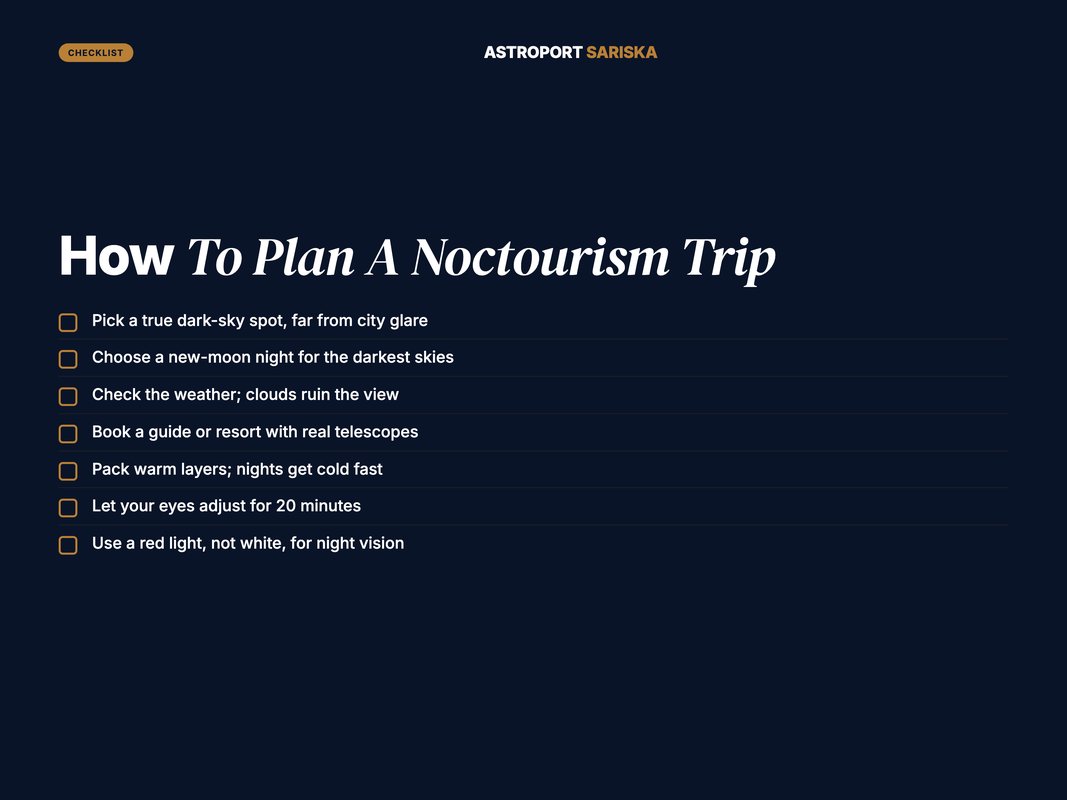
A great night-sky trip takes a little planning. Still, the basics are simple. So use this checklist before you go.
- Pick a true dark-sky spot, far from city glare.
- Choose a new-moon night for the darkest skies.
- Check the weather, since clouds ruin the view.
- Book a guide or resort with real telescopes.
- Pack warm layers, as nights get cold fast.
- Let your eyes adjust for 20 minutes in the dark.
- Use a red light, not white, to keep night vision.
Get The Basics Right
First, the biggest win is darkness. The less light, the more stars. So distance from the city counts most.
Timing matters too. A clear, moonless night is gold. Also, winter skies in north India are crisp and steady. They reward the patient watcher.
Finally, do not rush it. Give your eyes time to adjust. Then slow down and just look up. So that is when the sky opens up.
Q: How do I plan my first night-sky trip?
A: Pick a dark spot far from cities. Choose a clear, moonless night. Book a guide with telescopes. Pack warm layers and arrive ready to slow down.
Why Astroport Sariska
Astroport Sariska is built for this trend. Indeed, it is India’s first astronomy resort. The whole stay is shaped around the night sky. So that makes it a natural base for noctourism India.
It sits in the Aravalli hills, near the Sariska Tiger Reserve. The drive from Delhi NCR is just four to five hours. So a dark sky is a short trip away. No long flight needed.
The dark here is the real draw. For example, guests can see over 4,000 stars on a clear night. From inside Delhi, you might see 20. So that gap is the magic of true darkness.
More Than Stargazing
The resort makes the sky easy to enjoy. Resident astronomers lead the sessions. Then you stargaze through pro telescopes. You can join a constellation tour or an astrophotography class.
But it is more than stars. By day, there are tiger-reserve safaris. Also, yoga happens under the sky. Then comes organic farm-to-table food and a calm spa. The whole place runs on solar power.
So noctourism here is full and easy. Indeed, the night sky, the wild, and a premium stay sit in one spot. Ready to look up? Plan your trip and let the dark do the rest.
Conclusion
Noctourism is here to stay. Indeed, the world is rediscovering the night. So we travel for stars, wildlife, and calm. The dark has become the draw.
The reasons are clear. First, city lights hide the sky. Also, people want real moments. Then cool nights beat hot days. Meanwhile, India is building dark-sky spots to match.
You do not need to fly far to start. In fact, the Aravalli hills near Delhi NCR hold true dark skies, a fine base for noctourism India. So that is where Astroport Sariska sits. It blends stargazing, safari, and a premium stay in one place, and our 2026 astronomy travel guide maps the best nights to go.
So look up this season. Chase a sky full of stars. Finally, plan a trip to Astroport Sariska and meet the night in all its glory. The dark is waiting.
FAQ
Noctourism Basics
Q: What does noctourism mean?
A: Noctourism means travel built around the night. Think stargazing, night safaris, the aurora, glowing water, and night markets. The day is no longer the main event. The point is to enjoy a place after dark.
Q: Why is noctourism growing so fast?
A: A few forces are pushing it. City lights now hide the stars for most of us. People want real experiences, not just photos. Hot afternoons make cool nights more appealing. And dark skies feel calm and rare.
Q: Is noctourism only about stargazing?
A: No. Stars are a big part, but not all of it. Noctourism also covers night safaris, the northern lights, and night dives in glowing water. It even covers monuments by moonlight. The night holds many kinds of wonder.
Planning And Places In India
Q: Where can I do noctourism in India?
A: India now has real dark-sky spots. Hanle in Ladakh is the country’s first dark sky reserve. Pench is India’s first Dark Sky Park. The Aravalli belt near Delhi NCR also holds dark pockets, where Astroport Sariska sits.
Q: What is a dark sky reserve or park?
A: It is a protected place with very little artificial light. Lights are aimed down and kept low. This keeps the night sky dark and clear. The aim is to protect nature and let people see the stars again.
Q: Do I need a telescope to try noctourism?
A: Not at all. Your eyes alone can see thousands of stars from a dark spot. A guide helps you find planets and shapes. A telescope adds detail, like craters and rings. At Astroport, the gear and guides are on hand.
Q: When is the best time for a night-sky trip in India?
A: Pick a clear, dry night with little moon. Winter skies in north India are crisp and steady. New-moon nights are darkest of all. Always check the weather first.