
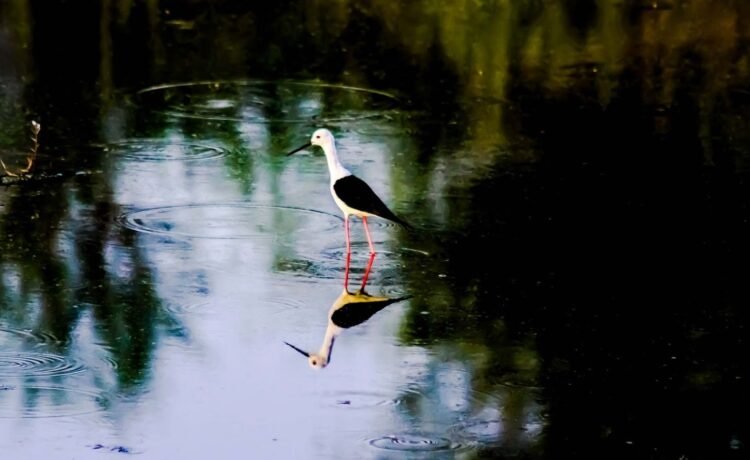
The water is still grey. Then a line of ducks lifts off it, wings whistling, and the mist parts.
That sound is the start of winter here. So this guide is about the winter birds Sariska holds from November to February.
Some are year-round locals. But many more fly in from colder lands for the cool months.
First, you will see why winter changes the bird list. Then you will meet the lake birds and the forest-edge visitors.
Next, you will learn where to look and when to go. Finally, you will get a simple kit list and a few field manners.
For the year-round picture, read our guide to birdwatching and nature trails around Sariska. This one is about the cold season only.
Quick Facts: Winter Birding at Sariska
- Winter season: November to February (Source: Forktail, 1993 — Birds of Sariska Tiger Reserve).
- Older survey: 211 species, with 120 resident and 73 migrant visitors (Source: Forktail, 1993 — Birds of Sariska Tiger Reserve).
- Newer survey: 224 species seen in 2007–2011, and 40% were winter visitors (Source: Journal of Threatened Taxa, 2013 — Updated checklist of birds of Sariska).
- Siliserh Lake: named a Ramsar wetland in December 2025, the fifth in Rajasthan (Source: Free Press Journal, 2025 — Siliserh Lake declared a Ramsar site).
- Distance: about 220 km from Delhi by road (Source: Astroport Sariska, 2026 — Contact Us).
Why Winter Changes the Bird List
Sariska has four clear seasons. Winter runs from November to February (Source: Forktail, 1993 — Birds of Sariska Tiger Reserve).
That is when the guest list grows. Because the north freezes, many birds come south to feed.
They travel along the Central Asian Flyway. In fact, that corridor stretches across 30 countries (Source: CMS, 2026 — Central Asian Flyway).
So Sariska sits on a busy route. Search for migratory birds Rajasthan winter guides, and you see the same story.
The numbers show it too. An older survey logged 211 species here, with 73 of them migrant visitors (Source: Forktail, 1993 — Birds of Sariska Tiger Reserve).
A newer survey found 224 species. Of those, 40% were winter visitors (Source: Journal of Threatened Taxa, 2013 — Updated checklist of birds of Sariska).
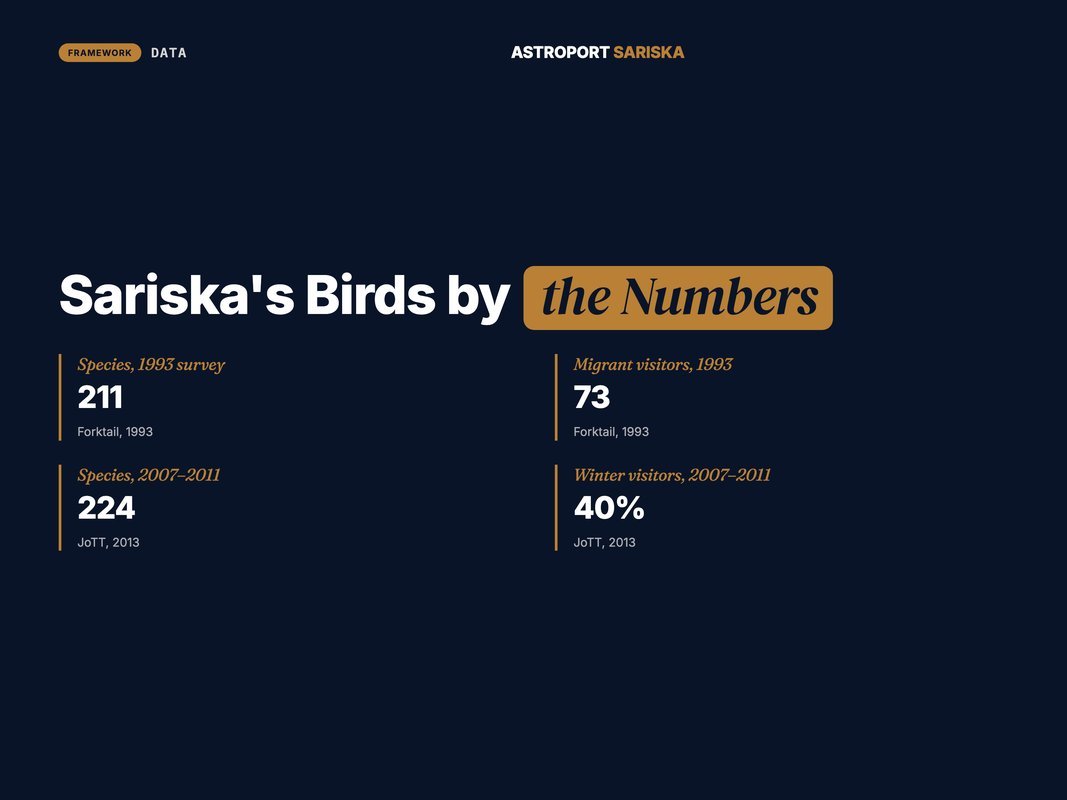
That is a big share. Put simply, almost two in five birds on that list are seasonal guests.
Why Dry Country Pulls in Water Birds
Rajasthan is mostly dry. So any lake with water in winter becomes a magnet.
Think of each lake as a rest stop on a long road. Tired birds drop in, feed for weeks and rest.
Sariska also has a mix of homes close together. There are lakes, dry forest, scrub and fields within a short drive.
As a result, one morning can cover very different birds. You may see a duck at sunrise and an eagle by mid-morning.
Q: Do the resident birds leave in winter?
The Winter Birds Sariska Hosts on Its Lakes
Water is where winter shows first. So start your search at a lake.
Siliserh Lake sits on the north-east edge of the reserve. Meanwhile, two lakes lie inside it, Manasarovar and Somasagar (Source: Forktail, 1993 — Birds of Sariska Tiger Reserve).
Ducks on Open Water
Ducks are the easy start. For example, Northern Shoveler was common on Siliserh, and Northern Pintail fairly common (Source: Forktail, 1993 — Birds of Sariska Tiger Reserve).
Look for the shoveler’s huge, flat bill. Then look for the pintail’s long, thin tail.
Red-crested Pochard and Common Teal also turn up. Both are listed as winter visitors to the reserve (Source: Forktail, 1993 — Birds of Sariska Tiger Reserve).
The newer survey adds more. Ruddy Shelduck, Gadwall and Mallard were all logged as common on the water (Source: Journal of Threatened Taxa, 2013 — Updated checklist of birds of Sariska).
Big Birds Worth the Wait
Then come the giants. These are rarer, but they are the ones people remember.
| Bird | Where it was seen | Old record |
|---|---|---|
| Great White Pelican | Siliserh | 45 birds, January 1990 |
| Painted Stork | Siliserh | 30 birds, January 1990 |
| Eurasian Spoonbill | Manasarovar | Up to 50, January 1990 |
| Pied Avocet | Manasarovar | 20 birds, January 1990 |
| Dalmatian Pelican | Manasarovar | Two birds, January 1990 |
(Source: Forktail, 1993 — Birds of Sariska Tiger Reserve)
Treat those as history, not a promise. Still, they show what a good January can bring.
How to Read a Lake in Five Steps
Lakes can feel overwhelming at first. So break the view into parts.
First, scan the far shore slowly with bare eyes. Look for any shape that moves.
Then lift your binoculars to the open water. Ducks usually sit there in loose rafts.
Next, sweep the near edge and the reeds. Herons and egrets stand very still there.
After that, look for the odd one out in each flock. A different shape or colour is often a new bird.
Finally, watch the sky above the water. Raptors often hunt where the birds gather.
Waders on the Mud
Also scan the muddy edges. Common Greenshank, Green Sandpiper and Wood Sandpiper were all common winter visitors (Source: Forktail, 1993 — Birds of Sariska Tiger Reserve).
They are plain brown birds. But watch them probe the mud, and they become oddly charming.
Q: Do I need a scope for the lake birds?
Winter Visitors of the Forest Edge and Open Sky
Away from water, winter is quieter. Yet the scrub fills with small, busy guests.
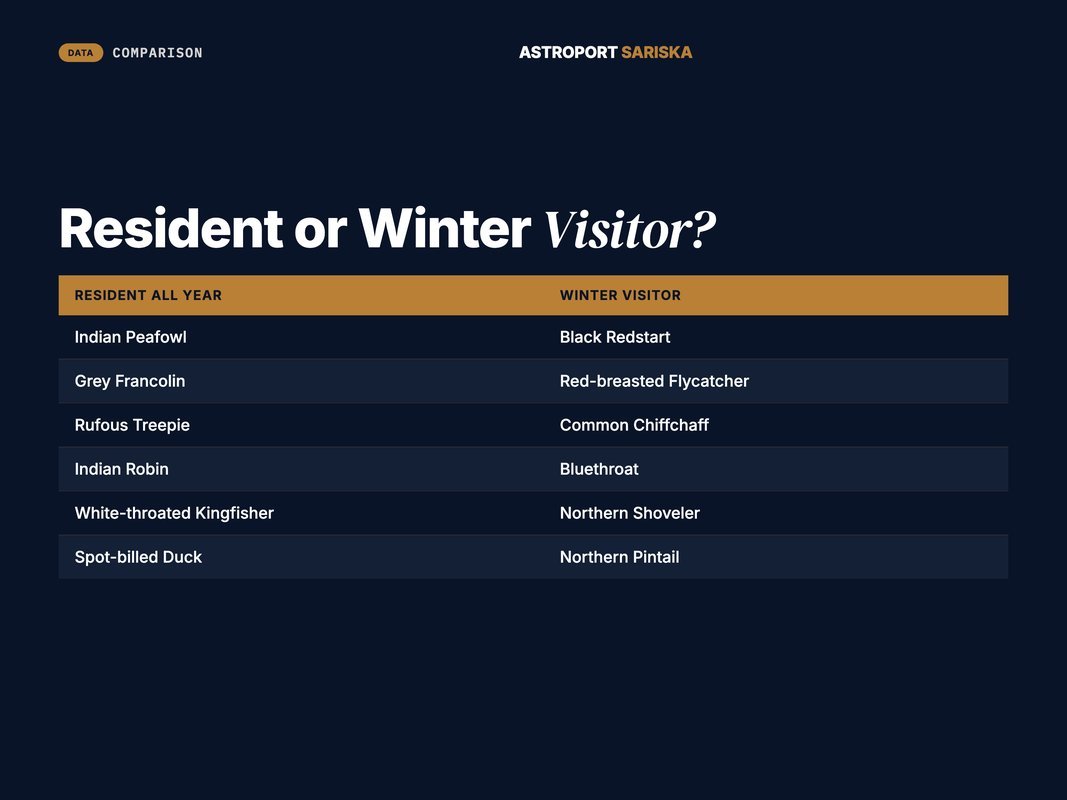
Black Redstart is the classic one. It was a common winter visitor, flicking a rusty tail from rocks and walls (Source: Forktail, 1993 — Birds of Sariska Tiger Reserve).
Red-breasted Flycatcher and Common Chiffchaff were common in winter too (Source: Forktail, 1993 — Birds of Sariska Tiger Reserve).
So listen for a soft “hweet” in the bushes. Then wait for the tiny bird to show.
Bluethroat is the prize for patient eyes. Because it skulks low near water, you often see it only briefly.
In the newer survey, Bluethroat was logged as common (Source: Journal of Threatened Taxa, 2013 — Updated checklist of birds of Sariska).
Residents That Shine in Winter Light
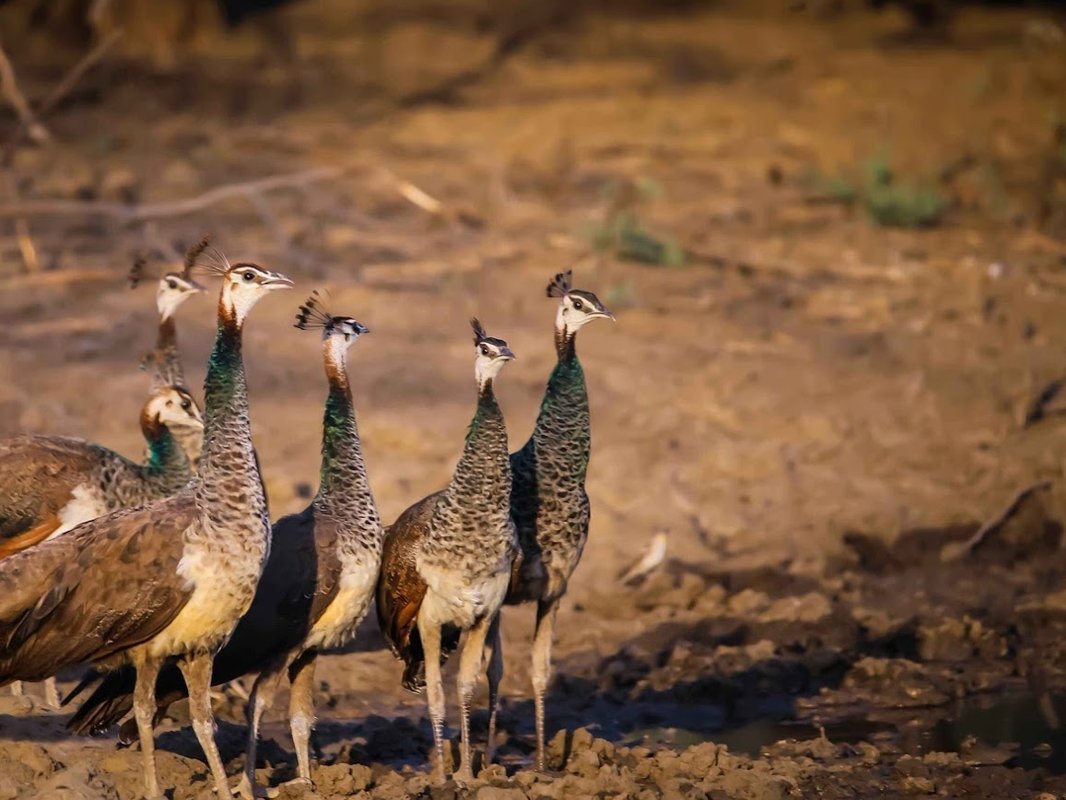
Do not ignore the locals. Indian Peafowl and Grey Francolin were both abundant residents (Source: Forktail, 1993 — Birds of Sariska Tiger Reserve).
Winter light suits them well. Because the scrub thins out, birds are easier to see on the ground.
The Rufous Treepie and White-throated Kingfisher stay all year too (Source: Forktail, 1993 — Birds of Sariska Tiger Reserve). So they keep you busy between the rarer finds.
Raptors Overhead
Now look up. Greater Spotted Eagle and Imperial Eagle have both been recorded here in winter, though rarely (Source: Forktail, 1993 — Birds of Sariska Tiger Reserve).
The Western Marsh Harrier has also been seen near Siliserh in November (Source: Forktail, 1993 — Birds of Sariska Tiger Reserve).
Flocks in the Fields
Finally, check the farmland edges. Spanish Sparrows once gathered in flocks of over 1,000 from December to February (Source: Forktail, 1993 — Birds of Sariska Tiger Reserve).
That is a noisy, brown cloud. Even so, it is one of winter’s best shows.
Q: Which winter bird should a beginner learn first?
Where to Look Around Sariska
Good birding is mostly about edges. So look where two habitats meet.
The newer survey named four sites as the richest for birds. These were Kalighati Valley, Karankawas, Pandupole and Siliserh Lake (Source: Journal of Threatened Taxa, 2013 — Updated checklist of birds of Sariska).
Lakes and Their Shores
Siliserh Lake and its forest are very important for waterbirds, including waders and migrants (Source: Journal of Threatened Taxa, 2013 — Updated checklist of birds of Sariska).
It is about 60 km from the resort (Source: Astroport Sariska, 2026 — Nearby Attractions). So plan it as a morning outing, not a quick stop.
Forest Edges and Valleys
Next, try the valleys and forest margins. Pandupole lies about 25 km from the resort (Source: Astroport Sariska, 2026 — Nearby Attractions).
There, flycatchers and warblers work the trees as the sun warms them. Also check streams, since wagtails like moving water.
Open Scrub and Farmland
Then walk the open ground. Larks, wheatears and sparrow flocks prefer the bare, sunny patches.
Close to Your Room
You do not always need to drive. The resort lists nature trails, farm tours and organic farming among its activities (Source: Astroport Sariska, 2026 — Home).
Farm edges and quiet trails are good places to practise. So try a short walk before breakfast on your first day.
You can pair a forest morning with a safari too. Our guide to combining a tiger safari with stargazing shows how.
Q: Can I birdwatch without entering the reserve?
When to Go: Months and Hours
Timing does half the work. So pick the month first, then the hour.
November brings the first arrivals. Then December and January form the heart of the season, and many old counts come from January (Source: Forktail, 1993 — Birds of Sariska Tiger Reserve).
February still holds most visitors. However, some start to drift north as it warms.
For wider planning, see our guide to the best time to visit Sariska.
The Golden Hours After Dawn
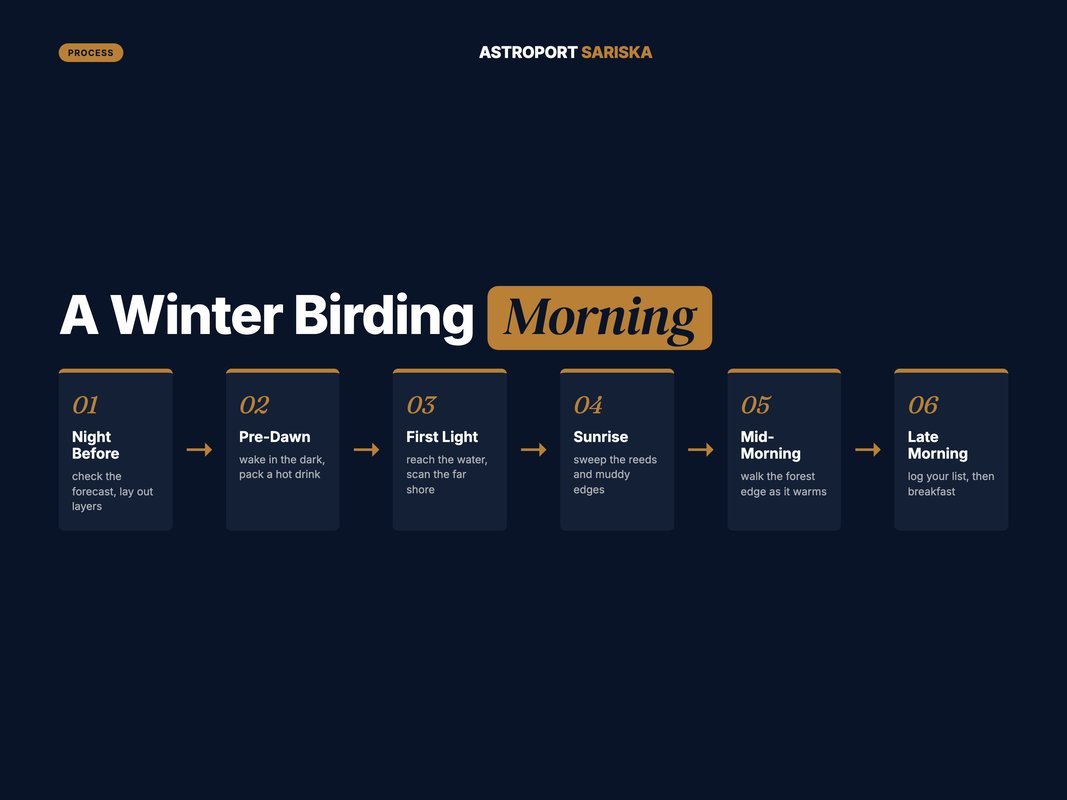
Dawn is everything in winter. Birds feed hard after a long, cold night.
So be at the water at first light. Then move to the forest edge as the sun climbs.
By late morning, things go quiet. That is your cue for breakfast and a nap.
A Simple Winter Weekend Plan
Here is one way to shape two days. It keeps the early starts gentle.
On day one, drive out and arrive before dark. Then rest, eat well and sleep early.
On day two, be at the water at first light. Afterwards, take a slow breakfast and a midday rest.
Later, try a safari or a forest-edge walk. Then end the day under the stars.
On day three, take one last dawn walk near your room. Finally, drive home after lunch.
Respect the Cold
Winter nights here are sharp. In fact, the temperature can drop to about 0°C (Source: Forktail, 1993 — Birds of Sariska Tiger Reserve).
So dress for standing still, not for walking. Cold hands make shaky binoculars.
Q: Is the late afternoon worth it in winter?
Beginner Kit and Field Manners
You do not need much to start. But a few things make a cold morning far better.
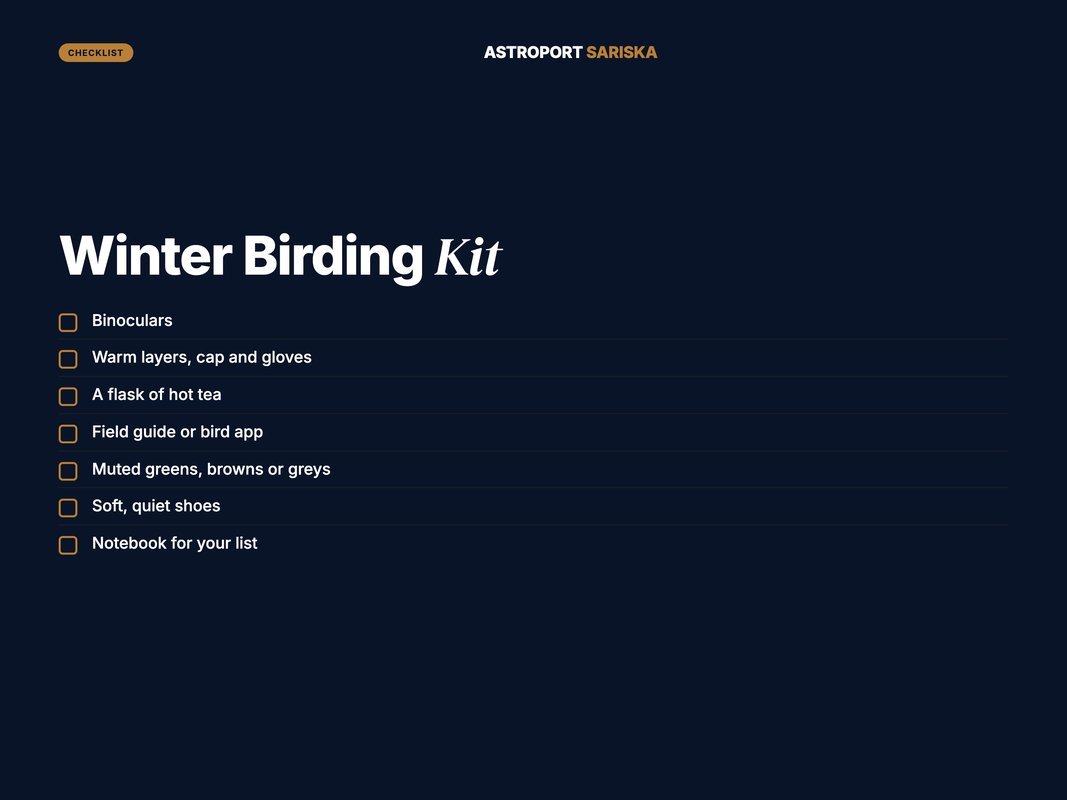
Binoculars come first. Then add warm layers, a cap and a flask of something hot.
A field guide or bird app helps you name what you see. You can also log your sightings on eBird, which pools records from birders worldwide (Source: eBird, 2026 — About eBird).
Wear muted greens, browns or greys. Also choose soft shoes, because quiet feet get closer views.
For a fuller list, see our astronomy trip packing list. Most of it suits birding too.
Keeping Your First Winter List
A list turns a walk into a story. So write down each new bird, even the common ones.
Note the place, the time and what the bird was doing. Those small details help you name it later.
Also add a rough count for each flock. Over many winters, your notes become your own record.
Field Manners That Matter
Winter visitors have flown far. So they need calm feeding time.
The birding code of ethics asks you to avoid stressing birds (Source: American Birding Association, 2019 — Code of Birding Ethics).
It also asks for care near roosts and feeding sites. Plus, it urges you to limit playing recorded calls (Source: American Birding Association, 2019 — Code of Birding Ethics).
So stay back from resting flocks. If birds keep lifting off, you are too close.
Q: Is it fine to play bird calls to draw birds out?
Why Astroport Sariska
A good birding base keeps the early start easy. So it helps to sleep close to the forest.
Astroport Sariska is India’s first astronomy resort. It sits next to Sariska Tiger Reserve, near Gate No. 2 at Tehla (Source: Astroport Sariska, 2026 — Contact Us).
That makes it a handy pick for birdwatching near Delhi in winter. The drive from Delhi is about 220 km (Source: Astroport Sariska, 2026 — Contact Us).
The activity list fits a birding trip well. It includes bird watching, bird photography, nature trails and jungle safaris (Source: Astroport Sariska, 2026 — Home).
It is also an easy reach from Jaipur, about 110 km away (Source: Astroport Sariska, 2026 — Contact Us). For routes and road tips, see our Delhi to Sariska travel guide.
Meals lean on the organic farm, so a cold dawn ends with fresh, warm food. Meanwhile, the resort runs on solar power.
Then the night has its own show. Resident astronomers run stargazing sessions with professional telescopes.
Winter skies are often dry and steady here. So the same cold that wakes the birds also sharpens the stars.
So your day can run from ducks at dawn to planets after dinner. Plan a winter birding weekend and pack warm.
Conclusion
So winter at Sariska is a changing cast. Residents stay, and migrants fill the lakes and the scrub.
The winter birds Sariska draws are best found from November to February. Go to the water at dawn, then follow the forest edge.
Look for shovelers and pintails on the lakes. Then find redstarts, flycatchers and chiffchaffs in the bushes.
Bring warm layers and keep your distance from resting flocks. Above all, give each bird time.
You will not see everything in one trip. But that is the charm, because each winter brings a slightly different cast.
So keep your list, and come back next season. The lakes will be waiting.
Ready for a cold, bright morning by the water? Book your winter stay and set an early alarm.
FAQ
Species and Timing
Q: Which winter birds are easiest to see around Sariska?
A: Start with the ducks and the small forest-edge birds. Northern Shoveler and Northern Pintail were logged on Siliserh Lake. Meanwhile, Black Redstart and Common Chiffchaff were common in the reserve. Both groups show well at dawn.
Q: When is the best time for winter birds at Sariska?
A: Plan for November to February, the local winter. Many of the big waterbird counts in the older survey came from January. Within the day, the first hours after sunrise are the richest.
Q: Is Siliserh Lake good for migratory birds in winter?
A: Yes. Surveys call the lake and its forest very important for waterbirds, including waders and migrants. It was also named a Ramsar wetland in December 2025. Pelicans, storks and ducks have all been recorded there in January.
Planning and Gear
Q: Is Sariska good for birdwatching near Delhi in winter?
A: It is a strong choice. The area sits about 220 km from Delhi and mixes lakes, dry forest and open scrub. So one weekend can cover water birds, forest birds and raptors.
Q: What should a beginner carry for a winter birding morning?
A: Carry binoculars, warm layers, a hot drink and a simple bird app or field guide. Wear muted colours and soft shoes. Winter dawns here can be very cold, so dress for standing still.
Q: Can I combine winter birding with stargazing?
A: Yes, and the two fit neatly. Birds are busiest at dawn, while the sky work happens after dark. So you can bird in the morning, rest at midday and stargaze at night.