
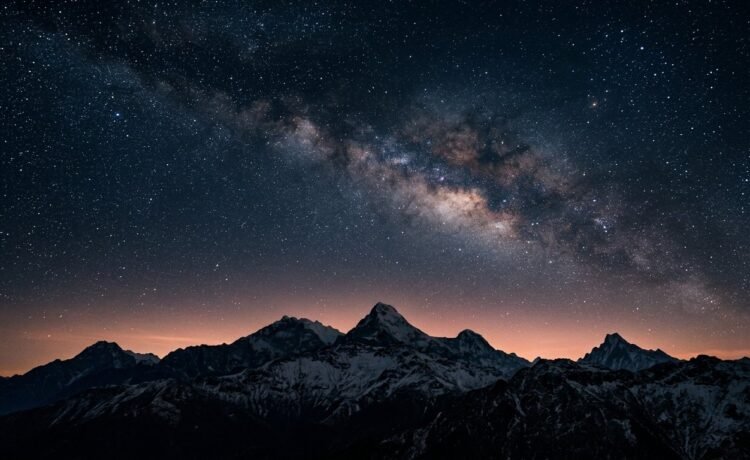
Short answer first. The Northern Lights from India are almost never visible. So India sits too far south for the aurora.
Still, the honest version is more fun. In fact, the northern lights from India are not truly possible on a normal night. But the sky has surprises. Because rare, violent solar storms strike, a faint red glow has reached far-north India. So in 2024, cameras in Ladakh caught it.
So this is not a simple no. Instead, it is a “no, but.” Below we explain why aurora needs the far north. Then we cover what really happened at Hanle in 2024. Also, we define a SAR arc. Finally, we show what you can see brilliantly from a dark Indian sky tonight.
Why The Aurora Lives In The Far North
The aurora is picky about geography. So it hugs the poles. Still, there is a clean reason for this.
First, the Sun throws charged particles at Earth. Then our planet’s magnetic field steers them toward the poles. As a result, the light show forms in rings near the Arctic and Antarctic.
So these rings sit at high “geomagnetic” latitude. Norway, Iceland, and Canada fall under them. But India does not. Instead, we sit far to the south of the action.
So that is the core problem. Distance. Because of it, the glow simply does not reach this far down on a calm day.
Yet there is one escape hatch. So a strong solar storm can push the rings outward. Then the bigger the storm, the lower the aurora drops. Scientists rank these storms on a G1 to G5 scale. So G5 is the rare, extreme top end. (Source: NOAA SWPC, 2024 — geomagnetic storms)
Still, only the biggest storms have any hope of reaching India. Yet even then, it is faint.
Q: So is India just too far south for aurora?
A: Yes, on a normal night. Our magnetic latitude is too low. The aurora rings stay near the poles. Only an extreme storm can stretch them far enough south to touch the top of India.
What Actually Happened Over Ladakh In 2024
Then came May 2024. So the Sun fired off a huge blast. In fact, it was the strongest solar storm in two decades.
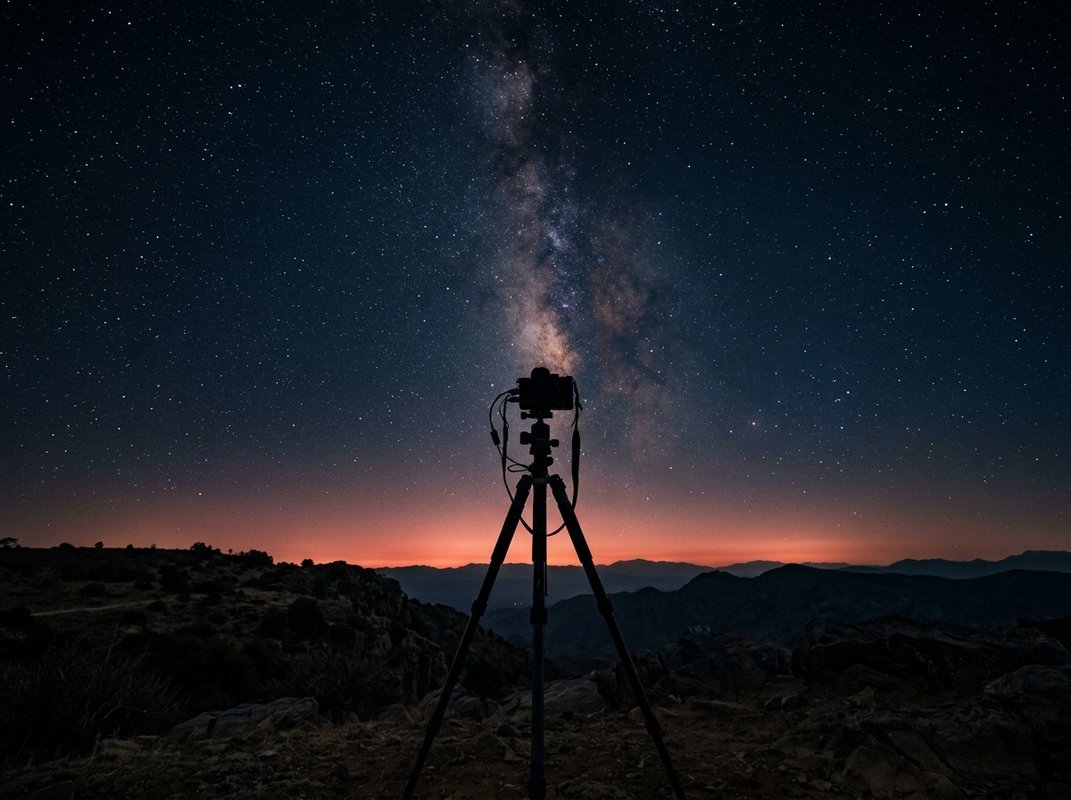
So that storm lit skies worldwide. People in Spain and Florida saw colour. Meanwhile, far up in Ladakh, something rare appeared.
So at the Hanle Dark Sky Reserve, a steady red glow rose on the horizon. Then cameras there caught it on the northwest sky. Also, Indian news and the observatory team shared the images widely. (Source: Indian Institute of Astrophysics, 2024 — Hanle media coverage)
So this was big news. Still, India almost never sees such a thing. The glow held for a couple of hours. Then it faded near dawn. (Source: Nature, 2024 — rare red aurora from a Himalayan observatory)
But here is the honest catch. So it was not the classic dancing aurora. Instead, it was a quieter cousin. So to understand it, we need one more term.
Q: Did India really see the northern lights in 2024?
A: Sort of. Ladakh saw a faint red glow during a record storm. Cameras at Hanle caught it. It was real and rare. But it was a stable red arc, not the bright curtains you picture from the Arctic.
True Aurora Versus The SAR Arc
So the Ladakh glow was a SAR arc. That stands for “stable auroral red” arc. Still, the name is a bit misleading.

So a true aurora is a dancer. Particles rain into the air and make it glow. Then the glow shifts fast. Also, it shows green, pink, and violet. Meanwhile, curtains and waves form.
A SAR arc is calmer. So it is a faint, wide band of deep red. Yet it barely moves. Because heat causes it, no particles fall in. So that heat leaks down from Earth’s ring current high above us.
So they look different and form differently. Indeed, one dances in many colours. Meanwhile, the other sits still and red. Still, both light up only during strong storms.
So the Ladakh sight was the steady red kind. As a result, it counts as a SAR arc, a close relative of the aurora. Still, it is a real thrill. So it is just honest to call it by its real name.
Q: Is a SAR arc the same as the aurora?
A: Not quite. Particles hit the air to make a true aurora, so it dances in many colours. By contrast, the SAR arc is a steady red glow from heat in the upper air. They are cousins, not twins.
Where In India Has Any Real Chance
So India can catch a faint glow. But only in the right spot. So three things matter most.
First, you need to be far north. Also, you need to be high up. Then you need a truly dark sky. So one place fits all three.
That place is Hanle in Ladakh. So it sits at about 4,500 metres. Also, it holds one of the darkest skies in India. Notably, the site is a notified dark sky reserve. (Source: Indian Institute of Astrophysics, 2024 — Hanle Dark Sky Reserve)
So why does height help? Thin, clean air means less haze. Then why does dark help? Because city light drowns a faint red glow, it vanishes. So why does north help? It is simply closer to the aurora rings.
So Ladakh is India’s best shot. Spiti may also help a little. But even there, you need an extreme storm. So the window is small and rare.
Q: Where in India should I go to try for an aurora?
A: Ladakh, and Hanle above all. It is high, dark, and far north. Even so, you need a rare, extreme storm and clear skies. Treat any sighting as a lucky bonus, never a sure thing.
Why You Can’t See the Northern Lights From India’s Plains
So now the blunt truth. Delhi cannot see the aurora. Jaipur cannot either. Neither can most of the plains.
So the reason is simple geography. Because these places sit too far south, they miss out. Then the aurora rings rarely stretch this low. So even in the May 2024 mega-storm, the plains saw nothing real.
Also, city light makes it worse. A SAR arc is faint to begin with. So streetlights and smog make it disappear. Thus you would not catch it even if it formed.
So please be careful with viral posts. Meanwhile, during big storms, fake or stretched photos spread fast. So a real naked-eye aurora from Rajasthan is not a thing to plan around.
Still, here is the good news. So you do not need the aurora to be amazed. Instead, a dark Indian sky has its own magic. Also, that magic shows up far more often. So let us talk about what you can actually see.
Q: Can I see the northern lights from Delhi or Rajasthan?
A: No, not in any real way. They sit too far south, and city light hides faint glows. Skip the aurora chase here. The dark-sky wonders below are far more rewarding and far more reliable.
What You CAN See Brilliantly Under A Dark Indian Sky
So forget the aurora for a moment. Instead, the real reward is right above you. Indeed, a dark Indian sky is stunning.

So from a city, you see maybe 20 stars. But from a dark site like Astroport Sariska, you can see 4,000 or more. So that is the whole point of going to a dark sky near Delhi.
The Milky Way, meteors, and planets
So the Milky Way is the headline act. Near cities, in Bortle class 5 to 6 skies, it washes out. Yet in the darkest class 1 skies, it glows so bright it can cast a faint shadow. (Source: Bortle scale, 2024 — dark-sky classes)
Also, meteor showers are pure joy. So the Geminids peak each December. Then, under dark skies, the rate can reach about 120 meteors per hour. (Source: EarthSky, 2024 — Geminid meteor shower)
Still, there is more. Saturn’s rings. Jupiter’s moons. Star clusters. The Moon’s craters. So all of it is real, and all of it is reliable. For the full list, see what you can see in the night sky at Sariska.
Q: What can I realistically see in a dark Indian sky?
A: Loads. The Milky Way, meteor showers, planets, star clusters, and the Moon’s craters. Thousands of stars, not a handful. Unlike the aurora, these wonders are reliable and visible most clear nights from a dark site.
Quick Facts: The Honest Aurora Picture
- The May 2024 solar storm was the strongest in two decades and brought a red glow to Ladakh’s Hanle. (Source: Nature, 2024 — rare red aurora from a Himalayan observatory)
- The Sun hit solar maximum, its 11-year peak, in late 2024, making storms and rare aurorae more common. (Source: NASA, 2024 — Sun reaches maximum phase)
- Storms are ranked G1 to G5; only the rare G5 extreme class can push aurora toward India. (Source: NOAA SWPC, 2024 — geomagnetic storms)
- Hanle sits near 4,500 metres and holds one of the darkest skies in India. (Source: Indian Institute of Astrophysics, 2024 — Hanle Dark Sky Reserve)
- Under dark skies, the Geminid meteor shower can reach about 120 meteors per hour. (Source: EarthSky, 2024 — Geminid meteor shower)
Why Astroport Sariska
So you may not catch the Northern Lights from India. But you can still have a magical night sky. Indeed, Astroport Sariska is built for exactly that.
So it is India’s first astronomy resort. Also, it sits in the Aravalli hills, near Sariska Tiger Reserve. Then, at about 4 to 5 hours from Delhi NCR, it lies roughly 200 km away. So a dark sky is closer than you think.
So here, resident astronomers guide you. Then you look through professional telescopes. Also, you learn the constellations. Like the teams at Hanle, you can try astrophotography. Meanwhile, by day, you can join a tiger-reserve safari.
So on a clear night, guests see 4,000-plus stars. Then the Milky Way pours overhead. Also, the whole place runs on solar power. So it blends stargazing, wildlife, an organic farm, and a premium stay in one spot.
So skip the aurora gamble. Instead, choose a sky you can count on. Then plan your trip and let the real stars do the rest.
Conclusion
So, can you see the Northern Lights from India? Honestly, almost never. Because India sits too far south, a normal aurora stays away.
Still, there is one rare exception. During extreme storms, a faint red SAR arc has reached high, dark Ladakh. So that happened at Hanle in 2024. Indeed, it was real, rare, and beautiful.
But you should not plan a trip around it. So the chance is tiny, and the plains see nothing. Instead, the smarter move is to chase the sky you can actually have.
So a dark Indian sky offers the Milky Way, meteors, and planets, almost every clear night. Also, a place like Astroport Sariska makes it easy. So come for the stars you are sure to see. Then plan your stay and look up.
FAQ
Aurora visibility from India
Q: Can you see the northern lights from India?
A: Almost never. India sits too far south for a normal aurora. Only during a rare, extreme solar storm has a faint red glow reached far north India, like Ladakh. From cities like Delhi or Jaipur, the answer is effectively no.
Q: Did India really see an aurora in 2024?
A: Yes, in a way. In May 2024 a giant solar storm hit Earth. Cameras at Hanle in Ladakh caught a steady red glow on the horizon. It was a stable auroral red arc, a close cousin of the true aurora, not the dancing curtains seen in Norway.
Q: What is the difference between a true aurora and a SAR arc?
A: A true aurora comes from particles raining down into the air. It dances and shows many colours. A SAR arc is a faint, steady red band caused by heat leaking from Earth’s ring current. It does not move much. It is usually a single deep red.
Best places and storm science
Q: Where in India has the best chance of seeing an aurora?
A: High, dark, far-north places have the only real chance. Hanle in Ladakh sits highest on that list. Even there, you need an extreme storm and clear skies. For most of India, including Rajasthan, the chance is close to zero.
Q: Can I see the aurora from Delhi or Rajasthan?
A: No, not in any practical sense. These regions sit too far south. City light also drowns out faint glows. You may read viral posts during big storms, but a real sighting from the plains is not something to plan a trip around.
Dark-sky alternatives and the solar cycle
Q: If not the aurora, what can I see in a dark Indian sky?
A: Plenty, and it is breathtaking. The Milky Way arches overhead. Meteor showers streak by. Planets, star clusters, and the Moon’s craters all shine. A place like Astroport Sariska shows you thousands of stars instead of the few you see in a city.
Q: Why is solar maximum making aurora news so common?
A: The Sun runs on an 11-year cycle. It hit its peak, called solar maximum, around late 2024. At the peak, storms grow more common, and auroras reach lower latitudes. That is why India saw rare aurora headlines in 2024 and beyond.