
What Is the Bortle Scale? And Why Astroport Sariska Ranks Among India’s Darkest Skies
When was the last time you truly saw the stars?
Not a handful of bright dots above a city haze. We mean thousands of stars, a glowing river of the Milky Way stretching from horizon to horizon, and planets so vivid they seem close enough to touch.
For most people in Delhi and across urban India, that experience feels like a myth. Cities like Delhi rank at Bortle Class 8 to 9 on the night sky scale, the worst categories for light pollution. In those conditions, you can spot barely 20 stars on a clear night. (Source: Astroport Sariska, 2026)
But just 3 to 4 hours from Delhi, the story is completely different. Astroport Sariska sits under a Bortle Class 4 sky, placing it among India’s darkest and most star-rich destinations accessible by road.
To understand why that matters, you first need to know what the Bortle scale is, and why it is the single most important tool for choosing a stargazing location.
About Astroport Sariska: Astroport Sariska invites you to rediscover wonder beneath vast star-lit skies and amidst forested hills. As India’s first astronomy-themed resort, we blend wild-forest charm, wildlife proximity and eco-friendly luxury so you can gaze at the cosmos by night and unwind in serene cottages by day. Perfect for families, couples or anyone craving a nature and stargazing escape.
Quick Facts: The Bortle Scale and India’s Dark Sky Landscape
- Created by: Amateur astronomer John E. Bortle, published in Sky and Telescope magazine in 2001
- Scale range: Class 1 (darkest skies on Earth) to Class 9 (inner city, worst light pollution)
- Delhi’s rating: Bortle Class 8-9 (you can see roughly 20 stars)
- Astroport Sariska’s rating: Bortle Class 4 (you can see 4,000+ stars). Learn more about dark sky tourism and why it’s rising in India
- Best stargazing season at Sariska: October to March
- Distance from Delhi NCR: 3 to 4 hours by road
- Astroport Sariska’s rating: Bortle Class 4 (you can see 4,000+ stars)
- Light pollution in India: Over 80% of India’s population lives under light-polluted skies (Source: AstronEra, 2024)
- Global dark sky tourism market: USD 1 billion in 2025, projected to reach USD 3 billion by 2032 at 15% annual growth (Source: Future Data Stats, 2025)
What Is the Bortle Scale? A Simple Explanation
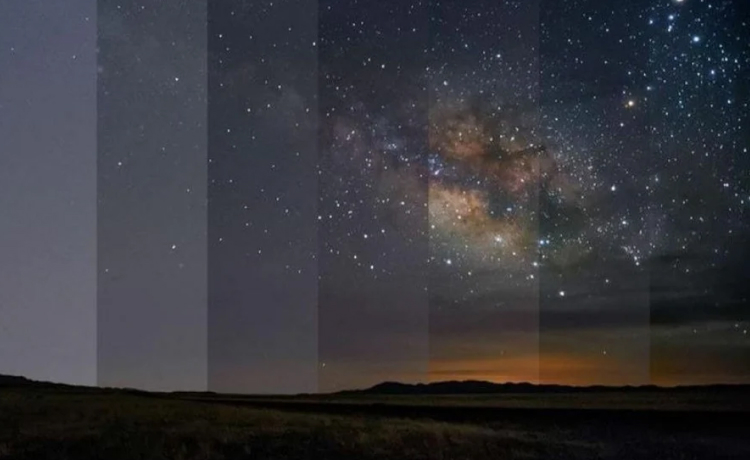
The Bortle scale is a nine-level system that measures how dark the night sky is at any given location. A lower number means darker skies and more stars. A higher number means more light pollution and fewer stars visible.
Amateur astronomer John E. Bortle created the scale and published it in the February 2001 edition of Sky and Telescope magazine to help skywatchers evaluate and compare the darkness of night-sky observing sites.
Before the Bortle scale existed, stargazers had no shared language for describing sky quality. They used terms like “dark” or “good” which meant different things to different people. The Bortle scale gave everyone a common framework.
Q: Who invented the Bortle scale and why?
A: American amateur astronomer John E. Bortle created it based on nearly 50 years of observing experience. He published it in 2001 because increasing light pollution was making it harder for astronomers to find genuinely dark skies.
Today, the Bortle scale is probably the most famous classification scale used by amateur astronomers and astrophotographers to estimate the brightness of the night sky. Like a visual assessment tool, it considers the visibility of a whole range of astronomical phenomena, not just the faintest star you can spot.
The scale works by asking: what can you actually see in the night sky from this location? The more you can see, the darker the sky, and the lower the Bortle class number.
Breaking Down All Nine Classes of the Bortle Scale
Understanding each class helps you instantly grasp what the sky looks like and what you can experience at each level.
Class 1: Truly Pristine Dark Skies
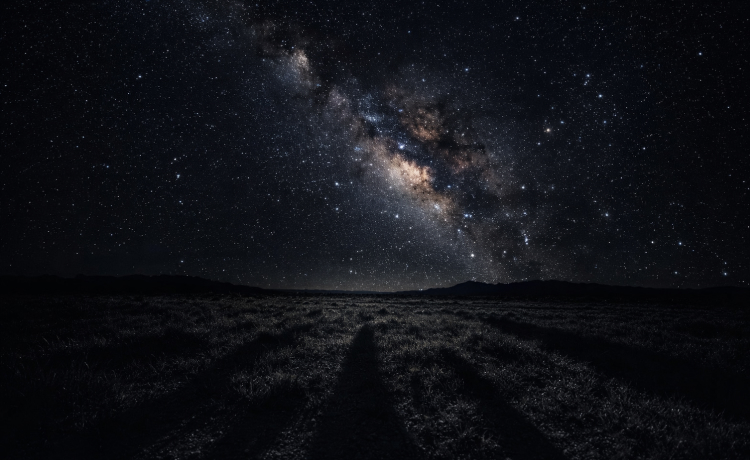
This is the rarest sky on Earth. Class 1 corresponds to excellent dark skies where the stars and the Milky Way cast shadows. There is no visible light pollution anywhere, and there are so many stars overhead that you cannot easily make out the major constellations.
The Andromeda Galaxy is visible to the naked eye. The zodiacal light (a faint glow along the planet’s orbital path) is so bright it casts a weak shadow. Only remote deserts and high mountain plateaus achieve this level.
Class 2: Typical Truly Dark Site
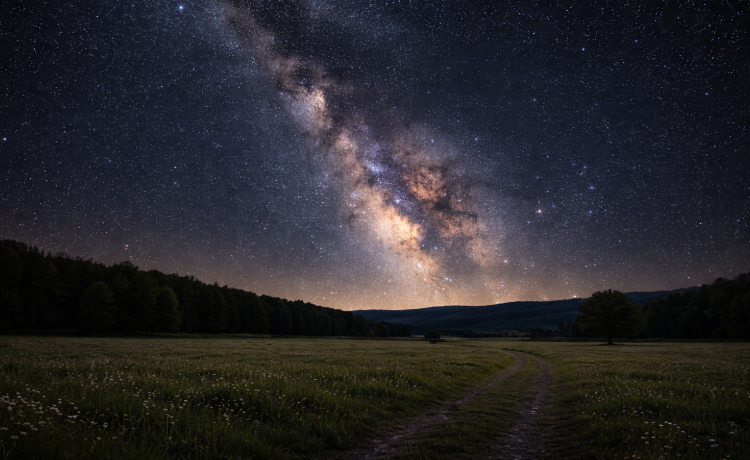
The summer Milky Way is highly structured to the unaided eye, and its brightest parts look like veined marble when viewed with ordinary binoculars. The zodiacal light is still bright enough to cast weak shadows just before dawn and after dusk.
India’s Hanle Dark Sky Reserve in Ladakh, at 4,500 meters elevation, achieves close to Class 2 conditions.
Class 3: Rural Sky
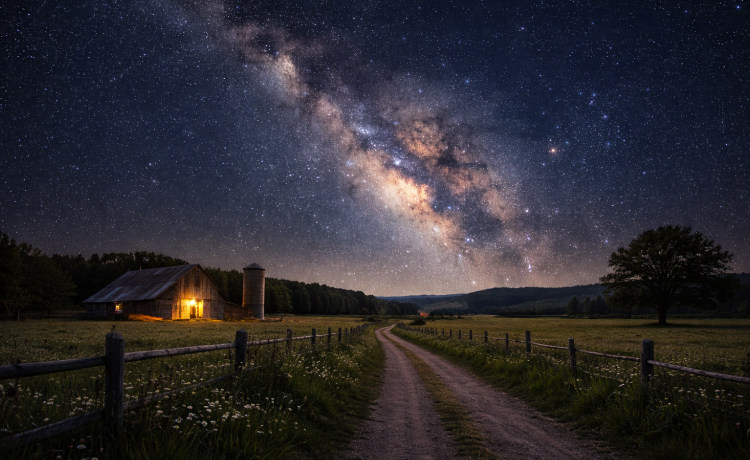
The Milky Way is clearly visible and detailed. Light pollution is noticeable only near the horizon. You can see stars down to magnitude 6.6 with the naked eye.
Class 4: Rural-Suburban Transition (Astroport Sariska’s Class)
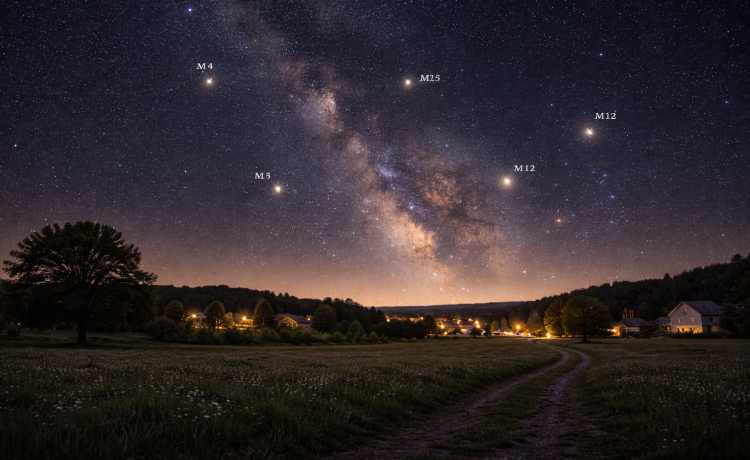
At Class 4, the Milky Way still appears complex, and globular clusters such as M4, M5, M15, and M22 are all distinct naked-eye objects. M33 (the Triangulum Galaxy) is easy to see with averted vision. The zodiacal light is striking in spring and autumn, extending 60 degrees above the horizon after dusk and before dawn.
This is where Astroport Sariska sits. It is genuinely excellent sky. For Milky Way photography, Bortle 4 or darker is the minimum needed. For a clear, detailed Milky Way core shot, you need skies where the Milky Way is at least faintly visible.
This is the sweet spot for stargazing resorts: dark enough for breathtaking views, yet close enough to major cities for a weekend trip.
Light pollution domes are visible over distant population centers, but directly overhead the sky is impressively dark and detailed. This is the sweet spot for stargazing resorts: dark enough for breathtaking views, yet close enough to major cities for a weekend trip.
Q: What can you see at Bortle Class 4 skies?
A: At Class 4, you can see the Milky Way in good detail, thousands of individual stars, globular clusters, nearby galaxies, and the zodiacal light during spring and autumn. With a professional telescope, you can view Saturn’s rings, Jupiter’s moons, nebulae, and distant star clusters.
Classes 5 and 6: Suburban Skies
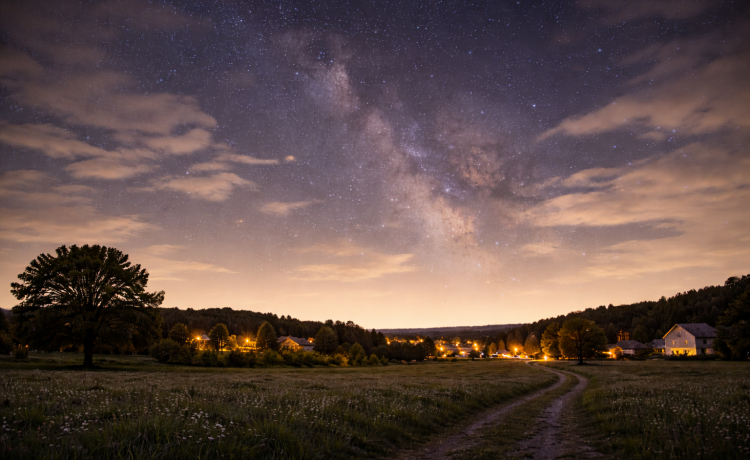
At Class 5, the Milky Way is very weak or invisible near the horizon and looks rather washed out overhead. Light sources are evident in most or all directions, and clouds are quite noticeably brighter than the sky itself.
Class 6 is worse. No zodiacal light is possible. The Milky Way only shows faintly directly overhead. Many faint deep-sky objects become impossible to observe.
Classes 7, 8, and 9: Urban Skies
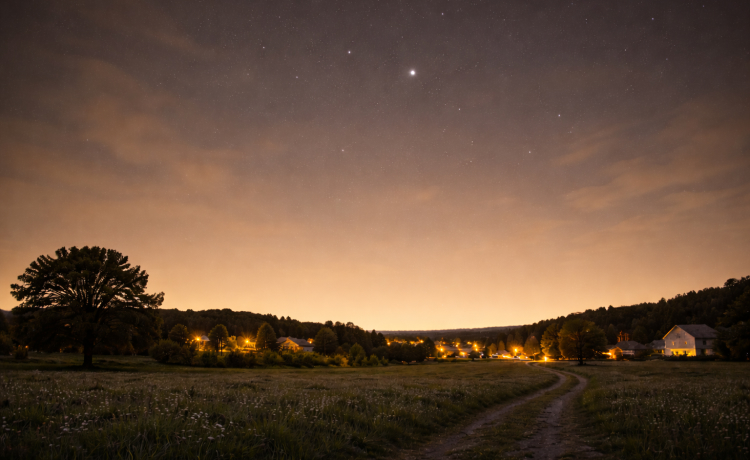
These are the skies most Indians live under. At Class 8, only the brightest planets and stars are visible. At Class 9, the sky glows white or orange, and even finding constellations becomes difficult. In cities like Delhi, you can barely spot 20 stars on a clear night.
Why Light Pollution Is Erasing India’s Night Sky
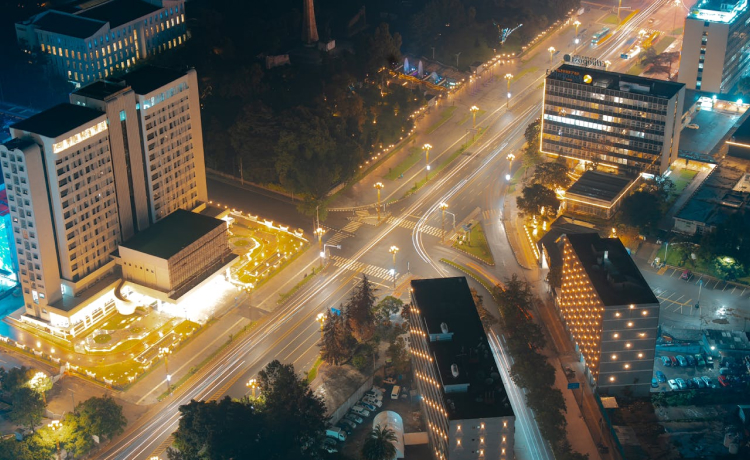
India is urbanizing faster than almost any country on Earth, and the night sky is paying the price.
Cities like Delhi and Bengaluru are experiencing nighttime brightness levels 40 to 50 times higher than what is considered natural.
The Milky Way, once etched across the night sky, is now invisible to nearly 80 percent of the global population.
This is not just a problem for stargazers. Light pollution disrupts wildlife, harms nocturnal ecosystems, and affects human health. Stargazing near Delhi has become the new wellness travel trend precisely because of the mental health benefits of escaping light pollution.
India is a significant part of this growth. Prominent Indian spots like Ladakh, Rajasthan, and Uttarakhand are rapidly emerging as prime destinations for celestial exploration. Learn about the 7 astronomy travel trends shaping India by 2026.
A 2023 study in Science by Kyba et al. found a global increase in sky brightness of 7 to 10 percent annually from 2011 to 2022. In other words, the night sky is getting brighter every year. True darkness is becoming rare.
Q: Why is Bortle Class 4 rare near Delhi?
A: Delhi and the surrounding NCR region fall under Bortle Class 8 to 9 due to massive urban light output. Finding Class 4 skies within a reasonable drive requires traveling to rural areas with very low population density and minimal industrial lighting, exactly the type of environment found near Sariska.
This is precisely why dark sky experiences are growing in value and demand.
The global dark sky stargazing tours market was valued at USD 1 billion in 2025 and is projected to expand at a CAGR of 15%, reaching a value of USD 3 billion by 2032.
India is a significant part of this growth. Prominent Indian spots like Ladakh, Rajasthan, and Uttarakhand are rapidly emerging as prime destinations for celestial exploration.
Ready to experience a Bortle Class 4 sky for yourself? Join us at Astroport Sariska for a guided astronomy session under some of India’s darkest accessible skies. Our expert astronomer guides and professional 16-inch Dobsonian telescope await. Just 3 to 4 hours from Delhi NCR.
How Astroport Sariska Achieves and Protects Its Bortle Class 4 Rating
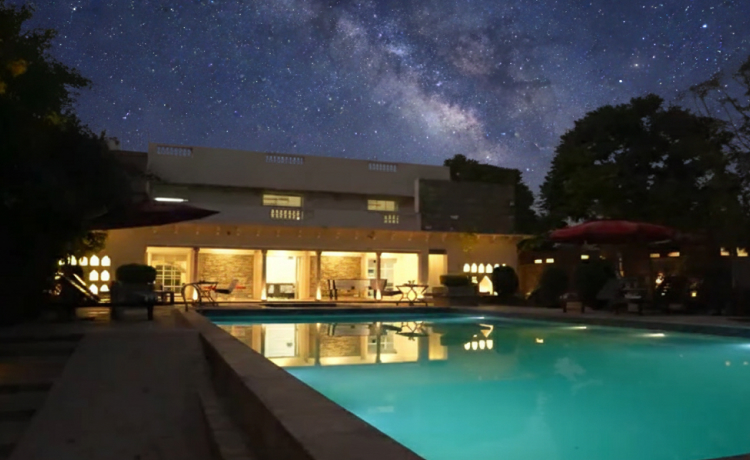
Not every rural location has Class 4 skies. Achieving and keeping this rating requires conscious effort and the right geography.
Astroport Sariska, located in the Tehla/Roopbas area of Alwar district, Rajasthan, benefits from several natural and operational advantages.
Geographic Isolation
The resort sits adjacent to Sariska Tiger Reserve, one of Rajasthan’s most protected wildlife zones. The reserve acts as a natural buffer against urban sprawl and uncontrolled lighting. Forests and protected land on multiple sides keep artificial light intrusion minimal.
Responsible Lighting Practices
Astroport Sariska operates as a no-plastic zone running entirely on 100% solar power. Discover what makes us India’s first astronomy resort and how we protect our dark skies. Outdoor lighting on the property is shielded, warm-toned, and directed downward, meaning it does not scatter into the sky. Every bulb, every lamp, and every pathway light is chosen to minimize skyglow.
This is called “dark-sky-friendly” lighting, and it is the same standard that certified International Dark Sky Parks follow. Without this kind of property-level discipline, a rural location can still degrade its own sky.
Low-Density Surroundings
The Aravalli hills create natural terrain that blocks distant city glow. The nearest large urban center is hours away. Local villages in the area have low industrial activity and minimal commercial lighting.
Q: How does the 16-inch Dobsonian telescope at Astroport Sariska enhance the Bortle Class 4 experience?
A: A 16-inch Dobsonian telescope collects enormous amounts of light. Under Bortle Class 4 skies, it can reveal Saturn’s ring system in stunning detail, Jupiter’s cloud bands and its four largest moons, distant nebulae, globular star clusters with thousands of individual stars, and galaxies millions of light-years away. The combination of dark skies and professional equipment is what separates a true astronomy experience from simple naked-eye stargazing.
What You Will Actually See at Bortle Class 4: A Guest’s Guide
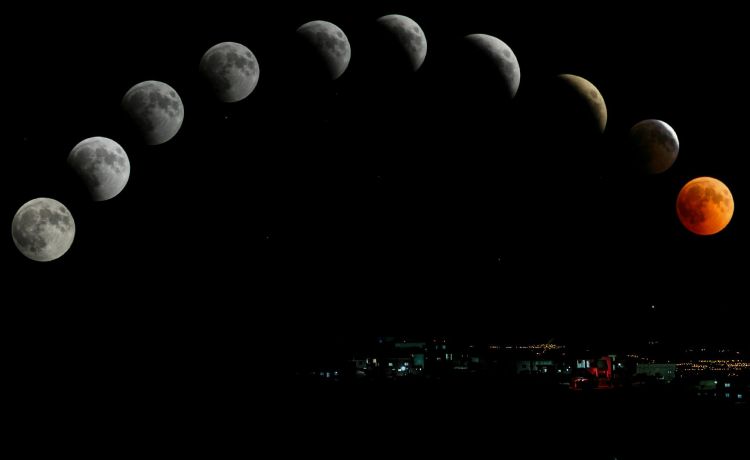
Knowing the science is one thing. Knowing what to expect on your actual stargazing night is another.
Here is what guests experience at Astroport Sariska under typical clear-sky conditions.
With the Naked Eye
The Milky Way appears as a thick, textured band of light. You can distinguish dark dust lanes within it. Thousands of individual stars fill the sky. Bright globular clusters like M22 in Sagittarius appear as fuzzy, glowing spheres. The zodiacal light, a pyramid of faint light stretching along the horizon after sunset, is visible during spring and autumn evenings.
With Binoculars
The Milky Way becomes spectacular. Star clusters like the Pleiades reveal many more members than visible to the eye alone. The Andromeda Galaxy shows a visible halo and core. Nebulae like Orion begin to show faint structure.
Through the 16-Inch Dobsonian Telescope
This is where the experience becomes extraordinary. Our expert astronomer guides target objects suited to the season and your interests.
- Saturn reveals its iconic ring system and the Cassini Division within the rings
- Jupiter shows cloud bands, the Great Red Spot when visible, and the orbits of its four Galilean moons
- The Orion Nebula (M42) appears as a cloud of gas and dust, glowing with the light of newborn stars
- Globular clusters like M13 in Hercules resolve into thousands of individual stars
- The Andromeda Galaxy at 2.5 million light-years away is directly visible, the farthest object most people ever see with their own eyes
Dark adaptation takes 20 to 30 minutes. Our guides ask guests to avoid white lights during this period. After full dark adaptation, the human eye becomes dramatically more sensitive, and the sky reveals even more. Here’s what to pack for your astronomy trip, including red-light torches.
The Astro-Safari Concept: Sariska by Day and Night
One of the most unique aspects of an Astroport Sariska visit is the “Astro-Safari” experience. No other destination near Delhi offers this combination.
By day, you explore Sariska Tiger Reserve, one of India’s best-known wildlife sanctuaries. Jeep safaris offer chances to encounter tigers, leopards, nilgai, sambar deer, and hundreds of bird species.
By night, you shift your gaze upward. See our complete 3-day Astro-Safari itinerary to understand how we combine wildlife and cosmos.
This pairing is not accidental. It reflects a scientific truth: 70% of all mammal species are nocturnal. Wildlife and dark skies are naturally linked. Preserving darkness preserves habitat for the animals that depend on it.
Our eco-friendly cottages with private pool villa options let you rest between these experiences in complete comfort. Farm-to-table dining with organic local produce grounds the experience in the land itself.
Q: Is Astroport Sariska suitable for children?
A: Absolutely. Our stargazing sessions are guided by expert astronomers who are skilled at making astronomy fun, accessible, and exciting for all ages. Children often respond with the most wonder. The guided format means there is no prior astronomy knowledge required. Many families find the experience genuinely transforms how their children think about science and the universe.
How to Use the Bortle Scale When Planning Your Stargazing Trip
Whether you are visiting Astroport Sariska or exploring other dark-sky options, the Bortle scale should be your first planning tool.
Step 1: Check Your Home Location
Use a free online light pollution map (such as lightpollutionmap.info) to find your current Bortle class. Most Delhi residents will find they are at Class 8 or 9.
Step 2: Identify Your Target
For a genuinely moving stargazing experience, aim for Class 4 or darker. Class 5 can work for bright objects but lacks the depth and detail of darker skies.
Step 3: Check Moon Phase
A full moon raises the effective Bortle class by 1 to 2 levels. Plan your visit around a new moon for the best dark sky viewing. Check our 2026 meteor shower calendar which includes moon phases for every major shower.
Step 4: Choose the Right Season
Step 4: Choose the Right Season
October to March offers the clearest, most transparent skies in Rajasthan. See our detailed seasonal guide to understand what each month offers.
Step 5: Arrive Prepared
Wear comfortable dark clothing. Avoid using your phone’s white light during the session. Give your eyes at least 20 to 30 minutes to fully dark-adapt. Our guides handle all the technical preparation so you can simply enjoy.
Q: Can beginners fully enjoy a Bortle Class 4 experience?
A: Yes, and often more than experienced stargazers. Beginners see everything with completely fresh eyes. Our expert astronomer guides explain every object in plain language. No prior knowledge or equipment is needed. You simply arrive, look up, and let the sky do the rest.
Frequently Asked Questions About the Bortle Scale India Dark Sky Experience
Q: What does Bortle Class 4 mean in plain language?
A: Bortle Class 4 means the night sky is genuinely dark. You can see the Milky Way clearly, thousands of stars, and a wide range of deep-sky objects. It is far better than any urban or suburban sky, and it puts Astroport Sariska among India’s finest accessible stargazing destinations.
Q: How far is Astroport Sariska from Delhi?
A: Astroport Sariska is located in the Tehla/Roopbas area of Alwar district, Rajasthan, approximately 3 to 4 hours by road from Delhi NCR. It is an easy and comfortable drive, making it ideal for a weekend trip.
Q: What is the best time of year to visit for stargazing?
A: October to March offers the best sky conditions at Sariska. Winter nights are crisp and transparent. The Geminid meteor shower in December and Orion’s prominence in the winter sky make this season especially rewarding for stargazers.
Q: How is the Bortle scale measured?
A: The Bortle scale is primarily assessed through visual observation. Astronomers look at which celestial objects are visible with the naked eye, how detailed the Milky Way appears, whether the zodiacal light is visible, and how much light glow appears over the horizon. A Sky Quality Meter (SQM) device can give a more precise numerical measurement that maps to a Bortle class.
Q: Is Astroport Sariska comfortable and suitable for families and couples?
A: Yes. The resort offers eco-friendly cottages and private pool villa options. The experience is designed to be premium and comfortable, not a rough camping expedition. Couples enjoy the romantic atmosphere of stargazing under truly dark skies. Families find the guided sessions educational and memorable.
Q: Does light pollution inside the resort affect the Bortle Class 4 rating?
A: No. Astroport Sariska operates with 100% solar power and uses only dark-sky-friendly lighting throughout the property. Outdoor lights are shielded, warm-toned, and directed downward. This is what keeps the sky above the resort genuinely dark, consistent with the Bortle Class 4 measurement.
Q: What telescope does Astroport Sariska use for guided sessions?
A: We use a professional 16-inch Dobsonian telescope, one of the most powerful instruments commonly used for visual astronomy. Under Bortle Class 4 skies, it reveals stunning detail in planets, nebulae, star clusters, and galaxies that would be invisible from city locations.
Conclusion: The Bortle Scale Tells You the Truth About the Sky
The Bortle scale is not just a number. It is the difference between looking at 20 stars through an orange haze and standing under 4,000 stars with the Milky Way blazing overhead.
For urban Indians, the contrast between a Class 8 city sky and a Class 4 dark sky is genuinely life-changing. Many guests at Astroport Sariska describe their first true dark-sky night as one of the most memorable experiences of their lives.
The science is simple. The experience is profound.
Astroport Sariska’s Bortle Class 4 rating, combined with expert astronomer guides, a professional 16-inch Dobsonian telescope, eco-friendly cottages, and the wild beauty of Sariska Tiger Reserve, makes it the most accessible and complete dark-sky experience available from Delhi NCR.
The stars have been waiting. Book your astronomy experience at Astroport Sariska and see for yourself what a truly dark sky looks like.
Ready to plan your Bortle Class 4 experience?
First-time visitors:
- Discover the 6 signs it’s time to book your first astro retreat
- Read guest reviews of India’s first astronomy resort
- See our complete 3-day weekend itinerary
Planning your trip:
- Check 2026 meteor shower dates and moon phases
- Find the best season to visit Sariska
- Get detailed driving directions from Delhi
Special interest:
- Plan an astronomy camp with your school
- Learn astrophotography under dark skies
- Explore weekend getaways under 6 hours from Delhi
You are just 3 to 4 hours away from a sky that will change the way you see the universe.
Visit astroportsariska.com to book your stay