
People book this trip for the night sky. Then they ask, slightly nervously, what happens between checkout of the stars and the next one.
It is a fair question. Because you cannot stargaze at noon, the day has to hold up on its own.
Here is the good news. The daytime things to do Sariska offers are strong enough to justify the drive by themselves.
This guide runs through them. First, the safari. Then the forts and temples inside the reserve.
Also, the daytime astronomy that nobody expects. Finally, the farm, the spa and how to pace it all.
The Short Answer
Mornings belong to the reserve. So that means a jeep safari, birdwatching or a nature walk.
Middle of the day suits the farm and the workshops. Because the light is harsh and the air is warm, this is indoor and shaded time.
Late afternoon is for slowing down. So the pool, the spa or a book.
Then the sky takes over again after dark.
So the day has a shape. Busy early, slow late.
Most people fight that at first. Then they stop, and the trip improves.
That shape is not arbitrary. It follows the animals, the heat and your own energy.
Get the order wrong and you will be asleep by the time the telescopes come out. So the pacing matters as much as the list.
Q: Is a full day here enough, or should I stay two nights?
A: Two nights gives you a whole free day, which is when this list actually fits. So with one night you are mostly driving. Because the safari runs at dawn, a second morning helps a lot.
Morning: The Sariska Safari
This is the headline daytime activity, and it earns the billing.
Sariska Tiger Reserve spans over 800 square kilometres of mountains, grasslands, dry deciduous forest and cliffs (Source: Rajasthan Tourism, 2026 — Sariska Tiger Reserve).
That scale is why you go by jeep. Because the terrain is broken and the distances are long, walking is not an option inside the core.
Tigers are the draw, obviously. Still, manage your expectations, because sightings are never guaranteed anywhere.
What you will almost certainly see is everything else. Jungle cats, rhesus macaques, sambhar, chital and wild boar are all resident here (Source: Rajasthan Tourism, 2026 — Sariska Tiger Reserve).
Birds are the quiet highlight. The reserve holds more than 220 species, including migrants from Europe and Central Asia (Source: Rajasthan Tourism, 2026 — Sariska Tiger Reserve).
Sand grouse, crested serpent eagles and grey francolin turn up regularly. So bring binoculars even if you came for tigers.
Dress in dull colours. Bright kit stands out in dry scrub.
Also, keep your voice down. Then you hear alarm calls, which is how guides track big cats.
Sit on the shaded side of the jeep. It makes an hour of glare much easier.
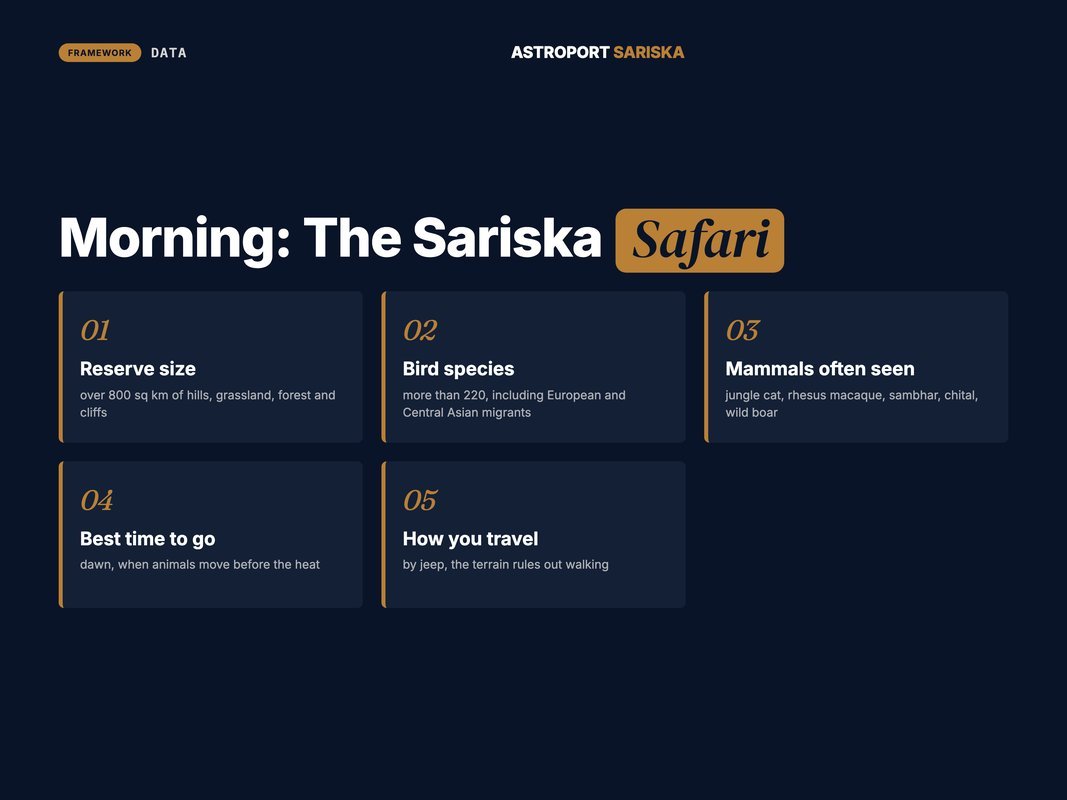
Safaris run early. Because animals move at first light and settle once it warms, dawn is the productive window.
Q: What if we do not see a tiger?
A: Most visits do not, and that is normal. So treat the tiger as a bonus rather than the goal. Because the landscape, the birds and the deer fill the drive anyway, people rarely come back disappointed.
Inside the Reserve: Forts, Temples and a Waterfall
Sariska is not only wildlife. Three sites inside the reserve are worth the detour.
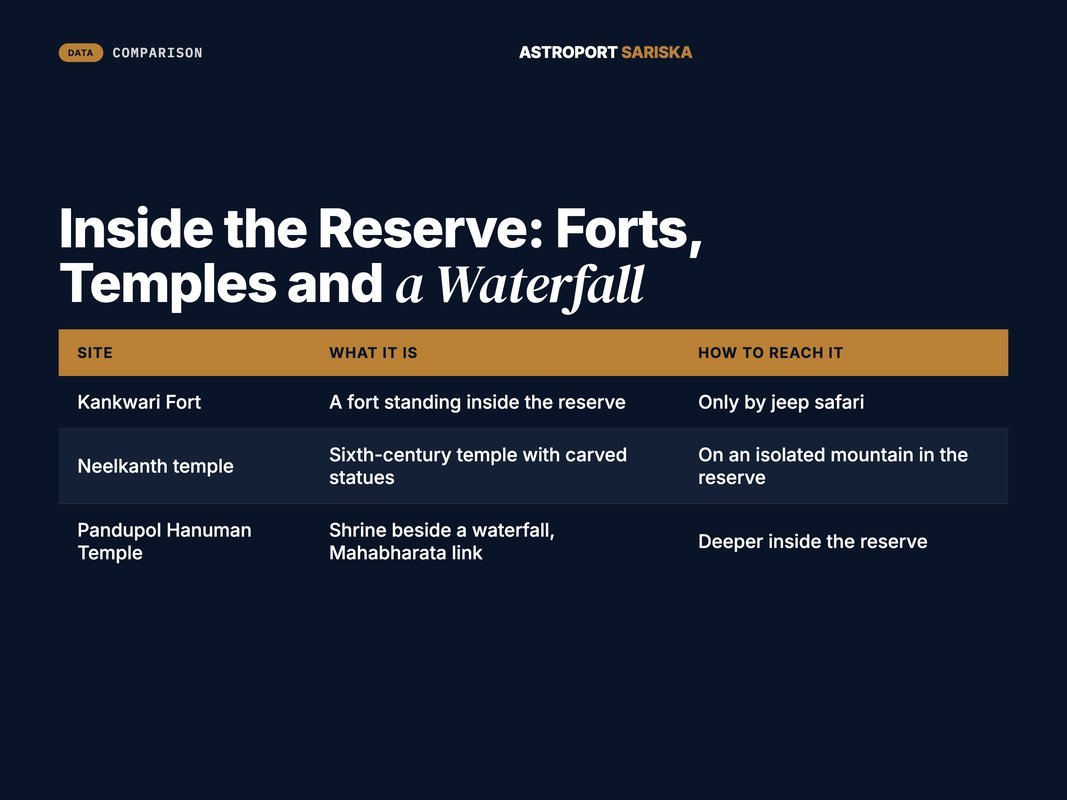
Kankwari Fort. It stands inside the reserve and can only be reached by jeep safari (Source: Rajasthan Tourism, 2026 — Sariska Tiger Reserve).
So it is a fort you arrive at through a forest, which is unusual in itself.
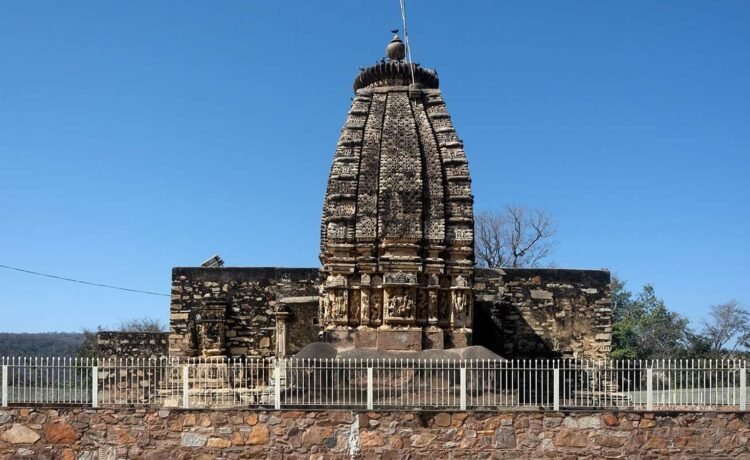
The Neelkanth temple. Built in the sixth century, it sits on an isolated mountain within the reserve (Source: Rajasthan Tourism, 2026 — Sariska Tiger Reserve).
It holds a collection of finely carved statues. Because it is well over a thousand years old, it puts the whole landscape in perspective.
Pandupol Hanuman Temple. This one stands beside a waterfall, deeper inside the reserve (Source: Rajasthan Tourism, 2026 — Sariska Tiger Reserve).
It carries a link to the Mahabharata, and people come to sit by the water as much as to worship.

So a safari can double as a heritage trip. Because these sit inside the same protected area, you cover both in one drive.
That is rare in India. Most parks give you one or the other.
Here you get both in a morning. So the drive earns its early start twice over.
Ask your guide to route past one. Then you break up the long stretches of scrub.
Q: Can I visit the temples without doing a safari?
A: Access varies by site and by season, so check on the day. Because Kankwari Fort in particular is reachable only by jeep safari, plan that one into your drive.
Astronomy Does Not Stop at Sunrise
This is the part that surprises people. The astronomy programme runs in daylight too.
Safe solar observation. So you look at our nearest star through proper filtered equipment.
Never attempt this on your own. Because unfiltered sunlight causes permanent eye damage instantly, this is strictly a supervised activity.
Telescope making. You build a working instrument, then use it the same night. So the payoff is immediate.
Hydro-air rocketry. Design, launch, watch it fail, adjust. Because it is loud and fast, it works especially well with older children.
Satellite making. A build exercise with real constraints, and a good group activity.
Astrophotography sessions. The theory and setup happen in daylight, and the shooting happens after dark.
(Source: Astroport Sariska, 2026 — Astroport Sariska)
So the day is not a gap between two nights. Instead, it is the other half of the same subject.
One scheduling note. Astronomy activities pause each year from 1 June to 15 August during the monsoon (Source: Astroport Sariska, 2026 — Our Facilities).
Q: Is solar observation actually interesting?
A: More than people expect. Because you can see sunspots and the texture of the surface, it stops being an abstract disc. So it usually lands better than a lecture would.
On the Farm
The organic farm is the quiet favourite, especially with families.
Farm tours walk you through what is growing and why. So you see the vegetables and fruit that end up on the dinner table.
There are dairy visits and poultry too. Because the produce is genuinely from here, the farm-to-table line is literal.
Nature trails run from the farm outward. So it doubles as an easy walk for anyone not up for a full trek.
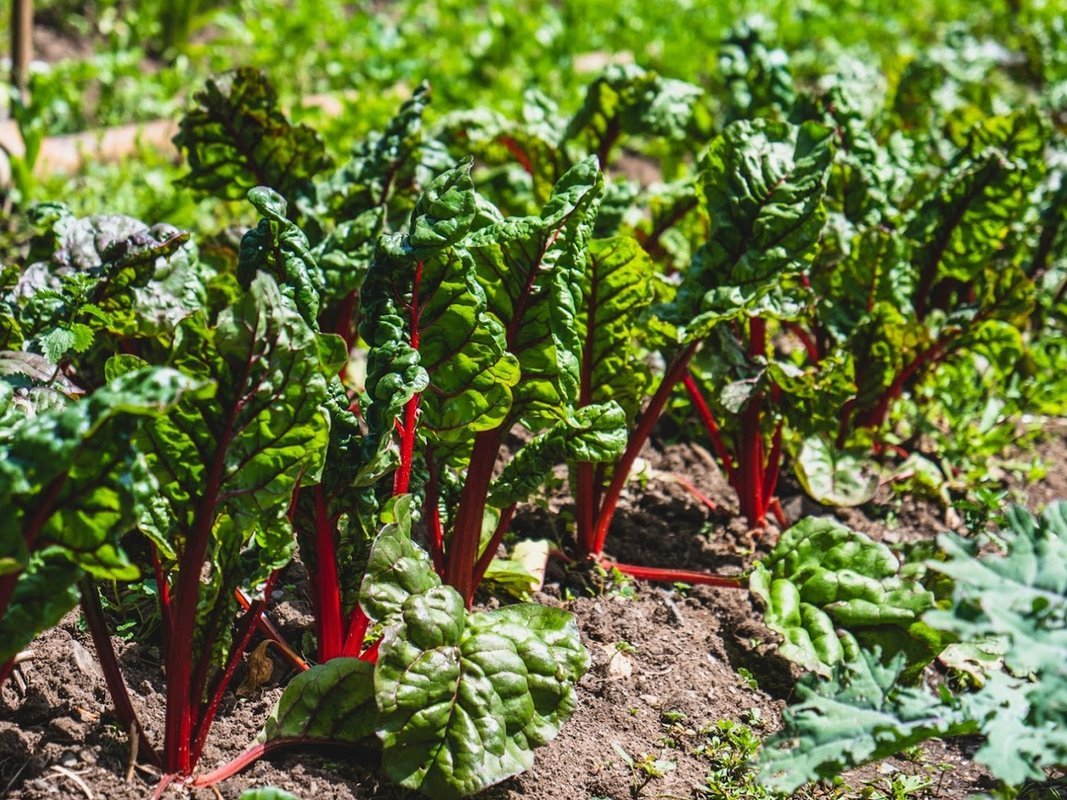
Children take to this fastest. Because there are animals, soil and things to pick, it beats most organised activities.
Adults tend to linger too. So it is worth allowing an hour rather than twenty minutes.
Ask what is in season. Because the menu follows the beds, that answer shapes your dinner.
Then taste something raw off the plant. It is a small thing, but people remember it.
Q: Is the farm tour suitable for very young children?
A: Yes, it is one of the better options for them. Because it is short, flat and hands-on, toddlers manage it easily. So it also fills the gap before an early dinner.
Slow Afternoon: Pool, Spa and Games
Afternoons here are deliberately unstructured. That is a feature, not a shortage of activities.
There is a swimming pool set among trees. Also, the Sparsh Spa handles the post-safari stiffness.
Indoor and outdoor games cover the rest. Billiards, air hockey, table soccer, chess, carrom and cards are all available, along with cricket, badminton and football outside.
Food fills the gaps. So there is the Orbit Restaurant with a seasonal menu, the poolside Dharohar Bar, private dining, jungle dining and hi-tea.
Here is a workable shape for a full day.
| Part of day | What to do | Why then |
|---|---|---|
| Dawn | Jeep safari into the reserve | Animals are active and the light is soft |
| Mid-morning | Birdwatching or a nature walk | Still cool, and birds stay busy |
| Late morning | Farm tour and dairy visit | Shaded, easy and good for children |
| Midday | Lunch, then solar observation | The Sun is high, which suits it |
| Early afternoon | Telescope making or rocketry | Structured indoor and shaded time |
| Late afternoon | Pool, spa or a book | Rest before a late night |
| Evening | Early dinner, then the sky | Eat before full darkness arrives |
Notice the rest block. Because the stargazing session runs late, an afternoon nap is not laziness.
Treat it as part of the plan. So set an alarm and take it seriously.
An hour is enough. Then you are good until well past midnight.
Q: Will we be bored in the afternoon?
A: Very few people are. Still, if you like a full schedule, book the workshops in advance. Because the slow hours are intentional, some guests treat them as the best part of the stay.
Pacing the Day So You Last the Night
The commonest mistake is doing everything. Then falling asleep at nine.
So plan the day backwards from the sky session.
- Safari at dawn, not mid-morning, so the day starts and ends early
- One structured activity in the middle, not three
- Lunch kept light, because heavy food plus heat equals a lost afternoon
- A genuine rest block between four and six
- Dinner before full darkness, never after
- Warm layers laid out before you go out
- Phones left in the room, or switched to red light
- Water carried all day, since the air here is dry

Also, skip the second safari if you have one night only. Because it eats your rest, it costs you the sky.
Q: What is the single best order for a two-night stay?
A: Arrive on day one and keep it easy. Then run the safari and the workshops on day two, with a rest block before the second night. So your best sky session lands when you are freshest.
Why Astroport Sariska
The day only works if the base is right. So proximity to the reserve does most of the heavy lifting.
Astroport Sariska is India’s first astronomy resort. It sits at Tehla in the Aravalli hills, beside the Sariska Tiger Reserve in Alwar, Rajasthan.
The drive is about four to five hours from Delhi NCR. So a two-night stay gives you one full, unhurried day.
Safaris leave from here with guides. Meanwhile, nature walks, trekking and birdwatching start on the doorstep.
The daytime astronomy is the differentiator. Because solar observation, telescope making, rocketry and satellite making all run in daylight, the subject carries across the whole stay.
The farm is genuinely working. It grows vegetables and fruit, and keeps its own poultry and dairy, which then feed the kitchen.
For the slow hours there is the pool, the Sparsh Spa, and a long list of indoor and outdoor games. Food runs from the Orbit Restaurant through to jungle dining and hi-tea.
The property also runs fully on solar power as a no-plastic zone. So the day is as considered as the night. Plan your stay with a full day in the middle.
Conclusion
So Sariska by day is not filler. It is a second reason to come.
Mornings give you a jeep safari across 800 square kilometres of Aravalli forest. Also, more than 220 bird species and a genuine chance of wildlife.
Inside the reserve sit a sixth-century temple, a fort you can only reach by jeep, and a waterfall shrine.
Then the astronomy continues in daylight, through solar observation and hands-on workshops. Meanwhile, the farm, the pool and the spa fill the rest.
The only real skill is pacing. Safari early, rest late, eat before dark.
Do that and both halves of the day work. Plan your Sariska stay and give the daylight its due.
FAQ
Q: What is there to do at Sariska during the day?
A: Jeep safaris into the tiger reserve, birdwatching, nature walks and trekking fill the mornings. Inside the reserve there is Kankwari Fort, a sixth-century Neelkanth temple and the Pandupol waterfall. Afternoons suit farm tours, the spa, the pool and games.
Q: Is there anything to do in the day if you came for the stars?
A: Yes, including more astronomy. Safe solar observation lets you look at the Sun properly. Telescope making, hydro-air rocketry and satellite making all run in daylight too. So the astronomy programme does not stop at sunrise.
Q: How big is Sariska Tiger Reserve?
A: It spans over 800 square kilometres of mountains, grassland, dry forest and cliffs. All of it sits in the Aravalli hills of Alwar district. That scale is why safaris are done by jeep rather than on foot.
Q: Can you visit forts and temples inside the reserve?
A: Yes. Kankwari Fort sits inside the reserve and can only be reached by jeep safari. The Neelkanth temple, built in the sixth century, stands on an isolated mountain, and the Pandupol Hanuman Temple sits beside a waterfall.
Q: Is Sariska good for birdwatching?
A: Very good. The reserve is home to more than 220 bird species, including migrants from Europe and Central Asia. Sand grouse, crested serpent eagles and grey francolin are among the birds regularly recorded there.
Q: What is there to do with children during the day?
A: Farm tours and dairy visits usually win with younger children. Hydro-air rocketry and telescope making suit older ones. There is also a pool, plus billiards, chess and carrom for the hot part of the afternoon.
Q: How should I plan the day so I am not too tired for stargazing?
A: Put the safari at dawn, keep the middle of the day slow, and rest in the late afternoon. An hour by the pool or at the spa before dinner makes a real difference to how long you last after dark.