
Meteor Shower Calendar 2026: Best Dates to Visit Astroport Sariska for a Celestial Show
Imagine lying back on a warm summer night in the Aravalli hills. Above you, streaks of light tear across the sky – one every few seconds, bright enough to leave a glowing trail. No city haze. No streetlights. Just 4,000 stars and a cosmic fireworks display that has been running for thousands of years.
That is what meteor shower India 2026 can look like from the right place.
But catching a great show depends entirely on two things. First, you need to know exactly when to go. Second, you need skies dark enough to actually see what the universe is throwing at you.
But catching a great show depends entirely on two things. First, you need to know exactly when to go. Second, you need skies dark enough to actually see what the universe is throwing at you. Most city dwellers can see 20 stars on a good night. At Astroport Sariska, our Bortle Class 4 skies reveal more than 4,000.
This calendar covers every major meteor shower visible from India in 2026. We include peak dates, hourly rates, moon conditions, and honest ratings for which showers are worth planning a trip around.
About Astroport Sariska
Astroport Sariska invites you to rediscover wonder beneath vast star-lit skies and amidst forested hills. As India’s first astronomy-themed resort, we blend wild-forest charm, wildlife proximity and eco-friendly luxury so you can gaze at the cosmos by night and unwind in serene cottages by day. Perfect for families, couples or anyone craving a nature and stargazing escape.
Quick Facts: Meteor Showers India 2026
-
- A meteor is a tiny dust grain from a comet or asteroid that burns up 100 km above Earth, creating a streak of light
-
- ZHR (Zenithal Hourly Rate) = maximum meteors per hour under a perfect dark sky
-
- India sits at mid-northern latitudes, giving excellent views of most major showers
-
- Dark adaptation takes 20 to 30 minutes – your eyes must adjust before you see faint meteors
-
- Moon phase is everything – a full moon can wash out 80% of visible meteors
-
- Best viewing time is almost always after midnight, when Earth rotates to face the incoming debris
-
- 2026 standouts: The Perseids (August) peak on a new moon – the best conditions in years. The Geminids (December) also enjoy near-dark skies
-
- Worst conditions: Eta Aquarids (May) and Delta Aquarids (July) face nearly full moons
-
- Location for best viewing near Delhi: Bortle Class 4 dark sky zones like Astroport Sariska, 3 to 4 hours from Delhi NCR
-
- For beginners wondering what all this astronomy terminology means, our guide breaks down the basics
What Makes a Meteor Shower Great (or Forgettable)
Before the calendar, a quick note on how to read it.
Not all meteor showers are equal. Three factors decide how good a night will actually be.
1. ZHR – the raw rate. This is the number of meteors per hour you would see if the shower’s radiant were directly overhead and the sky were perfectly dark. The Geminids have a ZHR of 150. The Draconids have a ZHR of around 10. A higher number does not always mean a better experience if the moon is bright.
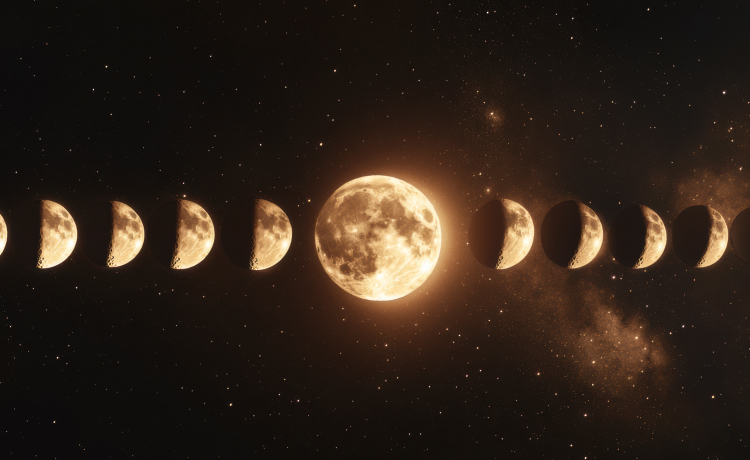
2. Moon phase. This is the single biggest variable year to year. A full moon acts like a floodlight pointed at your telescope. Even the strongest showers become disappointing under a bright moon. A new moon – or a crescent that sets early – means dark skies from dusk to dawn.
3. Radiant altitude. Showers visible from India work best when the radiant constellation is high in the sky. Most major annual showers have radiants well above the horizon from our latitude. That is good news for stargazers in Rajasthan.
Q: Do I need a telescope to watch a meteor shower?
A: No. A telescope actually makes things worse. Meteors can appear anywhere in the sky, and you need the widest possible field of view. Your naked eyes are the best tool. At Astroport Sariska, our 16-inch Dobsonian telescope is reserved for deep-sky objects between meteor bursts – planets, nebulae, and star clusters that reward magnification.
The Complete Meteor Shower India 2026 Calendar
April 21-22: Lyrids – A Promising Spring Opener
Peak: Night of April 21 into dawn of April 22
ZHR: Up to 20 meteors per hour
Parent body: Comet C/1861 G1 Thatcher
Moon phase: Waxing crescent (27% full) – sets before peak viewing hours
India viewing rating: Good
The Lyrids are the first major shower of the year and they arrive in fine style in 2026. Maximum activity is predicted for around 20:00 UT on April 22, and crucially, the crescent moon will set before the radiant reaches its best elevation. That leaves the pre-dawn sky beautifully dark. (Source: American Meteor Society, 2026)
These meteors are medium-speed and can produce bright fireballs. The Lyrids are known for sudden brief surges. On rare occasions they have produced 100 meteors per hour, though you should plan for the typical rate. The shower runs from April 15 through April 29, so there is a window on either side of the peak.
For visitors to Astroport Sariska, April is a pleasant month – warm evenings, low humidity, and clear skies that are still settling into the pre-monsoon season. It pairs well with an early morning Sariska Tiger Reserve safari. It pairs well with an early morning Sariska Tiger Reserve safari.
May 5-6: Eta Aquarids – Halley’s Legacy, Moon Spoils It
Peak: Night of May 5 into dawn of May 6
ZHR: Up to 50 meteors per hour (30 from India’s latitude)
Parent body: Halley’s Comet
Moon phase: Waning gibbous (84% full)
India viewing rating: Poor
This shower has a great story. The Eta Aquarids are debris from Halley’s Comet, the same parent body that creates the Orionids in October. From India’s northern latitudes, the shower can theoretically reach 30 meteors per hour just before dawn. But in 2026, a waning gibbous moon will severely affect this shower, reducing visible hourly rates to fewer than 10. (Source: IMO Meteor Shower Calendar, 2026)
Our honest advice: skip planning a dedicated trip for the Eta Aquarids this year. If you happen to be at Astroport Sariska in early May for other reasons, do look up before dawn. You may still catch some of the brighter meteors.
August 12-13: Perseids – The Star of 2026
Peak: Night of August 12 into dawn of August 13
ZHR: Up to 100 meteors per hour
Parent body: Comet 109P/Swift-Tuttle
Moon phase: NEW MOON (0% full)
India viewing rating: EXCEPTIONAL
Mark this date now. The 2026 Perseids are shaping up to be one of the best meteor shower India events in years, possibly the finest Perseid display since 2018. The reason is simple: a new moon falls on August 12 – the same night as peak activity. There will be zero moonlight to wash out faint meteors. (Source: EarthSky, 2026)
Under dark skies, the Perseids regularly deliver 60 to 100 meteors per hour, including bright fireballs that leave glowing trails lasting several seconds. The broad peak stretches from late on August 12 through the early hours of August 13, with maximum activity expected between 02:00 and 04:00 local time. (Source: Old Farmer’s Almanac, 2026)
The Perseids are caused by Comet Swift-Tuttle, discovered in 1862. Each August, Earth passes through the comet’s debris trail. These particles slam into our atmosphere at roughly 60 kilometres per second. Friction causes the surrounding air to glow white-hot. That streak of light is your “shooting star.”
Why Astroport Sariska is Perfect for the 2026 Perseids
From the mid-northern latitudes where Rajasthan sits, the Perseid radiant in constellation Perseus rises well above the horizon by 10:30 pm. From a Bortle Class 4 dark sky site – like the Aravalli hills surrounding Astroport Sariska – even the faintest meteors become visible. Our expert astronomer guides will set up our 16-inch Dobsonian telescope for deep-sky viewing between meteor bursts. We can show you star clusters, nebulae, and planets while you wait for the next fireball.
August also falls within our Milky Way photography window. Between meteor flashes, our farm-to-table kitchen prepares warm snacks for guests settled on their sky-watching blankets. It is a full sensory experience.
August also falls within our Milky Way photography window. Our astrophotography sessions teach you to capture meteor trails and the Milky Way with your own camera.
Q: How many meteors will I actually see per hour at Astroport Sariska during the 2026 Perseids?
A: Under our Bortle Class 4 skies, with no moon interference on peak night, you can realistically expect 50 to 80 meteors per hour at the peak. In a suburban setting, that number drops to 20 to 40. City observers might catch 5 to 10 at best. This is exactly why dark skies matter.
Book your Perseid meteor shower experience now. The 2026 Perseids are a once-in-several-years event. Our meteor night packages include guided astronomy sessions, 16-inch Dobsonian telescope access, and farm-to-table dining.
If you’re planning a weekend astronomy getaway from Delhi, the Perseids are the highlight of 2026.
Visit astroportsariska.com to check availability for August 11 to 13 weekends.
October 8-9: Draconids – A Peaceful Evening Shower
Peak: Evening of October 8 into early hours of October 9
ZHR: Around 5 to 10 meteors per hour
Parent body: Comet 21P/Giacobini-Zinner
Moon phase: Near new moon (1% full)
India viewing rating: Good for the experience, modest rate
The Draconids are unique. They are one of the only showers best viewed in the early evening rather than after midnight. Their radiant in the constellation Draco is highest in the northern sky just after darkness falls. By midnight, it has already begun to sink. (Source: EarthSky Meteor Guide, 2026)
In 2026, the moon is just 1% full at the Draconids’ peak, meaning near-perfect dark conditions. The rate is modest – around 5 to 10 meteors per hour under ideal conditions. But every meteor you see will be against a perfectly dark backdrop. The Draconids occasionally produce outbursts with much higher rates, though none is predicted for 2026. (Source: Old Farmer’s Almanac, 2026)
From Astroport Sariska, October is the beginning of our best season. The monsoon has departed. Nights are cool and crisp. The Sariska Tiger Reserve is active. You can pair an evening Draconid watch with a daytime wildlife safari.
October 21-22: Orionids – Hampered by Moonlight
Peak: Night of October 21 into dawn of October 22
ZHR: Up to 20 meteors per hour
Parent body: Halley’s Comet (yes, again)
Moon phase: Waxing gibbous (80% full)
India viewing rating: Fair
The Orionids are Halley’s second gift to the calendar year. They produce fast, often colorful meteors from the constellation Orion. In a good year with dark skies, they rival the Lyrids. But 2026 brings a bright, waxing gibbous moon that will obscure most of the fainter meteors. Only the brightest fireballs will punch through. (Source: Space.com, 2026)
If you are at Astroport Sariska in late October, look up after midnight when the radiant is highest. You may catch a few impressive streaks. But we would not recommend a dedicated trip for the Orionids this year.
Q: What is the difference between the Eta Aquarids in May and the Orionids in October?
A: Both come from Halley’s Comet debris, but Earth passes through different parts of the comet’s trail each time. The Eta Aquarids hit our atmosphere from a different angle in May. The Orionids come in October. They look and feel similar – fast, persistent – but peak at different radiant points in the sky.
November 17-18: Leonids – Fast Meteors, Partial Moon
Peak: Night of November 17 into dawn of November 18
ZHR: Up to 15 meteors per hour
Parent body: Comet 55P/Tempel-Tuttle
Moon phase: First quarter (45% full), sets around 11 pm
India viewing rating: Moderate
The Leonids are famous for their history. On November 17, 1966, observers saw thousands of Leonid meteors per minute for a brief span. Those storms happen on a roughly 33-year cycle linked to comet Tempel-Tuttle’s orbit. No outburst is predicted for 2026. But what the Leonids lack in numbers, they make up in speed. At 71 kilometres per second, they are among the fastest meteors in the sky, leaving long blue-green trails. (Source: EarthSky Leonids Guide, 2026)
In 2026, the first quarter moon sets around 11 pm, leaving the sky dark from midnight onward. That is the exact window when the radiant in Leo climbs highest. With patience after midnight, you should see the brighter Leonids clearly. (Source: StarWalk, 2026)
November is deep within our best season at Astroport Sariska. Temperatures are perfect for overnight sky sessions – cool enough to be comfortable under a blanket, warm enough to stay out for hours.
December 13-14: Geminids – The King Returns Under Dark Skies
Peak: Night of December 13 into dawn of December 14
ZHR: Up to 150 meteors per hour
Parent body: Asteroid 3200 Phaethon (not a comet – rare)
Moon phase: Waxing crescent (21% full), sets in early evening
India viewing rating: EXCEPTIONAL
If the Perseids in August are the summer sensation, the Geminids in December are the undisputed king of the year. They consistently produce more meteors per hour than any other annual shower – up to 150 under ideal conditions. And 2026 delivers nearly ideal conditions. The waxing crescent moon sets early in the evening, leaving the sky completely dark from around 9 pm onward through dawn. (Source: StarWalk Geminids Guide, 2026)
The Geminids are special for another reason. Most meteor showers come from comets. The Geminids come from an asteroid – 3200 Phaethon, a space rock about 6 kilometres across. This makes the particles denser and slower than most showers. At 35 kilometres per second, Geminid meteors drift visibly across the sky rather than zipping past. They are also colorful: mostly white, with streaks of yellow, red, blue, and green. (Source: Space and Telescope, 2026)
Another advantage: the Geminid radiant in constellation Gemini rises by 9 to 10 pm. You do not need to stay up until 2 am just to get started. Peak rates occur around 2 am, but you will see good activity from early evening onward.
December nights in Rajasthan are clear, dry, and cool. This is also the best time to visit Sariska for both stargazing and wildlife experiences.
Why Geminids + Astroport Sariska is a Winter Highlight
December nights in Rajasthan are clear, dry, and cool. The Sariska jungle is at its most active. Our eco-friendly cottages have warm bedding and our farm-to-table kitchen produces hearty meals perfect for the season. Our expert astronomer guides lead both naked-eye meteor sessions and telescope deep-sky tours. Between meteor bursts, we can show you winter deep-sky favorites – the Orion Nebula, the Pleiades, and the Andromeda Galaxy 2.5 million light-years away.
This is our personal recommendation for the most memorable meteor shower India 2026 experience. Two back-to-back exceptional showers – Perseids in August and Geminids in December – in a year when both fall under dark moon conditions. Plan for either. Plan for both if you can.
Q: Which is better for families – the Perseids in August or the Geminids in December?
A: Both are excellent. The Perseids win on weather – warm August nights mean children can lie out on blankets without cold being a concern. The Geminids win on start time – the shower is active from 9 pm, so younger children can see good activity before bedtime. At Astroport Sariska, our expert astronomer guides tailor sessions for all ages. Both are highly recommended family meteor shower India 2026 experiences.
Viewing Conditions Summary: 2026 Meteor Showers from India
| Shower | Peak Date | ZHR | Moon % | Rating |
| Lyrids | Apr 21-22 | 20 | 27% crescent | Good |
| Eta Aquarids | May 5-6 | 50 (30 from India) | 84% gibbous | Poor |
| Perseids | Aug 12-13 | 100 | 0% new moon | EXCEPTIONAL |
| Draconids | Oct 8-9 | 5-10 | 1% new moon | Good |
| Orionids | Oct 21-22 | 20 | 80% gibbous | Fair |
| Leonids | Nov 17-18 | 15 | 45% (sets 11pm) | Moderate |
| Geminids | Dec 13-14 | 150 | 21% crescent | EXCEPTIONAL |
5 Tips to Get the Most from Meteor Shower India 2026
1. Let your eyes adapt. It takes 20 to 30 minutes for your vision to fully adjust to the dark. During that time, your eyes produce a chemical called rhodopsin that allows you to see faint light. Every time you look at your phone screen, you reset the clock. Leave your phone face-down. (Source: SpaceInformer, 2026)
2. Look away from the radiant. Meteors appear to stream outward from a single point in the sky. But the longest and most dramatic streaks appear 30 to 45 degrees away from that point. Stare at a wide patch of dark sky rather than the radiant itself.
3. Check the moon phase before booking. Our calendar above tells you the 2026 moon conditions for each shower. Avoid peak nights when the moon is more than 50% full. The Perseids and Geminids in 2026 are the clear winners.
4. Go dark. Even a single streetlight on the horizon reduces your visible meteor count significantly. From a city like Delhi, you might see 5 to 10 meteors per hour during the Perseids. From Astroport Sariska’s Bortle Class 4 skies, that number rises to 50 to 80 under a new moon. (Source: Darkest Hour, 2026)
Go dark. Even a single streetlight on the horizon reduces your visible meteor count significantly. Learn more about why stargazing near Delhi has become the new wellness trend—it’s not just about seeing stars, it’s about mental health and digital detox.
5. Be patient and stay warm. Meteors come in bursts. You might see 6 in one minute and then nothing for 5 minutes. Pack warm layers, a blanket, and a thermos. Plan for at least 2 hours of viewing to catch the real rhythm of the shower.
Plan Your Meteor Shower Trip to Astroport Sariska
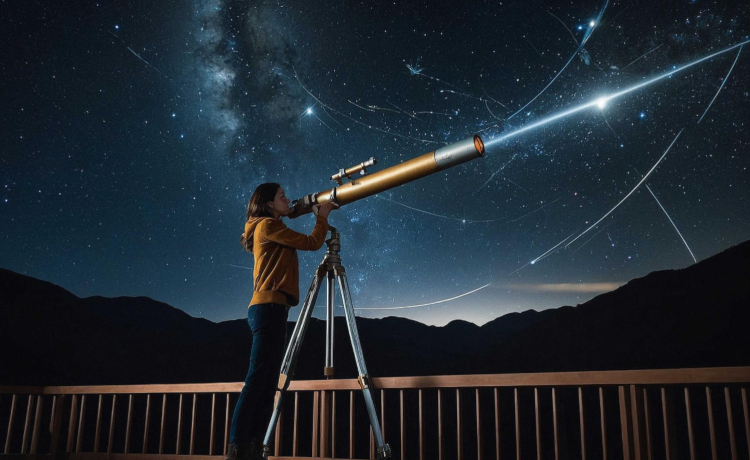
Astroport Sariska is India’s first astronomy-themed resort, located just 3 to 4 hours from Delhi NCR in Alwar district, Rajasthan – adjacent to Sariska Tiger Reserve.
We offer a complete astro-tourism experience unlike anything else in the country:
-
- Professional stargazing with our 16-inch Dobsonian telescope guided by expert astronomer guides
-
- Bortle Class 4 dark skies – the same sky quality recommended by the International Dark-Sky Association for serious observation
-
- Eco-friendly cottages and private pool villas running on 100% solar power
-
- Farm-to-table organic dining sourced from local produce
-
- Astro-Safari concept – tiger spotting by day, nebula hunting by night
-
- Best seasons: October to March for clear winter skies; August for Perseid meteor viewing
For meteor shower sessions, our team plans viewing times around the peak window for each shower. We set up reclining chairs, provide warm blankets, and have our expert astronomer guides narrate the show – explaining where each meteor comes from and which constellation marks the radiant.
We offer a complete astro-tourism experience unlike anything else in the country:
-
- Professional stargazing with our 16-inch Dobsonian telescope guided by expert astronomer guides
-
- Bortle Class 4 dark skies – learn what makes us India’s first astronomy resort
-
- Eco-friendly cottages and private pool villas running on 100% solar power
-
- Farm-to-table organic dining sourced from local produce
-
- Astro-Safari concept – tiger spotting by day, nebula hunting by night
Frequently Asked Questions About Meteor Shower India 2026
Q: When is the best meteor shower to see in India in 2026?
A: The two standout events for meteor shower India 2026 are the Perseids (August 12-13) and the Geminids (December 13-14). Both coincide with dark or near-dark moon phases, which is rare and makes both exceptional viewing opportunities. The Perseids in 2026 peak on a new moon – conditions that have not been this good since 2018.
Q: Where is the best place to see meteor showers in India in 2026?
A: You need dark skies away from city light pollution. Astroport Sariska, near Alwar in Rajasthan, offers Bortle Class 4 skies and is just 3 to 4 hours from Delhi NCR. Here’s how to reach us from Delhi, with detailed driving directions and train options.
Q: How many meteors per hour will I see from a dark location in India?
A: During the 2026 Perseid peak, under our Bortle Class 4 skies with zero moonlight, you can expect 50 to 80 meteors per hour. During the Geminid peak, also under excellent conditions, 70 to 100 per hour is realistic. From Delhi itself, those numbers drop to single digits.
Q: Do I need a telescope to see a meteor shower?
A: No. Telescopes and binoculars actually hurt your viewing because they reduce your field of vision. Meteors can appear anywhere in the sky. You want to see as much sky as possible with your naked eyes. At Astroport Sariska, we use the 16-inch Dobsonian telescope for deep-sky objects between meteor bursts – planets, nebulae, and galaxies.
Q: Is the meteor shower experience at Astroport Sariska suitable for children?
A: Yes. Our expert astronomer guides make the sessions educational and exciting for all ages. Children respond with enthusiasm to the 16-inch Dobsonian telescope and to the spectacle of meteors. The Perseids in August are especially family-friendly because of the warm weather. We recommend children aged 5 and above for guided night sky sessions.
Q: What should I wear and bring for a meteor shower night at Astroport Sariska?
A: For August Perseid nights, light layers and comfortable clothes are fine. For December Geminid nights, bring warm layers. Check our complete astronomy trip packing list for everything you’ll need for a stargazing weekend.
Q: Can I combine a meteor shower visit with a Sariska jungle safari?
A: Absolutely. This is exactly our “Astro-Safari” concept. Read about how to plan a student stargazing trip if you’re bringing children, or explore our luxury nature resort options for a premium experience.
Start Planning Your Celestial 2026
The universe runs on a schedule. It does not wait. The 2026 Perseids peak on a new moon only once. The Geminids offer near-perfect conditions only this December. Both windows are open – but they will close.
At Astroport Sariska, we have built India’s first astronomy-themed resort specifically for moments like this. Our expert astronomer guides know these showers intimately. Our 16-inch Dobsonian telescope will be calibrated and ready. Our Bortle Class 4 skies will be as dark as the night allows.
You are 3 to 4 hours from Delhi NCR. The Aravalli hills are waiting. The cosmos is on schedule.
Visit astroportsariska.com to check availability and explore our stargazing and Astro-Safari packages.
New to astronomy? Start with our astronomy camp planning guide or read why Astroport Sariska is rated as the best stargazing destination near Delhi.
Looking for more weekend ideas? Explore our guide to offbeat weekend trips from Delhi.
Visit astroportsariska.com to check availability and explore our stargazing and Astro-Safari packages.