
How to Plan a Stargazing Trip With Kids in 2026
Imagine your child looking up at a sky filled with thousands of stars, spotting Saturn’s rings through a telescope for the first time, or watching a meteor streak across the darkness. A stargazing trip with kids is not just a vacation. It is a chance to spark curiosity, build memories, and give them a science lesson they will never forget.
Whether you are planning a family weekend getaway or organizing a student stargazing trip for your school, the key is choosing the right location, timing, and activities. This guide will walk you through every step, from picking the best season to packing essentials, keeping kids safe, and making astronomy fun without feeling like homework.
Why Astroport Sariska? Astroport Sariska is India’s first astronomy-themed resort, offering professional telescopes, expert guides, and some of the darkest skies near Delhi. Located near the Sariska Tiger Reserve, it blends stargazing with nature walks, wildlife safaris, and eco-friendly cottages so your family or student group can explore the cosmos by night and unwind in comfort by day.
Why Stargazing With Kids Is Worth the Late Bedtime

You might wonder if dragging kids out at night is really worth the effort. The answer is yes. Stargazing offers benefits that go far beyond a fun evening. It builds curiosity, patience, and observation skills. It gives children screen-free time in nature. And it creates bonding moments that last a lifetime.
For students, a stargazing trip ties directly into their school syllabus. Class 6 geography covers constellations and the solar system. Class 8 science explores stars, planets, and the Moon’s surface. A night under real stars transforms textbook diagrams into living experiences. Kids learn to identify constellations like Ursa Major, observe the Moon’s craters, and understand why planets do not twinkle like stars.
Big Benefits: Curiosity, Confidence and Family Bonding
Looking at the night sky sparks natural wonder. Kids ask questions like “How far is that star?” or “Can we go to the Moon?” These questions open doors to learning about physics, space, and our place in the universe. Stargazing also teaches patience. Unlike instant entertainment on screens, the sky rewards those who wait and observe.
For families, the experience creates memories. Imagine sitting together on a blanket, pointing out constellations, sharing hot cocoa, and listening to stories about ancient myths. For school groups, a student stargazing trip builds teamwork and confidence as students work together to spot objects and record observations.
What Makes Stargazing Near Sariska Special (Dark Skies and Wild Landscape)
Not all skies are equal. In cities like Delhi, light pollution washes out most stars. You might see 20 to 50 stars on a clear night. At Astroport Sariska, located in the Aravalli hills near Sariska Tiger Reserve, you can see over 4,000 stars with the naked eye. The Milky Way appears as a bright river across the sky.
This difference is measured on the Bortle Scale, which rates sky brightness from Class 1 (pristine dark) to Class 9 (inner city). Delhi rates around Class 8 or 9. Sariska rates Class 2, a truly dark site. The location is surrounded by protected forest, which limits artificial lighting and creates a natural dark buffer.
The wild landscape adds magic. You might hear distant animal calls at night, spot peacocks at dawn, or take a jungle safari the next morning. This blend of astronomy and nature makes the trip richer and more memorable for kids.
First, Decide the Kind of Trip: Family Night Out or Student Stargazing Trip
Before you start planning, clarify what kind of trip you want. Are you bringing your own children and maybe a few cousins? Or are you a teacher organizing a formal school outing with 20 or 30 students?
A family trip is more flexible. You can adjust the schedule based on your kids’ moods, take breaks when needed, and focus on fun over structured learning. A student stargazing trip is more organized. It includes curriculum-aligned activities, supervision protocols, and clear learning goals to justify the excursion to school administrators.
What Is a Student Stargazing Trip, Exactly?
A student stargazing trip is an educational outing where children or school groups travel to a dark-sky location for guided astronomy sessions. It combines hands-on learning with outdoor adventure. Activities might include constellation hunts, telescope viewing, rocket-building workshops, and night-sky journaling.
These trips align with CBSE and ICSE syllabi. For example, Class 6 students learn to identify pointer stars and locate the Pole Star. Class 8 students observe lunar craters and differentiate planets from stars. Older students might build simple telescopes or launch hydro-rockets to understand Newton’s laws of motion.
The goal is to turn abstract concepts into real experiences. Instead of reading about Saturn’s rings in a textbook, students see them with their own eyes.
Choosing Age Group, Group Size and Learning Goals
Age matters. Children aged 6 to 8 can enjoy simple activities like spotting the Moon, identifying bright constellations, and listening to star stories. Kids aged 9 to 12 can handle longer sessions and more detail, like observing planets or tracking satellites. Teenagers can engage with advanced topics like astrophotography or the physics of light.
Group size also matters. For younger children, aim for a 1:8 or 1:10 adult-to-child ratio to ensure safety and supervision. For teenagers, 1:15 may work. Schools should follow CBSE guidelines, which recommend one adult per 10 students and require a senior female teacher if the group includes girls.
Set simple learning goals before the trip. Examples: “Identify three constellations,” “Observe the Moon through a telescope,” or “Understand why stars twinkle but planets do not.” Clear goals help you measure success and give the trip academic value.
When and Where to Go for the Best Night Sky
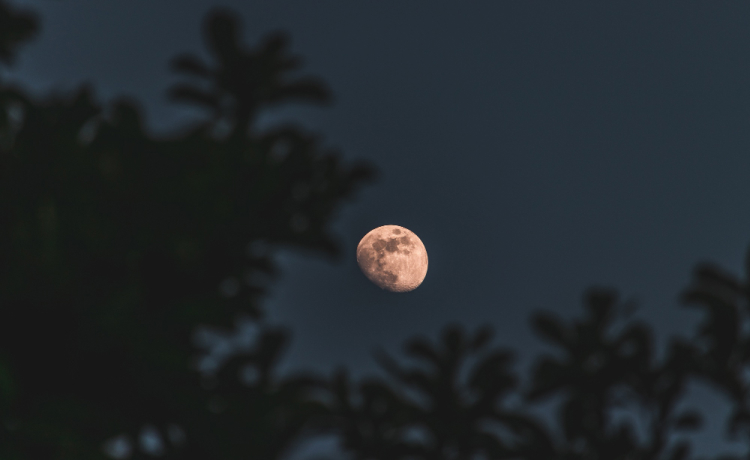
Timing is everything. A cloudy night or a full Moon can ruin your stargazing plans. The best time to visit a dark-sky location like Astroport Sariska is during the new Moon phase (when the Moon is barely visible) and in months with clear weather.
Picking the Right Season and Moon Phase
In Rajasthan, the best stargazing months are October through March. The weather is cool and clear. Nights can be cold (8 to 10 degrees Celsius), so pack warm layers. Summer months (April to June) can be hot during the day, though nights are still decent for stargazing.
Avoid the full Moon. A bright Moon washes out faint stars and deep-sky objects like nebulae. Check a lunar calendar before booking. The ideal window is within five days of the new Moon.
Weather is unpredictable. Check forecasts a few days before your trip. Clear skies are critical. Even professional telescopes cannot see through clouds.
Why Dark-Sky Locations Like Astroport Sariska Work Best
Light pollution is the enemy of stargazing. City lights scatter into the atmosphere, creating a glowing dome that hides stars. In Delhi, even on a clear night, the sky never gets truly dark.
At Astroport Sariska, the resort enforces a red-light policy. Guests use red-filtered torches instead of white lights. Red light does not destroy night vision because it does not deplete rhodopsin, the chemical in your eyes that helps you see in the dark. This is a practical biology lesson for students.
The resort is also surrounded by the Sariska Tiger Reserve buffer zone, which restricts commercial development and street lighting. This creates a naturally dark environment where you can see the Milky Way’s structure, faint galaxies, and thousands of stars.
Checking Weather, Wildlife and Park Rules
Before you travel, check local weather forecasts. Cloudy skies mean no stargazing. Also check Sariska Tiger Reserve timings if you plan a jungle safari. The park has specific entry and exit windows.
Wildlife safety is important. Stay within the resort boundaries at night. The staff will guide you on safe movement. Astroport Sariska‘s campus is enclosed and secure, so children cannot wander into restricted areas.
If you are a school group, confirm the resort’s safety protocols in advance. Ask about staff supervision, emergency medical contacts, and first-aid facilities.
What to Pack for a Kid-Friendly Stargazing Trip
Packing right makes the trip smoother. You do not need fancy gear, but a few essentials will keep kids comfortable and engaged.
Warm Layers, Snacks and Sleep Basics
Nights in Sariska can be cold, even in mild months. Pack:
- Warm jackets or fleece layers
- Long pants and closed shoes
- Blankets or shawls for sitting outdoors
- Hats or beanies if visiting in winter
Bring snacks and water. Stargazing sessions can last two to three hours. Hungry kids get cranky. Pack easy snacks like biscuits, fruit, or trail mix.
For sleep, bring familiar items like a favorite stuffed toy or a small pillow. If your child is sensitive to light, pack an eye mask for the morning.
Simple Astronomy Gear: Binoculars vs Telescope
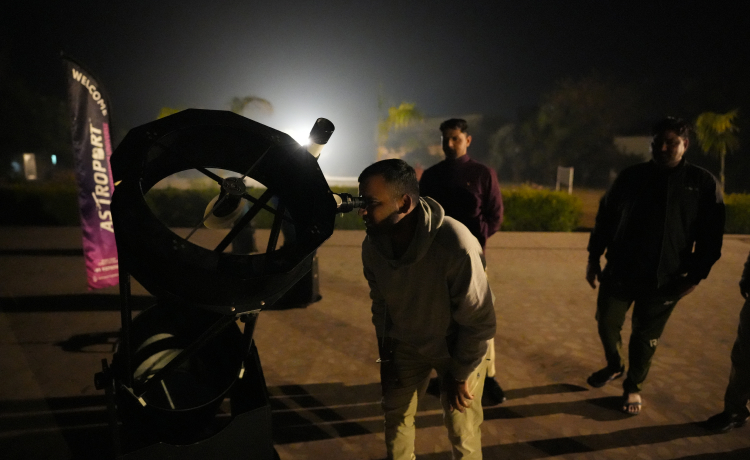
You do not need to buy a telescope. Astroport Sariska provides professional-grade equipment, including a 16-inch Dobsonian telescope that collects 5,000 times more light than the human eye. This lets you see Saturn’s rings, Jupiter’s moons, the Orion Nebula, and distant galaxies.
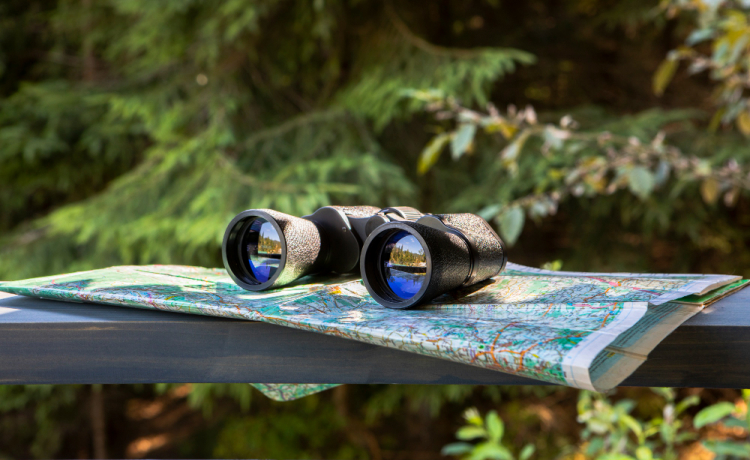
If you want to bring your own gear, start with binoculars. A simple 7×50 or 10×50 pair works well for spotting constellations and the Moon. Binoculars are easier for kids to hold and use than telescopes.
Apps, Star Maps and Fun Printables
Download a stargazing app like Stellarium, SkySafari, or Star Walk. These apps show you what is in the sky above you in real time. Point your phone up, and the app labels stars, planets, and constellations.
Print a simple star map or planisphere before the trip. Kids can use it to find constellations like Orion, Ursa Major, or Cassiopeia.
Bring a notebook or journal. Encourage kids to draw what they see, write down observations, or keep a “space passport” with stamps for each object they view. This makes the experience interactive and gives them a souvenir to take home.
Step-by-Step Plan for Your First Night Under the Stars

Planning the evening helps reduce chaos and keeps kids engaged. Here is a simple timeline for a successful stargazing night.
Daytime: Travel, Check-In and Let Kids Explore
Arrive at Astroport Sariska in the afternoon. This gives kids time to settle in, explore the resort, and burn off energy before the night session. Let them swim in the pool, walk around the gardens, or play on the lawns.
The drive from Delhi takes about 4 to 5 hours, depending on traffic. Plan for bathroom breaks and snacks along the way. If you are traveling with a school group, coordinate bus timings and communicate with parents about pickup and drop-off.
Check in early. Confirm your stargazing session time with the resort staff. Ask about add-on activities like a campfire, nature walk, or jungle safari the next morning.
Sunset to Twilight: Warm-Up Games and Sky Stories
As the sun sets, gather kids outside. Play simple games like “Spot the First Star” or “What Color Is the Sunset?” These activities ease them into the experience and build excitement.
Tell stories about constellations. For example, explain how Ursa Major (the Great Bear) got its shape in Greek mythology. Or share the story of Orion, the hunter. Kids love stories, and myths make the night sky feel alive.
Use this time to teach basic sky navigation. Show them how to find the North Star using the pointer stars of Ursa Major (the Big Dipper). This is a practical skill and aligns with Class 6 geography lessons.
Main Stargazing Session: What to Show, and in What Order
Start with easy targets. The Moon is always a hit. Through a telescope, kids can see craters, mountains, and the bright terminator line (the border between light and dark). Explain that those dark spots are ancient lava plains called maria.
Next, show bright planets. Jupiter and Saturn are popular because they have visible details. Jupiter’s cloud bands and four large moons are easy to spot. Saturn’s rings are breathtaking and often make kids gasp.
Move to constellations. Use a laser pointer to trace shapes in the sky. Point out Orion’s belt, Ursa Major, or Cassiopeia. Teach kids to use the Big Dipper’s pointer stars to find Polaris (the North Star).
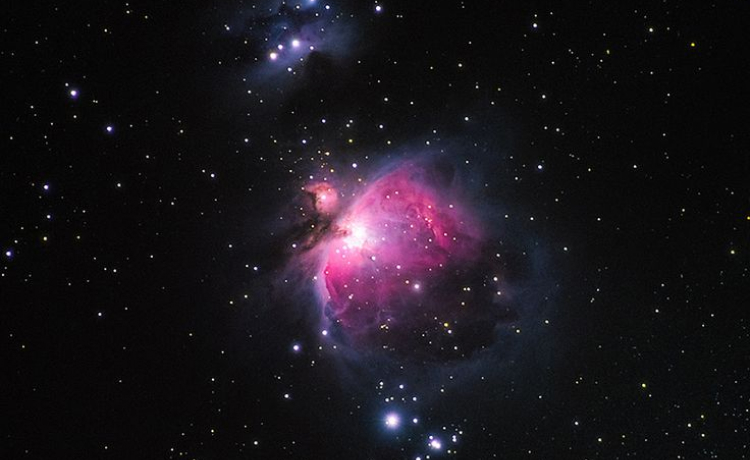
If the sky is dark enough, show deep-sky objects like the Orion Nebula or the Andromeda Galaxy. These look like fuzzy patches to the naked eye but reveal more detail through a telescope.
At Astroport Sariska, expert guides lead the session. They explain what you are seeing, answer questions, and adjust the telescope so every child gets a turn at the eyepiece. You do not need to be an astronomy expert. The guides handle the technical parts while you enjoy the experience with your kids.
Wind-Down: Hot Cocoa, Stories and Bedtime
After the session, bring kids inside for a warm drink like hot cocoa or milk. Sit together and talk about their favorite moments. Ask questions like “What was the coolest thing you saw?” or “Which planet did you like best?”
Encourage kids to write or draw in their journals before bed. This helps them process the experience and gives you a keepsake.
Then, lights out. Night sessions can end late (10 PM or later), so be prepared for tired kids the next morning. Build in extra sleep time or a relaxed breakfast schedule.
Safety, Comfort and Managing Kids’ Energy
Safety is the top concern for parents and teachers. Here is how to keep kids safe and comfortable during a stargazing trip.
Staying Safe in the Dark
Use red-light torches only. White light ruins night vision for everyone nearby. Teach kids to keep lights low and pointed at the ground, not in people’s faces.
Implement the buddy system. Pair kids up and make sure they stay together. In the dark, it is easy to lose track of someone.
Stay within designated areas. At Astroport Sariska, all astronomy sessions happen within the secure resort campus. There are clear boundaries, and staff members supervise the area.
For school groups, assign teachers or chaperones to specific clusters of students. Maintain the 1:10 ratio recommended by CBSE guidelines. Count heads regularly.
Handling Bugs, Weather and Meltdowns
Insects are part of outdoor life. Bring mosquito repellent and apply it before the session. Long sleeves and pants also help.
If the temperature drops suddenly, have extra blankets ready. If kids get too cold, move the session indoors. Some resorts have covered areas where you can still view the sky.
Expect at least one meltdown. A tired, overstimulated child might cry or refuse to participate. Have a backup plan. Let them sit out quietly with a caregiver while others continue. Do not force it.
Also prepare indoor backup activities in case of bad weather. Bring coloring books, space-themed puzzles, or a documentary to watch if clouds roll in.
Making It Educational (Without Making It Feel Like Homework)
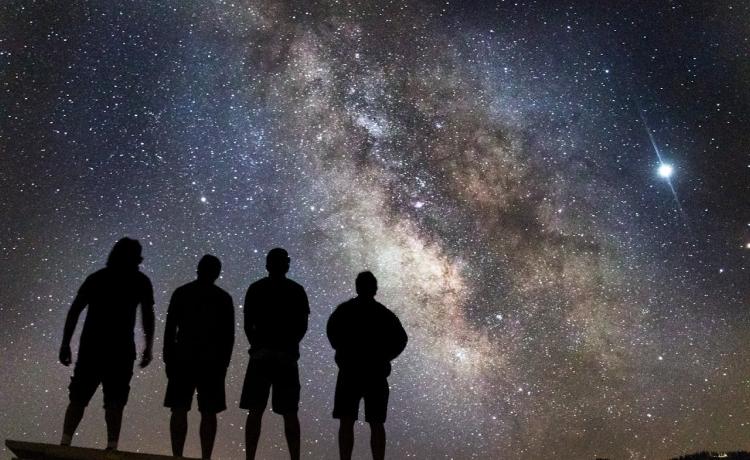
A student stargazing trip should be fun first, educational second. Here is how to sneak learning into the experience without making kids feel like they are in class.
Turning Constellations into Stories and Games
Use mythology to teach constellations. Instead of dry facts, tell stories. For example, explain that Orion was a great hunter who was placed in the sky by the gods. Point out his belt, sword, and shield.
Play constellation bingo. Create bingo cards with different star patterns. As kids spot each one, they mark it off. The first to complete a row wins a small prize.
Encourage creativity. Ask kids to invent their own constellations by connecting stars in new ways. Let them name their creations and share the stories behind them.
Simple DIY Experiments and Night-Sky Journals
Bring simple props for experiments. Use a flashlight and a ball to demonstrate the Moon’s phases. Shine the light on the ball from different angles to show how the Moon looks different from Earth at various points in its orbit.
Show star brightness differences. Compare a dim flashlight to a bright one from the same distance to explain apparent magnitude (how bright a star looks from Earth versus its actual brightness).
Give each child a night-sky journal. Prompt them to write the date, location, and weather. Ask them to draw the Moon’s phase, list constellations they saw, and note one thing they learned. These journals become keepsakes and can be used for school projects later.
Ideas for School Projects and Student Stargazing Trip Follow-Ups
Suggest follow-up projects to extend the learning. Examples include:
- Create a poster of the constellations you saw, with myths and facts
- Write a short essay titled “My Night Under the Stars”
- Build a shoebox diorama of the solar system
- Give a presentation to classmates about your student stargazing trip
- Track the Moon’s phases for a month after returning
These projects help teachers justify the trip to administrators by demonstrating clear educational outcomes. They also give students a sense of accomplishment.
Why Astroport Sariska Is the Perfect Base for Your Family or Student Stargazing Trip
When planning a stargazing adventure, the venue matters as much as the sky. Astroport Sariska is designed specifically for astronomy, not just as an add-on amenity. Here is why it stands out.
India’s First Astronomy-Themed Resort: Telescopes, Domes and Expert Guides
Astroport Sariska is India’s first astronomy-themed resort. Everything here is built around stargazing. The resort has professional telescopes, including a 16-inch Dobsonian that can show you Saturn’s Cassini Division (the gap between its rings) and the Trapezium cluster inside the Orion Nebula.
Trained astronomy guides lead every session. They explain the science in simple terms, answer questions, and make sure every child gets eyepiece time. You do not need to know anything about astronomy. The guides do the heavy lifting while you enjoy the experience with your kids or students.
The resort also offers workshops like hydro-rocketry (building water-pressure rockets) and telescope assembly. These hands-on activities demonstrate physics concepts like Newton’s Third Law and the optics of lenses. They align perfectly with Class 9 and 10 science syllabi.
Nature and Wildlife Add-Ons: Sariska Safari, Nature Walks and Campfire Evenings
Astronomy is the main draw, but Astroport Sariska offers more. The resort is located near Sariska Tiger Reserve. You can book a jungle safari to spot tigers, leopards, peacocks, and deer. This adds a wildlife dimension to your trip.
Nature walks around the resort grounds let kids explore the Aravalli landscape. Birdwatching is popular in the mornings. Evening campfires provide a cozy setting for storytelling and bonding.
These add-ons turn a one-night stargazing trip into a fuller nature and adventure experience. Kids stay engaged during the day while waiting for nightfall.
Eco-Friendly Comforts: Cottages, Private Pools and Farm-to-Table Food
Comfort matters, especially when traveling with kids. Astroport Sariska offers cottages with modern amenities, lush lawns, and a swimming pool. Some cottages include private pool options for families who want extra privacy.
The resort serves farm-to-table meals made with organic produce from their own farm. This means fresh, healthy food that kids enjoy. Dietary accommodations (vegetarian, vegan, or allergy-friendly) are available on request.
The resort follows eco-conscious practices like red-light protocols, minimal plastic use, and waste management. This gives kids a subtle lesson in sustainability and environmental responsibility.
How We Host Family Groups and Student Stargazing Trips
Astroport Sariska regularly hosts both family groups and school groups. For student stargazing trips, the team can customize sessions based on age, syllabus, and group size. They offer flexible meal times, structured schedules, and safety protocols that meet CBSE guidelines.
Group coordinators can work directly with the resort team to plan every detail, from transportation timing to post-dinner activities. The staff understands the needs of school administrators and can provide documentation or itineraries for parent communication.
Ready to plan your student stargazing trip or family sky weekend? Contact the Astroport Sariska team to design a custom package that fits your group’s needs and schedule.
How to Book Your Stargazing Trip at Astroport Sariska
Booking is straightforward if you follow a few simple steps. Here is how to plan your dates and secure your reservation.
Ideal Trip Length and Sample 2 to 3 Day Plan
A one-night trip works if you only want the stargazing experience. Arrive in the afternoon, settle in, stargaze at night, and leave the next morning.
A two-night stay is better. Day one is for travel and daytime activities (pool, nature walk). Night one is for stargazing. Day two includes a jungle safari or workshop. Night two offers a second stargazing session or campfire. Day three is for relaxed breakfast and departure.
A three-day astronomy weekend from Delhi gives you maximum value. You can explore Sariska Tiger Reserve, take nature walks, attend multiple astronomy sessions, and still have downtime to relax.
Check the resort’s website for sample itineraries that match your preferred length.
What to Share With Our Team When You Enquire
When contacting Astroport Sariska, provide the following details:
- Preferred dates or a flexible date range
- Number of adults and children (with ages)
- Whether it is a family trip or a student stargazing trip (school group)
- Group size for school trips (students, teachers, chaperones)
- Any special needs (dietary restrictions, accessibility)
- Interest in add-ons like jungle safari, workshops, or campfire
This information helps the team create a tailored package and check availability. It also speeds up the booking process.
Quick Checklist Before You Click ‘Book’
Before finalizing your reservation, confirm:
- Dates align with new Moon phase for best stargazing
- Room types and capacity match your group size
- You have packed warm layers, snacks, and essentials
- You checked Sariska Tiger Reserve timing if planning a safari
- You communicated trip details to all parents or participants
- You have emergency contact numbers and a basic first-aid kit
Then, book your dates through the resort’s website or contact them directly.
Quick Facts: Student Stargazing Trip at Astroport Sariska
Location: Tehla/Roopbas, near Sariska Tiger Reserve, Alwar district, Rajasthan
Distance from Delhi: Approximately 200 km (4 to 5 hours by car)
Ideal Ages: 6 years and up (younger kids can participate with close supervision)
Best Months: October to March (clear skies, cool weather)
Moon Phase: New Moon period (5 days before or after) for best visibility
Group Size Capacity: Families to school groups of 50+ students (customizable)
Supervision Ratio: Recommended 1 adult per 10 students (CBSE guideline)
Key Activities: Telescope viewing, constellation hunts, hydro-rocketry, telescope assembly workshops, jungle safari, nature walks, campfire
Equipment Provided: 16-inch Dobsonian telescope, binoculars, red-light torches
Safety Protocols: Enclosed campus, staff-supervised sessions, red-light policy, buddy system
Accommodation: Eco-friendly cottages, pool, private pool options, lawns
Dining: Organic farm-to-table meals, dietary accommodations available
FAQs About Planning a Stargazing Trip With Kids
Q: What is a student stargazing trip?
A: A student stargazing trip is a structured educational outing where school groups travel to a dark-sky location to learn about astronomy through guided telescope sessions, hands-on workshops, and night-sky observation activities.
Q: What is the best age for kids to enjoy a stargazing trip?
A: Kids aged 6 and older can enjoy basic stargazing like spotting the Moon and bright constellations. Older children (9 to 12) handle more detail, and teenagers can engage with advanced topics like astrophotography and physics experiments.
Q: Do we need to buy a telescope before visiting Astroport Sariska?
A: No. Astroport Sariska provides high-quality telescopes, including a 16-inch Dobsonian, plus expert guides who operate the equipment. You do not need to invest in your own gear.
Q: When is the best time of year to plan a stargazing trip near Sariska?
A: October through March offers clear skies and cool weather. Avoid the full Moon phase. Book during the new Moon period for the darkest, star-filled skies.
Q: Is a stargazing trip with kids safe near Sariska Tiger Reserve?
A: Yes. Stargazing sessions at Astroport Sariska take place within the secure, enclosed resort campus. Staff supervise all activities, and safety protocols (red-light policy, buddy system) are strictly enforced.
Q: What should we pack for a stargazing night with kids?
A: Pack warm layers, closed shoes, blankets, snacks, water, a notebook or journal, and a red-light torch. The resort provides telescopes and other equipment.
Q: Can Astroport Sariska customize a student stargazing trip for our school group?
A: Yes. The resort team can tailor astronomy sessions, workshops, and schedules to match your students’ age group, curriculum needs, and group size. Contact them to discuss your requirements.
Final Thoughts: Your First Star-Filled Night Starts Here
Planning a stargazing trip with kids does not have to be stressful. With the right location, timing, and preparation, you can create an experience that sparks wonder, builds knowledge, and strengthens bonds. Whether you are a parent planning a weekend getaway or a teacher organizing a student stargazing trip, the key is choosing a place that makes astronomy accessible, safe, and fun.
Astroport Sariska offers everything you need: professional telescopes, expert guides, dark skies, wildlife proximity, and comfortable eco-friendly accommodations. It is a place where kids can see Saturn’s rings, track the Milky Way, and learn physics through hands-on experiments, all while surrounded by nature.
Book your student stargazing trip or family sky weekend at Astroport Sariska today. Discover the universe together, one star at a time.