
Astronomy for Beginners India: 10 Fun Space Facts to Know
Are you ready to look up and wonder? If you are new to stargazing, you are about to discover something magical. Astronomy for beginners in India is growing fast. More travellers are leaving city lights behind to rediscover the night sky. And there is no better place to start than under the vast, dark skies of Rajasthan.
Before you pack your bags for Astroport Sariska, let us share 10 fun space facts that will make your first stargazing trip unforgettable. You do not need to be a scientist. You just need curiosity and a sense of wonder. These facts will help you see the universe in a whole new way.
Why Astroport Sariska?
Astroport Sariska invites you to rediscover wonder beneath vast star-lit skies and amidst forested hills. As India’s first astronomy-themed resort, we blend wild-forest charm, wildlife proximity and eco-friendly luxury so you can gaze at the cosmos by night and unwind in serene cottages by day. Perfect for families, couples or anyone craving a nature and stargazing escape.
Welcome to Your First Stargazing Adventure in India
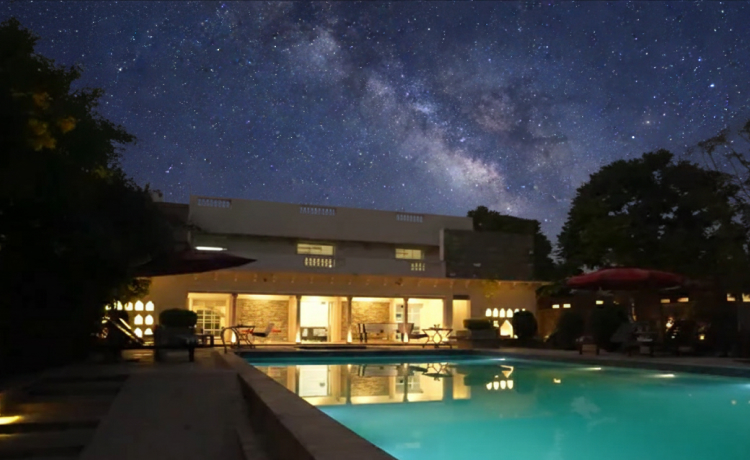
Stargazing is one of the oldest human activities. But in cities like Delhi, you might see only 20 stars on a clear night. The reason? Light pollution. Artificial lights wash out the sky and hide the universe from view.
When you travel just a few hours from Delhi NCR to Astroport Sariska, everything changes. Suddenly, you can see over 4,000 stars. You can spot planets with your naked eye. You can even glimpse distant galaxies through a telescope.
This is astronomy for beginners India style. It is not complicated. It is about reconnecting with nature and the cosmos. Whether you are a family with curious kids, a couple seeking a romantic escape, or a solo traveler hungry for adventure, stargazing at Sariska offers something special.
Why Astroport Sariska Is Perfect for First-Time Sky Watchers
What makes Astroport Sariska ideal for beginners? Three things.
First, we are located in a Bortle Class 4 zone. That means our skies are dark enough to see the Milky Way clearly. Second, we provide professional telescopes and expert guides. You do not need your own equipment or prior knowledge. Third, we combine astronomy with nature. By day, explore the Sariska Tiger Reserve. By night, explore the cosmos. It is a complete experience.
Our guides are passionate astronomers who love teaching. They explain everything in simple terms. They help you find constellations, point out planets, and share stories about the stars. You will leave with knowledge, memories, and maybe even a few photos of the moon.
Quick Facts: Astronomy for Beginners in India
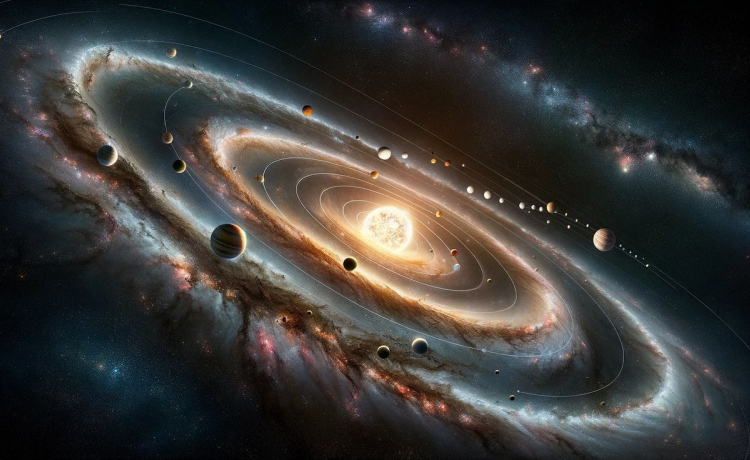
Here are a few basics to get you started:
- Planet vs Star: Planets shine steadily. Stars twinkle. That is because planets are closer and appear as tiny disks, while stars are just points of light affected by our atmosphere.
- Best Viewing Months: October to March offers the clearest skies in Rajasthan.
- Naked Eye Viewing: You can see five planets without a telescope: Mercury, Venus, Mars, Jupiter, and Saturn.
- Dark Adaptation: Your eyes need 20 to 30 minutes to adjust to darkness. After that, you will see much more.
- Red Light Rule: Use red torches at night. White light from phones or flashlights ruins your night vision instantly.
What You’ll See in the Night Sky Near Sariska
Let us set realistic expectations. You will not see NASA-quality images through our telescopes. But what you will see is real, live, and right there above you. That makes it more magical than any photo.
Planets You Can Spot With the Naked Eye
On most clear nights, you can see at least one or two planets. Venus is the brightest object after the Moon. It shines white or yellowish and appears in the evening or early morning. Jupiter is also very bright and looks steady, not twinkling.
Mars has a reddish tint. Saturn is golden. Through our 16-inch Dobsonian telescope, you can see Saturn’s rings clearly. You can also spot Jupiter’s four largest moons, called the Galilean satellites.
Stars, Constellations, and the Milky Way
The Milky Way is the hazy band of light stretching across the sky. It is actually our home galaxy seen edge-on. From Sariska, you can see it clearly on moonless nights.
You will also learn to find constellations. Orion is easy to spot in winter with its three-star belt. The Big Dipper helps you find Polaris, the North Star. Our guides will teach you the stories behind these star patterns.
10 Fun Astronomy Facts to Know Before Your Trip
Now let us dive into the fun part. These 10 facts will make your stargazing experience richer and more exciting.
1. You Can See Another Galaxy From Rajasthan
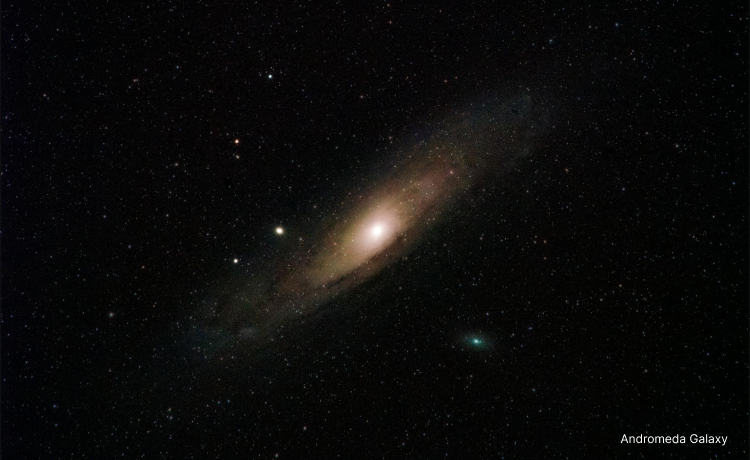
The Andromeda Galaxy is the most distant object you can see with your naked eye. It is 2.5 million light-years away. That means the light you see left Andromeda 2.5 million years ago, long before humans existed.
From Sariska’s dark skies, Andromeda appears as a faint, fuzzy oval. Through a telescope, you can see more detail. This galaxy contains about one trillion stars. In about 3.75 billion years, Andromeda and our Milky Way will collide and merge into one giant galaxy.
October and November are the best months to view Andromeda in the northern hemisphere.
2. The Moon Is Drifting Away From Earth
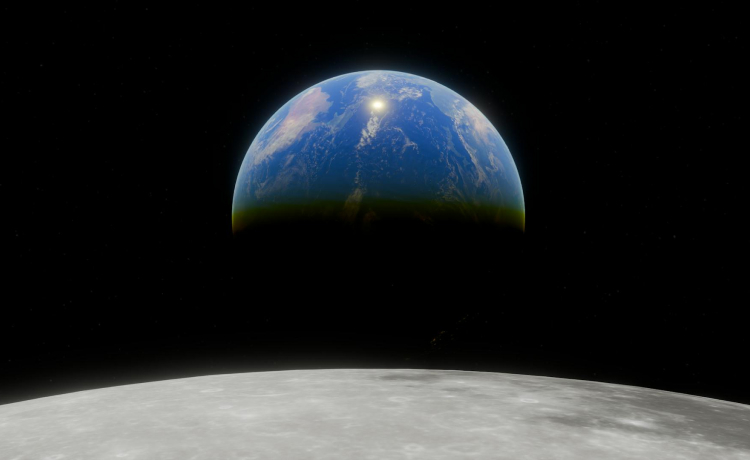
Here is something most people do not know. The Moon is moving away from Earth at about 3.8 centimeters per year. That is roughly the same rate your fingernails grow.
Why is this happening? The Moon’s gravity creates tides in Earth’s oceans. As Earth rotates faster than the Moon orbits, these tidal bulges pull the Moon forward. This transfer of energy pushes the Moon into a higher orbit.
The Moon is also tidally locked to Earth. That means it rotates at the same rate it orbits. That is why we only ever see one side of the Moon from Earth. The far side is not dark. It receives just as much sunlight. We just never see it.
3. Some Stars You See Are Already “Gone”
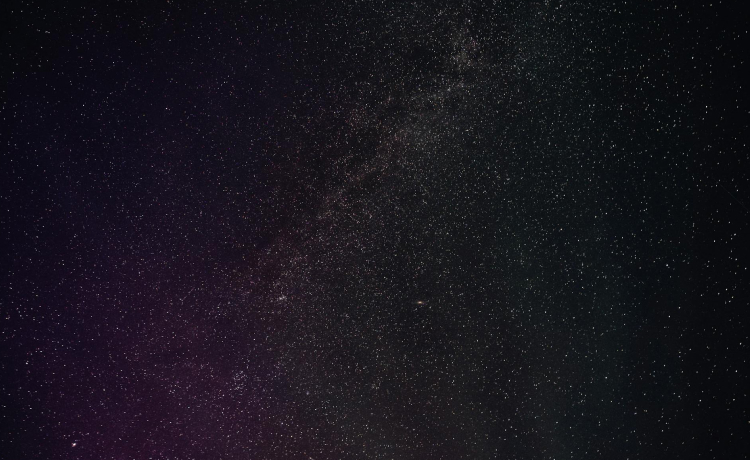
When you look at the night sky, you are looking back in time. Light travels at 299,792 kilometers per second. But even at that speed, it takes time to reach us.
Most stars you see with your naked eye are within 1,000 light-years of Earth. Since even massive stars live for millions of years, the chance of a star dying during the few centuries its light travels to us is very low. Less than 1 percent.
However, some stars are on the edge. Betelgeuse, the red star in Orion’s shoulder, could explode as a supernova anytime in the next 100,000 years. When it does, it will be as bright as the full Moon.
4. Jupiter Has More Moons Than Any Other Planet
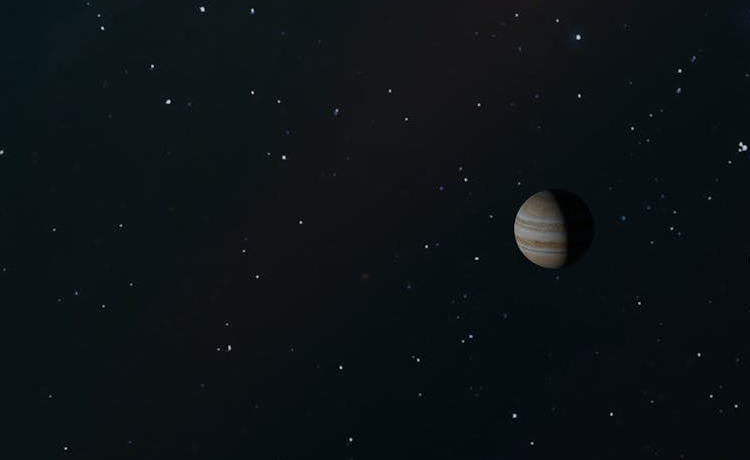
Wait, not quite. Jupiter has 95 officially recognized moons. But Saturn recently took the lead with 274 known moons as of early 2025.
Still, Jupiter’s four largest moons are the most famous. Galileo Galilei discovered them in 1610 with a basic telescope. They are called the Galilean satellites: Io, Europa, Ganymede, and Callisto.
Ganymede is the largest moon in the solar system, even bigger than the planet Mercury. Io is the most volcanically active body we know. Europa might have liquid water under its icy surface, making it a target for the search for alien life.
Through our telescope at Astroport Sariska, you can see these four moons lined up beside Jupiter. They change position every night.
5. The Milky Way Is Best Seen in Rural India
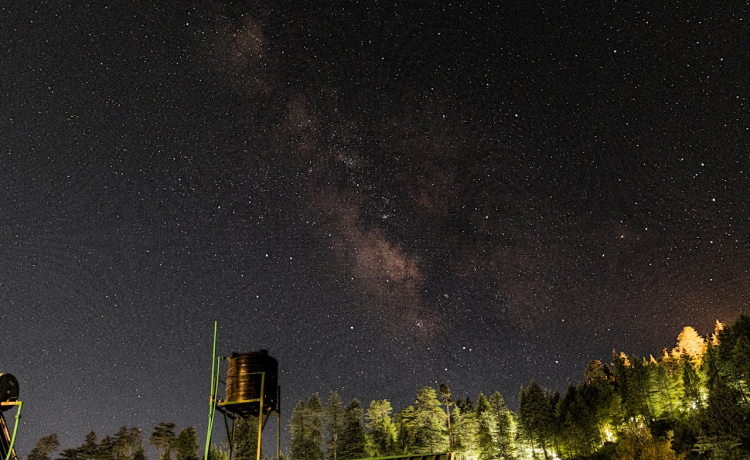
In cities, you can barely see the Milky Way. In a Bortle Class 4 location like Sariska, it looks like a river of light flowing across the sky.
The Milky Way is our home galaxy. It contains about 100 to 400 billion stars. We are located about 26,000 light-years from the center. When you look at the Milky Way, you are looking at billions of stars too faint to see individually.
The best months to see the Milky Way’s bright core are March through June. But even in winter, you can see fainter sections stretching overhead.
6. Your Eyes Need 20 Minutes to Truly See the Dark

This is one of the most important facts for astronomy for beginners in India. Your eyes need time to adjust to darkness.
In bright light, your pupils are small. In darkness, they expand. But the real change happens in your retina. Cells called rods become more sensitive. After 20 to 30 minutes, your eyes can be 10,000 to one million times more sensitive than in daylight.
That is why we ask guests to avoid using phones or white flashlights during stargazing sessions. Even a brief flash of white light resets your dark adaptation. You have to wait another 20 minutes to recover.
Red light does not affect your night vision. That is why astronomers use dim red torches. We provide these at Astroport Sariska.
7. The North Star Doesn’t Move, But the Sky Does
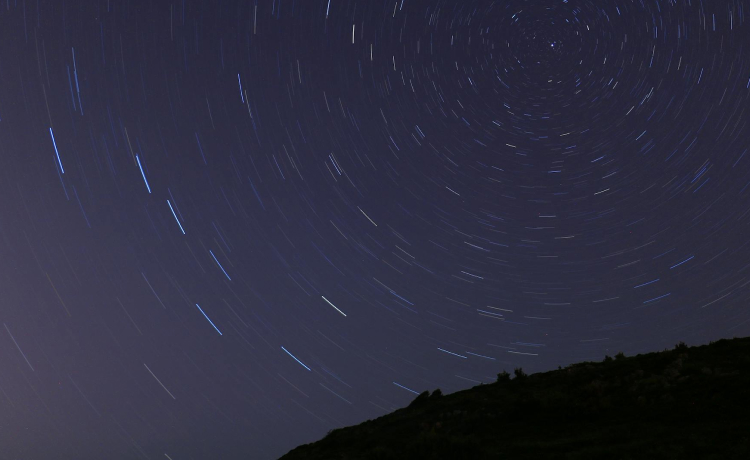
Polaris, the North Star, seems fixed in the sky. All other stars appear to rotate around it. But Polaris is not special because it is the brightest star. It is special because it sits almost directly above Earth’s North Pole.
Here is the twist. The title of North Star changes over time. Earth’s axis wobbles like a spinning top. This wobble, called axial precession, takes about 26,000 years to complete one cycle.
In 12,000 years, the bright star Vega will be the North Star. It held that position 14,000 years ago too. And Polaris itself is not a single star. It is actually a triple-star system.
8. Telescopes Don’t Work Like Movies Show
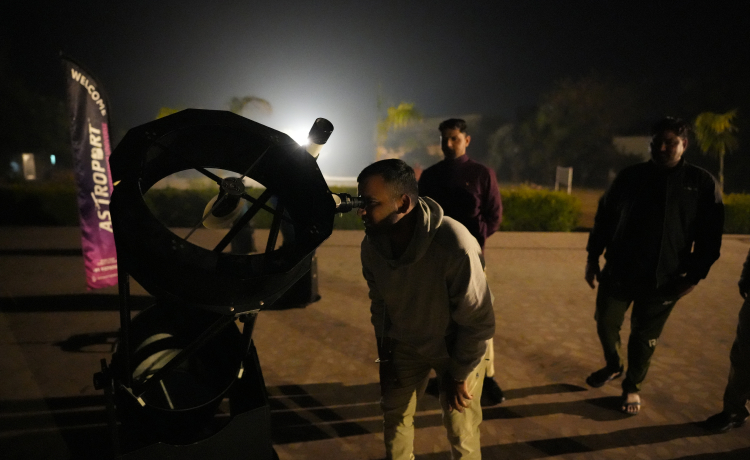
If you expect to see colorful nebulae like in space photos, you might be disappointed at first. Those images are often taken with long exposures and special filters.
What you see through a telescope is real-time, live, and unfiltered. Saturn’s rings are white or yellowish. The Moon’s craters are gray. But seeing them with your own eyes is far more exciting than any photo.
Our 16-inch Dobsonian telescope collects about 5,000 times more light than your eye. That lets you see faint objects like the Orion Nebula, star clusters, and distant galaxies. You will see structure and detail invisible to the naked eye.
We also provide stable equatorial mounts. Because Earth rotates, objects in the sky drift across your view. These mounts track that rotation, keeping objects centered in the eyepiece.
9. Wildlife and Stars Share the Same Night Rhythm
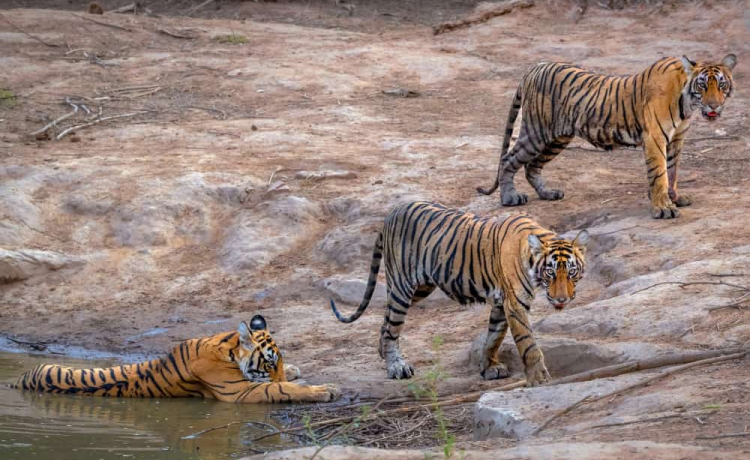
Astroport Sariska is located near the Sariska Tiger Reserve. About 70 percent of mammals are nocturnal. That includes Bengal tigers, leopards, owls, and many smaller creatures.
These animals depend on darkness to hunt, navigate, and survive. Light pollution disrupts their behavior. Bright lights can disorient birds, interfere with predator hunting, and reduce pollination by nocturnal insects.
By preserving dark skies, we protect wildlife. Our resort uses solar power and carefully managed lighting. That means you get to enjoy both the stars above and the sounds of the jungle around you.
10. India Has Some of the Darkest Skies in the Aravallis
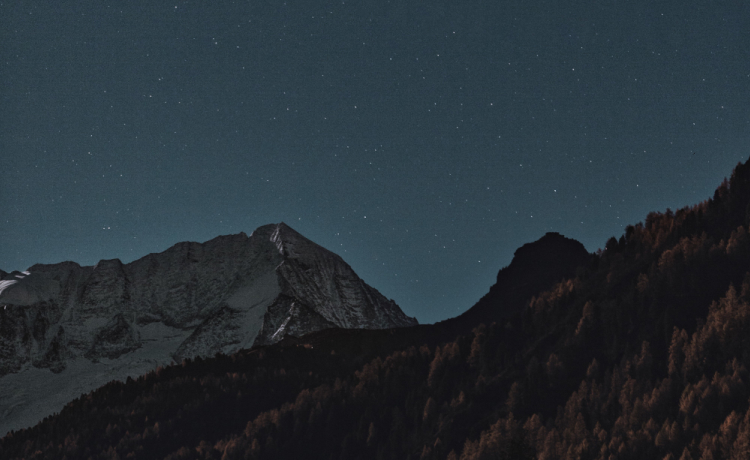
The Aravalli Range acts as a natural barrier. It blocks dust and pollution from the Thar Desert and Delhi. That gives Sariska clearer air and better sky transparency.
India’s astrotourism industry is growing fast. The global dark sky stargazing market was valued at one billion USD in 2025 and is expected to reach three billion USD by 2032.
Places like Hanle in Ladakh offer Bortle Class 1 skies, the darkest rating. But Hanle is remote and hard to reach. Sariska offers a sweet spot: dark enough to see the Milky Way and Andromeda, yet close enough for a weekend trip from Delhi.
India also has a deep history of astronomy. Ancient Indian astronomers like Aryabhata proposed that Earth rotates on its axis back in 499 CE. The Indian calendar system is based on lunar mansions and zodiac signs. Stargazing at Sariska connects you to thousands of years of human curiosity.
How to Prepare for Your First Stargazing Experience
A little preparation goes a long way. Here is what you need to know before your trip.
What to Wear for a Night Under the Stars
Nights in Rajasthan can get cold, especially between October and February. Wear layers. A warm jacket, long pants, and closed shoes are essential.
Bring a hat or scarf too. You will be outdoors for at least an hour, often longer. Comfort matters. If you are cold, you will not enjoy the experience.
Avoid bright or reflective clothing. Dark colors help maintain the group’s night vision. And please, no shiny jewelry or accessories that reflect light.
What to Bring (And What to Leave Behind)
Bring:
- A red flashlight or headlamp (we provide these, but you can bring your own)
- A water bottle
- A blanket or reclining chair if you have one (we provide seating)
- A star chart app on your phone (set to night mode with red display)
Leave Behind:
- White flashlights or bright headlamps
- Flash photography (it ruins everyone’s night vision)
- Expectations of seeing Hubble-quality images
- Your phone’s bright screen (use night mode or airplane mode)
Astronomy for Beginners India: A Simple Guide to Using a Telescope
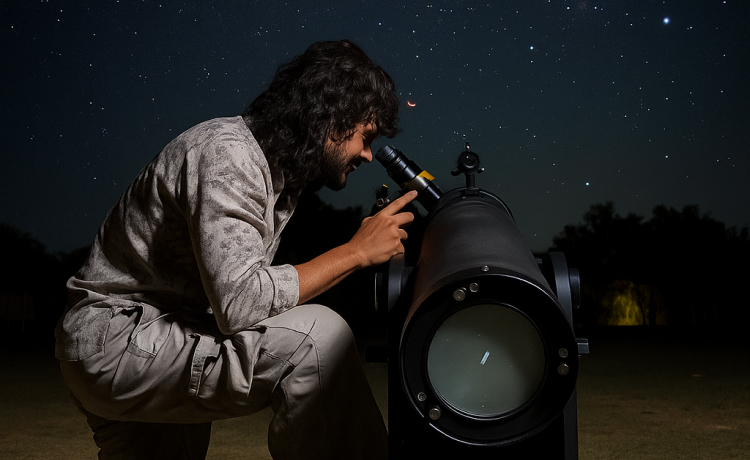
Telescopes can seem intimidating. But using one is easier than you think, especially with our guides helping.
There are two main types of telescopes. Refracting telescopes use lenses to bend light. Reflecting telescopes use mirrors to reflect light. Our 16-inch Dobsonian is a reflecting telescope. It is lightweight, easy to point, and collects a huge amount of light.
When you look through the eyepiece, you might need to adjust the focus. The object will appear upside down or flipped. That is normal. Telescopes do not correct the image like binoculars do.
Our guides will help you find targets like Saturn, Jupiter, or the Orion Nebula. They will explain what you are seeing and answer your questions. You do not need any prior experience. Just look, wonder, and enjoy.
Best Time of Year for Stargazing Near Sariska Tiger Reserve
Timing matters. Here is a seasonal breakdown.
October to November:
Perfect weather. Clear skies. Comfortable temperatures. The Andromeda Galaxy and Great Square of Pegasus are visible. This is one of the best windows for astronomy for beginners in India.
December to January:
Peak winter season. Cold but crystal clear. Orion, Sirius (the brightest star), and the Geminid meteor shower light up the sky.
March to June:
Hot during the day but excellent for stargazing. The Milky Way’s bright galactic core is visible in late hours. This is prime Milky Way season.
July to September:
Monsoon season. Cloudy and humid. Not ideal for stargazing, though occasional clear nights can be stunning after rain washes the air.
How Astroport Sariska Turns Stargazing Into a Full Nature Experience
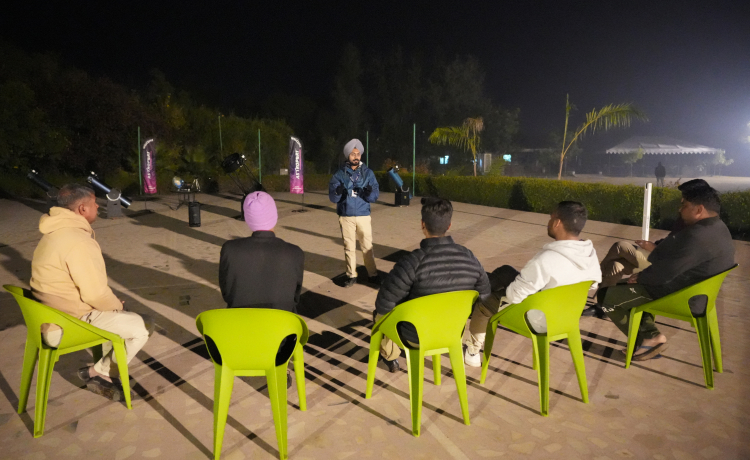
Stargazing is just one part of your adventure. We offer a complete experience that blends astronomy, wildlife, and eco-conscious comfort.
From Jungle Safaris to Night Skies
Start your day with a jungle safari in Sariska Tiger Reserve. Spot Bengal tigers, leopards, sambar deer, and over 200 bird species. Explore ancient temples and rugged Aravalli landscapes.
After a delicious farm-to-table lunch, relax by the pool or take a nature walk. As the sun sets, the magic begins. Our guided stargazing sessions start after dark. You will use professional telescopes, learn constellations, and hear stories about the cosmos.
Eco-Friendly Comfort Under the Stars
We believe in sustainable tourism. Our resort runs on 100 percent solar power. We are a no-plastic zone. Our dining features organic produce from local farms.
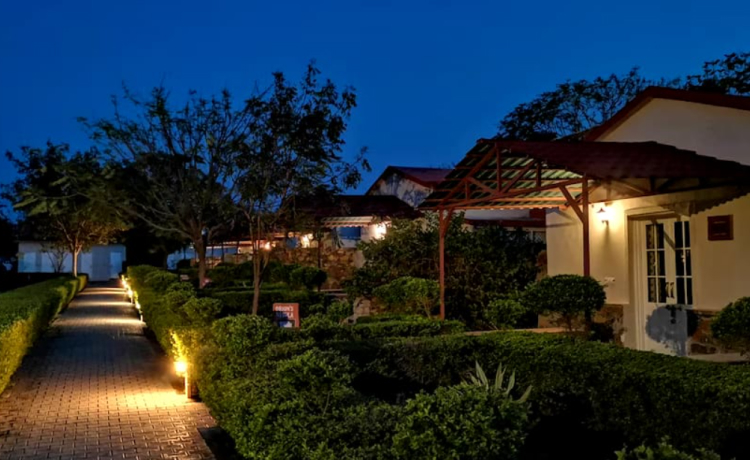
Our cottages offer premium comfort without harming the environment. You can choose standard cottages or private-pool villas. All are designed to blend with the natural surroundings. You get modern amenities, warm hospitality, and a peaceful setting.
Family, Couples, or Solo? Who This Experience Is Perfect For
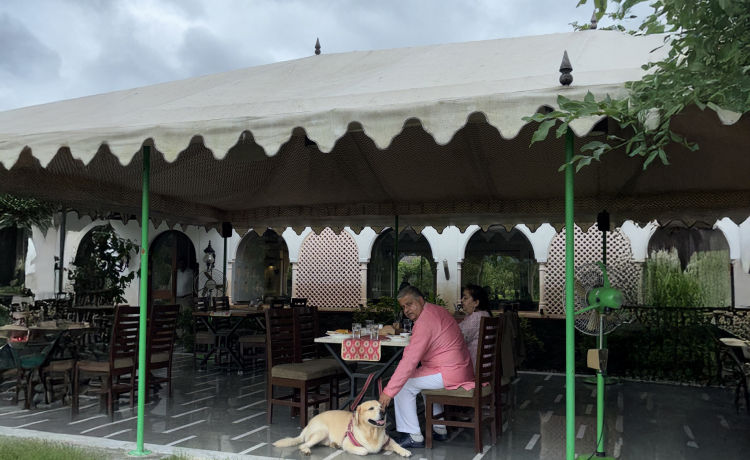
Families:
Kids love stargazing. It is educational and exciting. Our guides make learning fun. They explain concepts in simple terms and answer endless questions with patience.
Couples:
Looking for a romantic getaway? Stargazing under a canopy of stars is unforgettable. Add a candlelit dinner, a private pool villa, and the sounds of the jungle. Perfect.
Solo Travelers:
Traveling alone? You will feel welcome. Our group sessions are social and friendly. You can also book private sessions for a more personal experience.
Q: Is stargazing safe for young children?
A: Yes. All sessions are conducted in secure areas within the resort. Our guides are experienced and patient.
Q: Can elderly guests participate?
A: Absolutely. We provide comfortable seating. Sessions are relaxed and at your own pace.
Plan Your Astronomy Getaway from Delhi NCR
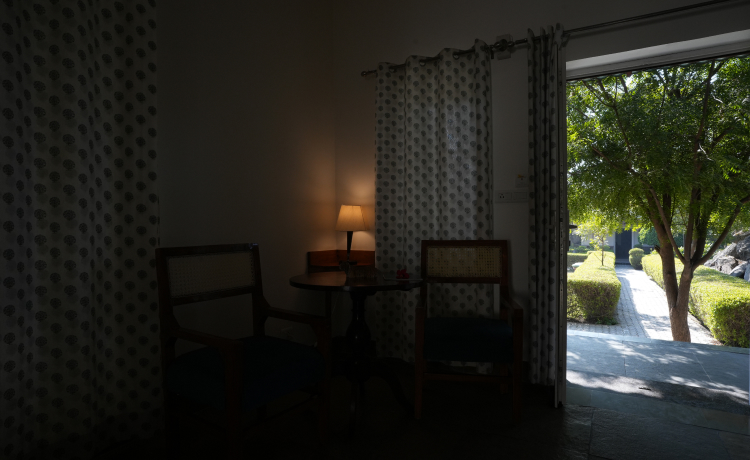
Astroport Sariska is located in Tehla, Alwar district, Rajasthan. It is about a 3 to 4 hour drive from Delhi NCR. The roads are good, and the drive is scenic.
You can drive yourself or hire a cab. We also offer pickup services for groups. The journey itself is part of the experience. You leave behind city chaos and enter the peaceful Aravalli hills.
Weekend trips are popular. Arrive Friday evening, stargaze Friday and Saturday nights, and return Sunday. You can also extend your stay for more jungle safaris and relaxation.
Q: Is the drive from Delhi safe?
A: Yes. The route is well-maintained. We recommend leaving early to avoid traffic.
Q: Do you offer packages for families?
A: Yes. We have family packages that include accommodation, meals, safari, and stargazing sessions. Contact us for details.
Frequently Asked Questions About Astronomy for Beginners in India
Q: Is astronomy for beginners in India suitable for children?
A: Yes. Our stargazing sessions are guided and designed to be fun and easy for all ages. Kids often enjoy it more than adults.
Q: Do I need my own telescope to enjoy stargazing?
A: No. We provide professional telescopes and expert guides during sessions. You just need to bring curiosity.
Q: What can I really see in the night sky near Sariska?
A: You can see planets like Jupiter and Saturn, constellations like Orion, the Moon’s craters, and on clear nights, the Milky Way and Andromeda Galaxy.
Q: What is the best season for stargazing in Rajasthan?
A: October to March offers the clearest skies and most comfortable weather. December and January are peak months.
Q: Is it safe to stargaze near a tiger reserve?
A: Yes. All sessions are conducted in secure, designated areas within the resort. Wildlife stays in the jungle. You are completely safe.
Q: Can beginners understand telescope viewing easily?
A: Absolutely. Our guides explain everything in simple, beginner-friendly terms. No prior experience needed.
Q: How far is Astroport Sariska from Delhi NCR?
A: Approximately 3 to 4 hours by car. The drive is scenic and easy.
Ready to See the Universe Up Close? Book Your Stay at Astroport Sariska
You have learned the facts. Now it is time to experience them. Astronomy for beginners in India starts here, under the darkest skies near Delhi NCR.
At Astroport Sariska, you will see planets, galaxies, and constellations with your own eyes. You will learn from passionate guides. You will relax in eco-friendly comfort. And you will create memories that last a lifetime.
Whether you are planning a family adventure, a romantic escape, or a solo journey of wonder, we are ready to welcome you.
Book your stargazing getaway today at Astroport Sariska and discover the universe waiting above.