
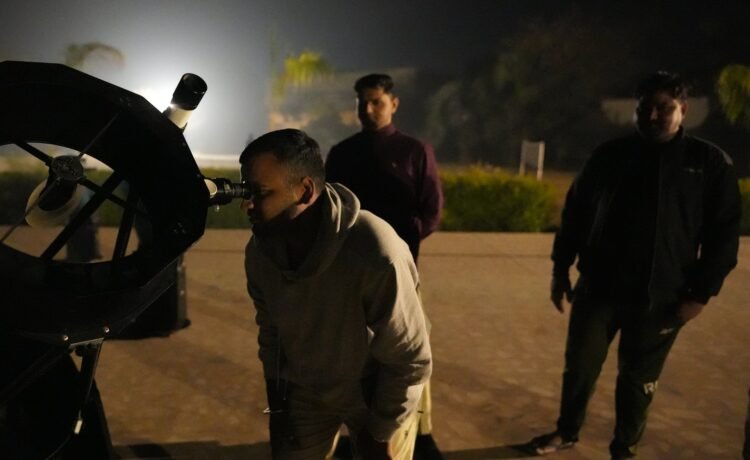
The first time is always a shock. You expect a faint smudge. Instead, a bright, textured river of light runs the whole width of the sky.
Then you notice the dark lanes cutting through it.
But most people never see this. Because the Milky Way keeps a season, and half the year it simply is not there. So timing matters more than gear, effort or luck.
This guide answers the best time Milky Way India question properly. First, you will learn why the season exists. Then you will get a month-by-month table for Indian skies.
Also, you will see which months the monsoon quietly cancels. Finally, you will know the two windows that actually work.
What You Are Actually Looking At
Our galaxy is a flat disc of stars. We sit inside it, roughly two-thirds of the way out from the middle.
So when you look along the plane of that disc, you see millions of distant stars stacked up. Because they blur together, they read as a glowing band.
Every single star you can see with your eyes belongs to this galaxy (Source: EarthSky, 2026 — Every visible star is within the Milky Way).
But the band is not evenly bright. Look towards the centre and it swells into a wide, brilliant boulevard.
That is the galactic core. Also, it is the part every Milky Way photograph is really about.
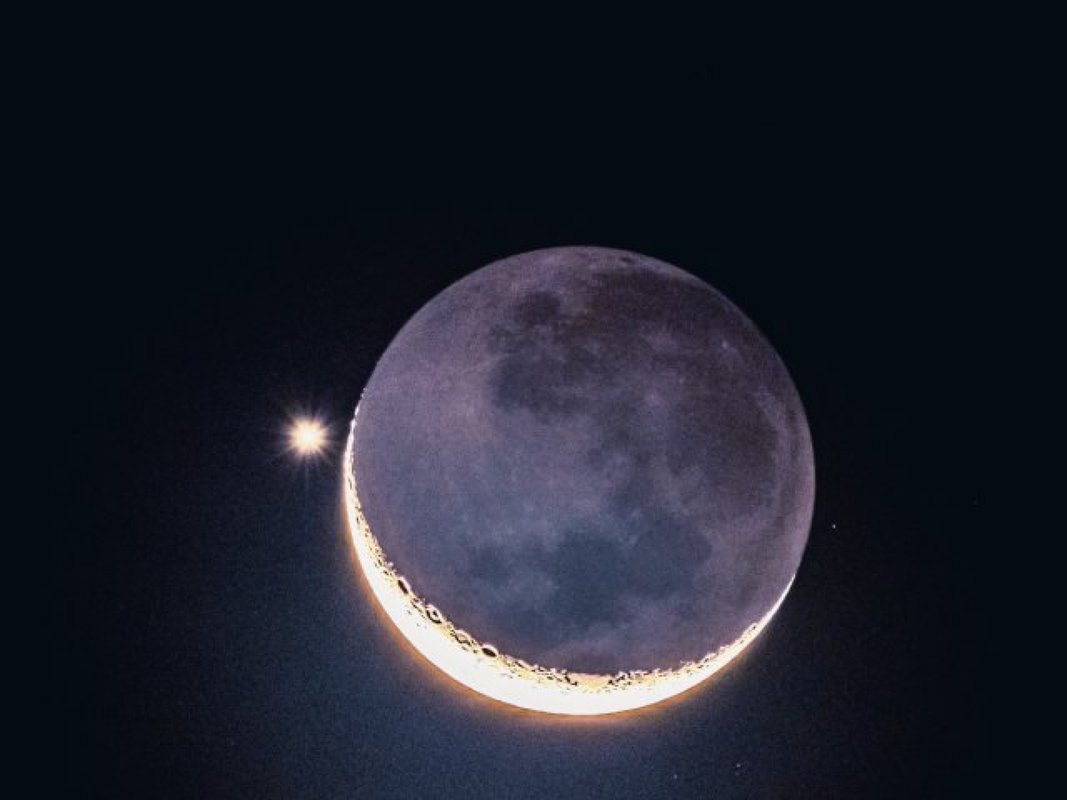
The dark streaks running through it are not gaps. Instead, they are clouds of interstellar dust blocking the light behind them.
Seeing those lanes with your own eyes is the real test. Because they only appear under genuinely dark skies, they are a good gauge of your site.
Scale helps here, briefly. The galaxy is a disc roughly a hundred thousand light years across. So the light reaching you left the core long before humans existed.
You are also moving while you watch. Our whole solar system circles the centre once every couple of hundred million years.
None of that shows in the view, of course. Still, it changes how the view lands.
Q: Is the Milky Way the same thing as the galactic core?
A: No. So the Milky Way is the whole band across the sky, visible in some form all year. Meanwhile, the core is the bright bulge at the centre, and that has a season.
Why the Milky Way Has a Season
The core does not move. Instead, we do.
Earth orbits the Sun once a year. So the night side of our planet faces a different direction each month.
For part of the year, the core sits behind the Sun from our point of view. Then it is up during daylight, and invisible.
For the rest, it rises at night. Because that window shifts steadily, the core appears a little earlier each week.
So the same object climbs the sky on a slow annual schedule. In February it barely clears the horizon before dawn. By August it stands high in the evening.
Then it slides west through autumn. Finally it disappears into the Sun’s glare around November.
Astronomers call this stretch Milky Way season. In practice, it runs from roughly February to October (Source: EarthSky, 2026 — Milky Way season).
Q: Why is there no Milky Way core in December?
A: Because Earth is on the other side of its orbit. So at night we face away from the galactic centre, out towards the sparse outer arms. Still, the fainter winter band is visible, running through Orion.
Month by Month: The Milky Way Over India
Here is the year, judged for northern India. Sariska sits near 27 degrees north, so this holds for Delhi, Rajasthan and most of the plains.
| Month | Core visible? | Best hours to look | Typical sky in NW India |
|---|---|---|---|
| January | No | Core behind the Sun | Clear and cold, winter band only |
| February | Just barely | The hour before dawn | Clear, cold, very steady |
| March | Yes, low | Pre-dawn, roughly 4 to 6 a.m. | Clear and dry |
| April | Yes | After about 2 a.m. | Clear, warming, good |
| May | Yes, climbing | After midnight | Hot, some dust haze |
| June | Yes | Late evening onward | Pre-monsoon dust and haze |
| July | Yes, high | Mid-evening onward | Monsoon cloud, poor odds |
| August | Highest of the year | About two hours after sunset | Monsoon cloud, poor odds |
| September | Yes, high | Early evening | Monsoon retreating, improving |
| October | Yes, sinking west | Right after full dark | Crisp and clear, best odds |
| November | Briefly, low west | A short window at dusk | Clear and cool |
| December | No | Core behind the Sun | Clear and cold, winter band only |
Reading the Table
Notice the tension in that table. Because the best sky positions and the best weather fall in different months, you have to choose.
In August the core stands highest, due south, a couple of hours after sunset (Source: EarthSky, 2026 — Teapot of Sagittarius points to the galactic centre).
Yet August is also peak monsoon across most of India. So the geometry is perfect and the clouds are relentless.
Q: Does this table change much further south in India?
A: A little, and in your favour. Because southern India sits closer to the equator, the core climbs higher there. Still, the monthly pattern stays the same everywhere in the country.
The Best and Worst Months, Ranked
Strip out the theory and the year sorts into four tiers.
Tier one: October. The core is still up as soon as it gets dark, sitting low in the southwest. Meanwhile, the monsoon has cleared and the air is washed clean.
So you get a reasonable core and reliable skies. For most Indian travellers, this is the answer.
Tier two: March, April and early May. The core is well placed, though only in the small hours. Also, spring skies here are dry and steady.
The catch is the alarm clock. Because you are watching at 3 or 4 a.m., it suits committed skywatchers more than casual ones.
Tier three: late September. The core is high and the monsoon is retreating. But cloud is still a coin toss.
Tier four: July and August. Textbook-perfect geometry, ruined by cloud. Also, June brings dust haze before the rains arrive.
Worth saying plainly: these months are not hopeless. Because monsoon skies break occasionally, a clear August night is spectacular.
But you cannot plan around it. So treat a clear night then as a bonus rather than a booking.
November is the quiet surprise. The core hangs low in the west for a short window after dusk.
That window closes fast, within maybe forty minutes. Still, a low core over a ridge makes a striking photograph.

So the honest recommendation is October first, spring second. Still, any clear moonless night in season beats a cloudy one in August.
Q: If I can only travel once, when should I go?
A: Aim for a moonless week in October. Because the core is up early and the sky is post-monsoon clear, your odds are best. Also, the nights are comfortable rather than cold.
Three Things That Decide Your Night
Month is only the first filter. So three more factors settle whether you actually see anything.
One: the moon. A bright moon washes the core out completely. Because the Milky Way is a diffuse glow, it cannot compete with moonlight.
So plan around the new moon. A window of about five nights either side works well.
Two: cloud and haze. Thin high cloud is enough to erase the core. Meanwhile, dust haze near the horizon does the same job lower down.
Three: light pollution. This is the big one. Skyglow now hides the Milky Way from more than a third of humanity (Source: Falchi et al., 2016 — The New World Atlas of Artificial Night Sky Brightness).
And it is getting worse quickly. Night skies have been brightening by about 9.6 percent a year, which doubles their brightness every eight years (Source: US National Park Service, 2026 — Light Pollution).

So the right month with the wrong sky gives you nothing. Therefore, treat all three as gates you must pass.
Q: How far from the new moon can I still go?
A: About five days either side is comfortable. Beyond that, the moon is bright enough to flatten the core. Still, you can wait for moonset and watch the hours afterwards.
How to Find the Galactic Core
Once you are under a dark sky, finding it is easy. So work through these steps in order.
-
Face south, or southwest in autumn. First, get your bearings before it is fully dark. Also, note where any town glow sits.
-
Give your eyes thirty minutes. Then stay off your phone entirely. Because bright light resets your night vision instantly (Source: NASA, 2026 — How to Find Good Places to Stargaze).
-
Find the Teapot. Next, look for a group of stars shaped like a teapot, low in the south. That is part of Sagittarius.
-
Look just above its spout. So the core sits right there, between the Teapot and the tail of Scorpius.
-
Use averted vision. Then look slightly to one side of it. Because the edges of your retina are more light-sensitive, faint detail jumps out.
-
Wait, and look again. Finally, give it ten more minutes. The dust lanes usually emerge last.

So no app is strictly necessary. Still, a red-filtered sky chart helps on your first attempt.
Q: What is averted vision and why does it work?
A: It means looking slightly beside a faint object rather than straight at it. Because the outer parts of your retina detect dim light better, the object brightens. So astronomers use the trick constantly.
What About the Winter Milky Way?
November to January gets written off too easily. So it deserves a fairer hearing.
The core is genuinely gone in those months. But the band itself never leaves.
In winter you are looking outward, away from the galactic centre. So you see the sparse outer arms instead of the crowded middle.
That band runs through Orion, Taurus and Auriga. Because those stars sit high overhead in December, it arcs right across the top of the sky.
It is fainter, certainly. Still, under a dark sky it is unmistakable, and it has its own character.
Winter also brings the year’s brightest stars. Orion, Sirius and the Pleiades all belong to this stretch (Source: EarthSky, 2026 — Why are stars so bright on winter nights?).
Then there is the air itself. Because cold winter air over Rajasthan is dry and stable, star images stay sharp.
So December is poor for the core but excellent for everything else. Meanwhile, the long nights give you far more observing hours.
Many first-timers actually prefer it. You get crisp constellations, easy planets and comfortable timings.
So do not skip winter. Just go knowing what you will and will not see.
Q: Is a winter trip worth it if the core is not up?
A: Yes, for different reasons. Because winter air is dry and steady, telescope views are at their sharpest. Also, the brightest constellations of the year are on show. Still, save the core photography for October.
Your Milky Way Night Checklist
Small things decide whether you last the session. So run through this before you leave.
- Moonless night, ideally within five days of new moon
- Month chosen from the table above, October for the best odds
- Genuinely dark site, well clear of any town glow
- Clear-sky forecast, rechecked on the day
- Thirty minutes with no screens, for eye adaptation
- Red-light torch instead of a white one
- Warm layers, since desert nights cool fast
- Something to lie back on, so your neck survives
- Patience for a full hour, not fifteen minutes

Also, keep expectations honest. Your eyes see structure and depth, while a camera sees colour. Both are worth having.
Arriving Well
One habit is worth building early. Arrive while there is still light in the sky.
Because you can then set up properly, the transition into darkness feels gradual. Meanwhile, people who arrive at midnight spend their first half hour stumbling around.
Bring one other person, if you can. So there is somebody to point things out to.
The band takes time to reveal itself. First you notice a vague brightening. Then the edges sharpen. Finally the dust lanes cut through, and the shape locks into place.
That last step usually takes forty minutes. Still, it is the moment worth waiting for.
Q: Will the Milky Way look like the photographs?
A: Not quite, and that is fine. Because cameras collect light over many seconds, they pull out colour your eyes cannot. Still, the live view has depth and scale that no photo captures.
Why Astroport Sariska
Picking the right month is half the job. So the other half is standing somewhere the core can actually reach your eyes.
Astroport Sariska is India’s first astronomy resort. It sits at Tehla in the Aravalli hills, beside the Sariska Tiger Reserve in Alwar, Rajasthan.
The drive is about four to five hours from Delhi NCR. So a Milky Way night becomes a weekend rather than an expedition.
The site was chosen for its darkness. Because there is no city dome nearby, guests see thousands of stars on a clear night. Meanwhile, central Delhi offers a couple of dozen.
That gap is exactly what the core needs. So the dust lanes become visible, not just the band.
You also get help. Resident astronomers run the sessions with professional telescopes. Also, there are astrophotography sessions if you want to take the core home.
One practical note on timing. Astroport rates October to March as its ideal window, when the air is clearer and the nights are longer (Source: Astroport Sariska — Stargazing Weekend From Delhi). So an October trip lines up neatly with both the core season and the resort calendar.
Days here are not idle either. For example, there are jeep safaris into Sariska, walks through the organic farm, and a spa. Meanwhile, the whole property runs on solar power. Plan your stay for a moonless week.
Conclusion
The Milky Way is not always there, and that surprises people. So the core keeps a season running from about February to October.
August puts it highest. Yet August also brings monsoon cloud across most of India.
That leaves two honest windows. October gives you an early-evening core under clear post-monsoon skies. Meanwhile, March to May gives you a pre-dawn core and very stable air.
Then three gates decide the night itself. Check the moon, check the cloud, and get far from city light.
Do all three and the band appears within half an hour. So pick your month, watch the moon phase, and go. Plan your Milky Way trip while the season is still open.
FAQ
Timing and Season
Q: What is the best month to see the Milky Way in India?
A: October is the most reliable month in north India. The bright galactic core is still up in the early evening, and the monsoon clouds have cleared. March and April are the next best, though the core only rises in the pre-dawn hours.
Q: Can you see the Milky Way all year round?
A: You can see part of it all year, but not the bright part. The dense galactic core is only above the horizon at night from around February to October. From November to January the core sits behind the Sun, so only the faint outer band is visible.
Q: What time of night is the Milky Way brightest?
A: Whenever the core is highest above the horizon, which shifts through the season. In the spring months that means the hours just before dawn. By August and September it means the first few hours after dark.
Monsoon and Equipment
Q: Does the monsoon ruin Milky Way season in India?
A: It overlaps with the best months, unfortunately. July and August place the core highest in the sky, but they are also the cloudiest months in most of India. That is why late September and October are the practical sweet spot.
Q: Do I need a telescope to see the Milky Way?
A: No, and a telescope actually makes it worse. The Milky Way spans the whole sky, so you need the widest view possible. Dark skies and fully adapted eyes matter far more than any equipment.
Dark Skies and Where to Go
Q: How dark does the sky need to be to see the galactic core?
A: Dark enough that city glow no longer reaches the horizon. Skyglow hides the Milky Way from more than a third of the world’s population. Once you are far from town, the core appears as a textured band with visible dust lanes.
Q: Where near Delhi can I see the Milky Way?
A: You need to leave the city dome behind entirely, which usually means several hours of driving. Astroport Sariska sits in the Aravalli hills about four to five hours from Delhi NCR. The skies there are dark enough for the core and its dust lanes to show clearly.