
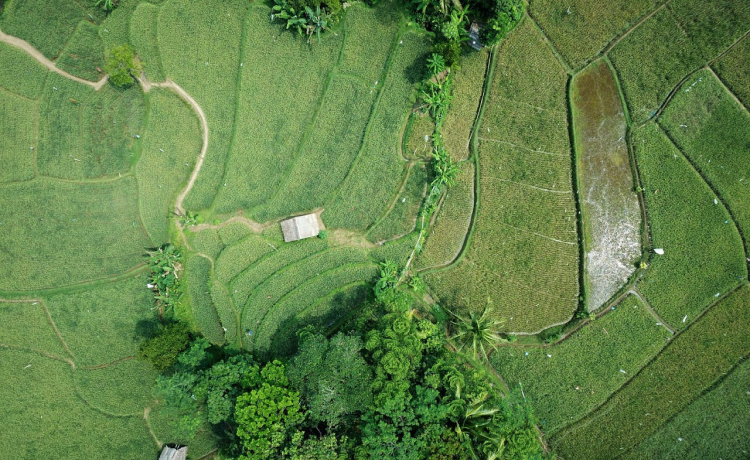
What Is Agrotourism? Experience It at Astroport Sariska
When did you last touch the soil?
Not a pot on a balcony. Real soil. The kind that has been farmed for generations. The kind that smells earthy after rain.
Most of us in Delhi, Gurugram, or Noida have lost that connection. Food arrives in packets. Vegetables come from supermarkets. Milk is in a sealed pouch. We eat three times a day without knowing where anything came from.
Agrotourism changes this.
It takes you to a working farm. You see the plants. You meet the animals. You understand, for the first time or the first time in years, exactly where your food comes from.
And the good news is you do not need to travel far. One of the best agrotourism near Delhi experiences is just four hours away, in the Aravalli hills of Rajasthan.
At Astroport Sariska, we are India’s first astronomy-themed resort. But we are also a working organic farm. We grow our own vegetables, run our own dairy, and welcome guests into the process every single day.
This article explains what agrotourism is, why it is growing so fast, and what you can experience on our farm during your stay.
What Is Agrotourism?
Agrotourism means visiting a working farm as a travel experience.
It is not a theme park version of farming. It is the real thing. You visit a farm that is actually producing food. You walk through fields. You see crops growing. You meet the animals. Sometimes, you get to do the work yourself.
The word comes from combining “agriculture” and “tourism.” But the idea is ancient. People have always been curious about where their food comes from. Agrotourism simply makes that curiosity into a trip.
Today, it is one of the fastest-growing travel categories in India. Urban families are seeking it. Schools are booking agrotourism trips for students. Couples are choosing farm stays over city hotels.
Why? Because it is grounding. It is real. And in a world of screens and city noise, it offers something that is genuinely rare: a direct connection to the natural world.
Q: What is agrotourism in simple terms?
A: Agrotourism means visiting a real, working farm as part of your travel experience. You explore crops, meet animals, learn about farming, and sometimes participate in the work yourself.
Why Agrotourism Is Growing Near Delhi
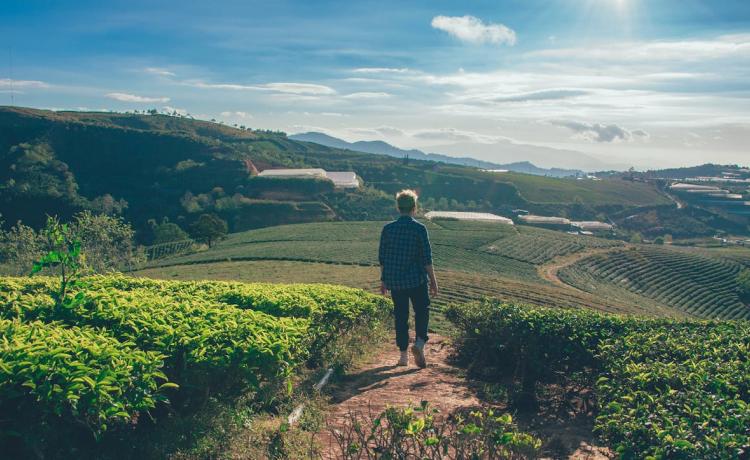
Delhi is one of the largest and most densely populated cities in the world. It is also one of the most disconnected from nature.
Children in Delhi often cannot name the vegetables in their school lunches. Adults eat organic food without knowing what organic actually means. Most people have never seen a crop being harvested.
This disconnection is driving the surge in agrotourism near Delhi.
Families want their children to see a real farm before they grow up. Parents want weekend trips that teach something without feeling like school. Travelers want experiences that feel genuine, not staged.
At the same time, city life has become harder. Air quality in Delhi is poor for much of the year. Noise is constant. Green space is shrinking. A trip to a working farm feels like medicine.
The short drive also helps. Many agrotourism destinations near Delhi are in Haryana, Uttarakhand, or Rajasthan. They are close enough for a weekend. Far enough to feel like a real escape.
Quick Facts: Agrotourism at Astroport Sariska
- Location: Tehla, Alwar district, Rajasthan
- Distance from Delhi: 200 to 215 km (3 to 5 hours)
- Farm type: On-site organic farm with vegetables, fruits, dairy, and poultry
- Agro activities: Guided farm tours, organic farming sessions, dairy visits, nature cooking, tractor rides
- Dining: Farm-to-table meals at the Orbit Restaurant using home-grown produce
- Amenities: Solar-powered cottages, swimming pool, Sparsh Spa, outdoor games
- Also available: Jungle safari, stargazing, telescope sessions, pottery, nature trails
- Best for: Families with children, couples, school groups, corporate retreats
- Best season: October to March
What You Experience at Astroport Sariska’s Organic Farm
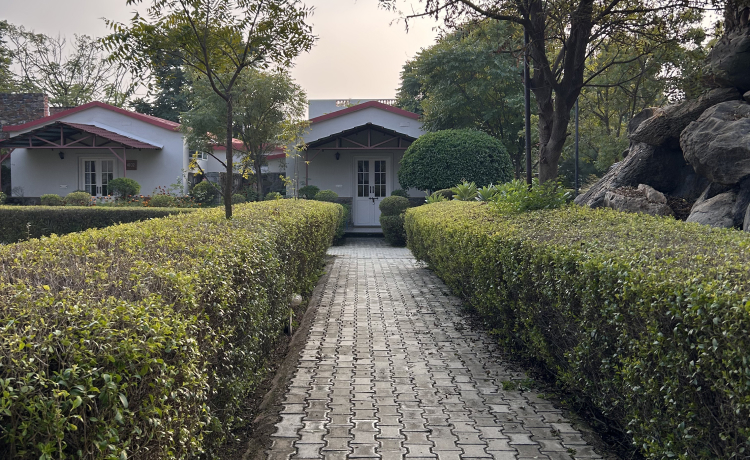
We did not build a farm to show guests. We built a farm because it is central to how we operate. It feeds our restaurant. It supports our sustainability model. It connects our guests to the land.
Here is what a typical farm experience looks like during your stay.
Guided Farm Tour
Your tour starts at the farm gate.
A guide walks you through every part of the property. You see what is growing right now. Seasonal vegetables. Leafy greens. Fruit trees. Herbs used in the kitchen that same evening.
The guide explains how each crop grows. How long it takes from seed to harvest. What the soil needs. How we avoid chemical fertilizers and pesticides.
You learn, without realizing you are learning. It is a conversation, not a lecture.
For children, this is often a revelation. The tomato they ate at lunch came from that plant right there. The eggplant they turned their nose up at last week was picked this morning. Something changes in how they see food.
Hands-On Organic Farming Sessions
This is where you get your hands dirty.
Guests who want to go deeper can join a farming session. You plant seeds. You pull weeds. You water the beds. You harvest whatever is ready.
These are not performative activities. The work you do genuinely contributes to the farm. You are not pretending to farm. You are farming.
Adults find this surprisingly therapeutic. There is something deeply calming about working with soil. No phone. No emails. Just your hands and the earth.
Children love it without reservation. Give a child a small trowel and a patch of dirt and watch what happens.
Q: Do guests need any farming experience for the hands-on sessions?
A: No experience is needed at all. Our farm team guides you through every step. All equipment is provided. Sessions are designed for all ages and fitness levels.
Dairy Visit
We have our own cow dairy on the property.
During the dairy visit, you see where our milk comes from. You meet the animals. You learn how milk is collected, stored, and used in the kitchen.
For most urban visitors, this is their first time seeing dairy production up close. Milk does not come from a packet. It comes from a living animal, cared for daily by a dedicated team.
The dairy also produces yogurt, fresh cream, and other dairy products that go directly into our kitchen. Nothing is outsourced. Nothing is processed.
Children especially love the dairy visit. Many have never been close to a cow. The interaction tends to be one of the memories they talk about on the drive home.
Poultry Visit
Our on-site poultry unit provides fresh eggs for the kitchen.
The visit shows guests how the poultry is managed sustainably. Free-range practices, natural feed, and humane conditions are standard here.
Eggs at Astroport Sariska do not come from a commercial facility. They come from birds raised 50 meters from the kitchen. That freshness is visible in every dish they appear in.
Nature Cooking
This is one of our most popular experiences.
Nature cooking takes the farm-to-table concept one step further. Guests participate in cooking a meal using ingredients sourced directly from the farm that day.
You harvest your vegetables. You bring them to the kitchen. A member of our team shows you how to prepare traditional Rajasthani dishes using what you just picked.
The cooking session ends with a meal. Not just any meal. One you helped make, from ingredients you just pulled from the ground.
It is hard to describe how different that food tastes. Ask anyone who has done it.
Farm-to-Table Dining at the Orbit Restaurant
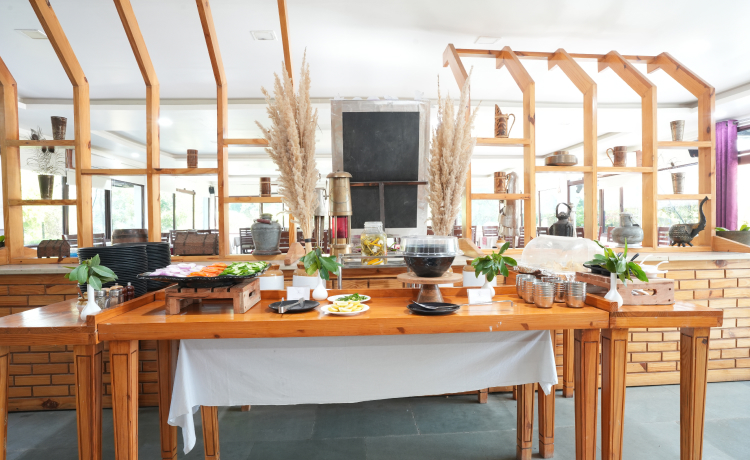
Every meal at Astroport Sariska reflects our farm.
The Orbit Restaurant uses a seasonal menu built around what is growing on the property. Home-grown vegetables, fresh dairy, and organic eggs form the foundation of every dish.
The menu also draws from local Rajasthani cuisine. You will find traditional flavors, local spices, and regional cooking techniques alongside the fresh farm produce.
Nothing travels far. Nothing sits in a cold-chain warehouse. Everything on your plate was grown or raised close to where you are sitting.
Private dining is also available. A candlelit dinner can be arranged at various spots around the property. Imagine eating under the open sky, with the Aravalli hills around you and the stars beginning to appear overhead.
This is farm-to-table taken seriously. Not as a label. As a practice.
More Agrotourism Activities at Astroport Sariska
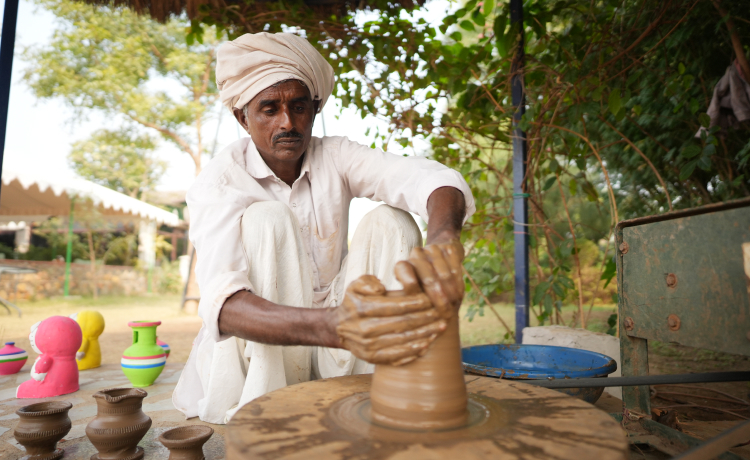
Agrotourism at Astroport goes beyond the farm itself. The entire property reflects rural Rajasthani culture and sustainable living.
Tractor Rides and Camel Cart Rides
Guests can enjoy tractor rides through the property and surrounding areas. This is a classic agrotourism activity, and children love it without exception.
Camel cart rides are also available on request. Both offer a slow, grounded way to experience the landscape that no car can replicate.
Pottery
Pottery sessions are held on weekends.
This ancient craft connects you directly to rural Indian tradition. You sit at a wheel. You shape clay. You take home something you made with your hands.
It sounds simple. But in a world of digital everything, shaping something physical
with your own hands is quietly powerful.
Cultural Folk Music Evenings
Our evenings often include cultural folk music from the Rajasthan region.
Local musicians perform traditional songs and instruments. This is not a tourist performance. It is a genuine expression of the region’s cultural heritage.
Guests who stay multiple nights often say these evenings are among their most memorable.
Worm Composting Demonstration
This one surprises guests.
Our worm composting unit converts organic waste from the kitchen and farm into nutrient-rich manure. That manure goes back into the farm. The loop is closed.
Watching this process, especially with children, makes sustainability tangible. It stops being an abstract concept and becomes a visible cycle that makes complete sense.
Why Agrotourism Near Delhi Is Perfect for Families
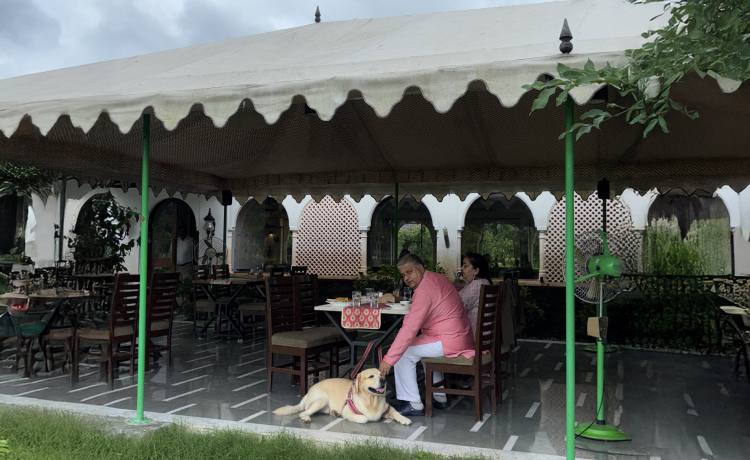
Families are the biggest drivers of the agrotourism boom near Delhi.
Parents want trips that are educational without being classroom-like. They want activities that engage children without screens. They want holidays that create real memories, not just Instagram photos.
Agrotourism checks every box.
A child who joins a farm tour at Astroport Sariska learns about photosynthesis without a textbook. A child who visits the dairy understands where milk comes from without a lecture. A child who helps cook a meal with vegetables they harvested will eat differently for the rest of their life.
These are not small things. These are the experiences that shape how children relate to food, nature, and the planet.
And while children explore the farm, adults get something equally valuable: space to breathe. To slow down. To sit quietly on a terrace with a cup of chai and no notifications.
Q: What is the best age for children to visit Astroport Sariska for agrotourism?
A: Children from age 5 upward enjoy the farm tours, dairy visits, and hands-on sessions. Older children also enjoy the pottery and telescope sessions in the evening.
Agrotourism and Stargazing: A Unique Combination
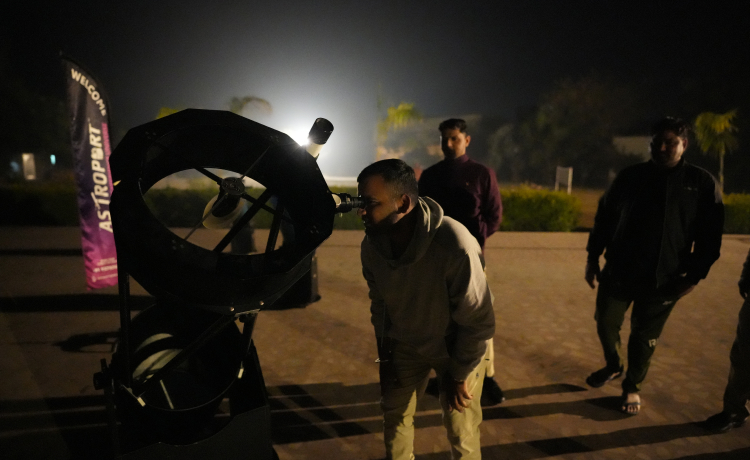
Most agrotourism destinations offer farming experiences and stop there.
Astroport Sariska offers something no other agrotourism destination near Delhi can match: the night sky.
After spending your day on the farm, your evening begins with professional stargazing. Our trained astronomers set up high-powered telescopes. The skies above us are Bortle Class 3 to 4, among the darkest in northern India. The Milky Way is visible. Saturn’s rings are visible. Jupiter’s moons are visible.
This combination of daytime agrotourism and nighttime astronomy is genuinely unique.
You come for the farm. You stay for the stars. You leave having experienced something that no city hotel, theme park, or standard resort can offer.
It is also deeply coherent. During the day, you connect with the earth. At night, you connect with the cosmos. Both remind you of the same thing: that the world is larger, older, and more beautiful than the city lets you see.
Planning Your Agrotourism Trip Near Delhi
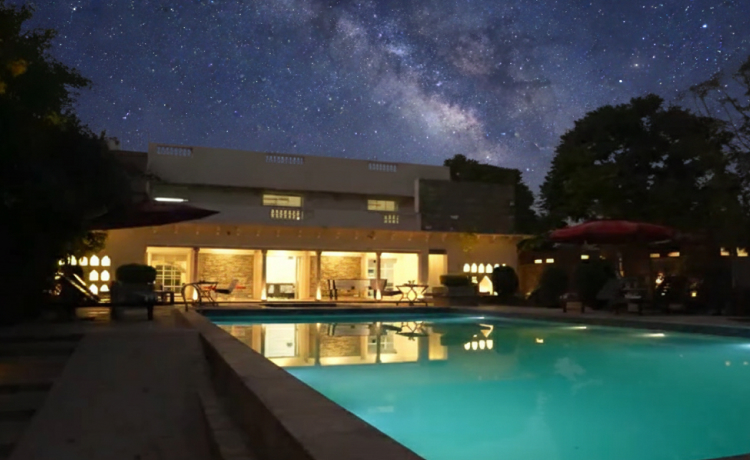
Here is everything you need to plan a visit.
Getting there: Astroport Sariska is approximately 200 to 215 km from Delhi. The drive takes 3 to 5 hours depending on traffic. Take NH 48 toward Jaipur, then head toward Alwar and Tehla. Download offline maps before you leave, as signals can drop near the reserve.
Best time to visit: October to March offers the best weather. Days are warm and clear. Nights are cool and ideal for stargazing. April to June is hot but manageable in the mornings.
How long to stay: Two nights is the ideal duration. This gives you one full farm day, two evenings of stargazing, and time for a safari if you want one.
What to pack: Comfortable clothes you do not mind getting dirty on the farm. Closed shoes for the farm and trails. A warm layer for evenings in winter months. A camera. No special equipment is needed for any activity.
What is provided: All farming tools and equipment. Telescope access and guidance. Meals from the organic farm. Cottages with all standard amenities including air conditioning and attached bathrooms.
Frequently Asked Questions About Agrotourism Near Delhi
Q: What is agrotourism near Delhi?
A: Agrotourism near Delhi means visiting a working farm within a few hours of the city. You explore crops and animals, participate in farming activities, eat farm-fresh food, and learn about sustainable agriculture. Astroport Sariska is one of the best options, located 200 km from Delhi in Rajasthan.
Q: What can I do at an agrotourism destination near Delhi?
A: At Astroport Sariska, you can join guided farm tours, hands-on farming sessions, dairy and poultry visits, nature cooking, tractor rides, pottery, camel cart rides, and cultural folk music evenings. In the evening, you can also join our professional stargazing sessions.
Q: Is agrotourism near Delhi suitable for school trips?
A: Yes. Astroport Sariska is well-suited for school and educational group visits. Farm tours, composting demonstrations, astronomy workshops, and wildlife awareness sessions provide rich, curriculum-linked learning across science, geography, and environmental studies.
Q: How far is Astroport Sariska from Delhi for an agrotourism trip?
A: Astroport Sariska is approximately 200 to 215 kilometres from Delhi. The drive takes 3 to 5 hours and is a comfortable, well-routed journey via NH 48.
Q: Is agrotourism at Astroport Sariska suitable for toddlers and young children?
A: Children from age 5 upward enjoy the farm, dairy, and hands-on activities fully. Toddlers can also visit and enjoy the open spaces, animals, and farm environment with parental supervision.
Q: What food is served at an agrotourism stay at Astroport Sariska?
A: All meals at the Orbit Restaurant use produce grown on our own organic farm. The menu is seasonal, fresh, and includes traditional Rajasthani dishes. Private dining options are also available.
Q: Do I need to book agrotourism activities in advance at Astroport Sariska?
A: Farm tours and hands-on sessions are part of the guest experience and can be arranged at check-in. For pottery, weekend availability is recommended. Jungle safaris should be booked in advance through the resort.
Come Back to the Soil
City life moves fast. It demands constant attention. It pulls you away from the things that ground you.
A visit to a working farm brings you back.
You slow down. You use your hands. You eat food that grew in the same earth you are standing on. You watch your child ask a cow for the first time. You fall asleep under more stars than you have ever seen.
This is what agrotourism near Delhi offers. Not a holiday from the world. A return to it.
At Astroport Sariska, the farm is waiting. The kitchen is planning tonight’s menu around what is ripe today. The Aravalli hills are quiet. The sky will be dark.
Come and reconnect with the land, the season, and the sky.
Book your agrotourism stay at Astroport Sariska today. Book Now at astroportsariska.com