
7 Ways Astroport Champions Sustainable Travel in Rajasthan
Most resorts talk about sustainability. They put a sign in the bathroom about reusing towels. They call themselves “eco-friendly” and move on.
Astroport Sariska does not work like that.
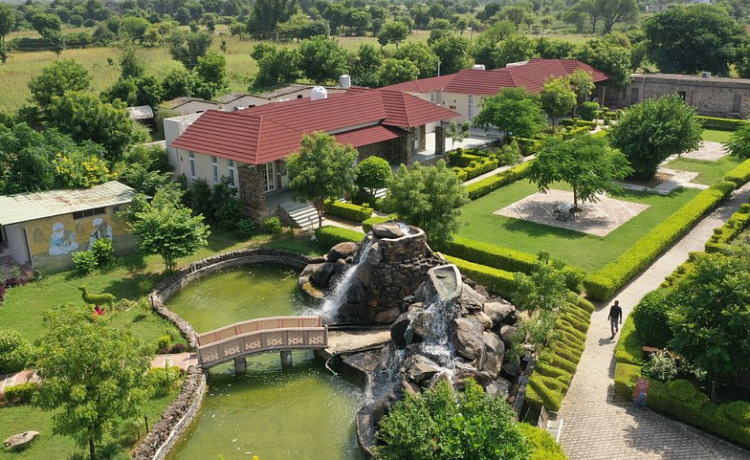
We are a family-owned resort in the Aravalli hills of Rajasthan, built from the ground up around a single belief: that tourism and conservation must go hand in hand. We are not retrofitting eco-practices onto an old hospitality model. Sustainability is baked into everything we do, from the power that lights our cottages to the food on your plate to the darkness above your head at night.
Sustainable travel India is no longer a niche idea. It is the direction the entire industry is moving. But there is a real difference between resorts that claim it and resorts that live it. This article walks you through exactly what we do, why it matters, and why it makes your stay here feel different from anything else you have experienced.
Astroport Sariska invites you to rediscover wonder beneath vast star-lit skies and amidst forested hills. As India’s first astronomy-themed resort, we blend wild-forest charm, wildlife proximity, and eco-friendly luxury so you can gaze at the cosmos by night and unwind in serene cottages by day. Perfect for families, couples, or anyone craving a nature and stargazing escape.
Why Sustainable Travel India Matters Right Now

India is at a turning point. Tourism is growing fast. But so is the damage it leaves behind. Plastic waste on trails. Light pollution creeping into forests. Water tables depleting near resorts. Wildlife corridors broken by development.
Travelers are noticing. A growing number of visitors from Delhi NCR and across India are actively looking for places that do not just offer a beautiful view but actively protect it.
Sustainable travel India means choosing destinations and stays that minimize harm and maximize benefit. It means your visit leaves the place better, not worse. It means the local ecosystem, the local community, and the local culture all benefit from your presence.
The good news is that Rajasthan, with its deserts, forests, and Aravalli hill ranges, is one of the most naturally rich and ecologically sensitive regions in India. It also happens to be home to Astroport Sariska, where every decision made on this property has sustainability at its core.
Quick Facts: Sustainability at Astroport Sariska
- Power source: 100 percent solar energy
- Plastic policy: Zero single-use plastic on the entire property
- Farm: On-site organic farm supplying vegetables, fruits, and dairy
- Water management: Two large rainwater harvesting structures
- Irrigation: Drip irrigation to minimize water waste
- Waste management: Worm composting unit converts organic waste to manure
- Biogas: Biogas plant converts organic waste into clean fuel for the staff kitchen
- Green cover: 5,000 plus plants grown on the premises
- Amenities: 100 percent organic amenities used throughout the property
- Location: Near Sariska Tiger Reserve, Alwar district, Rajasthan
7 Ways We Champion Sustainable Travel in Rajasthan
1. 100 Percent Solar Power: Running on Sunshine, Not Fossil Fuels
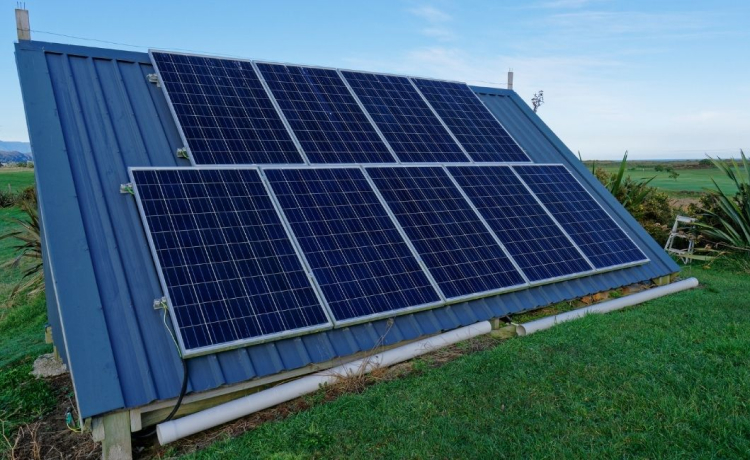
The most important energy decision any resort can make is where its power comes from.
We made that decision clearly. Astroport Sariska runs entirely on solar energy. Every light in every cottage, every fan, every charging point, every kitchen appliance runs on power generated right here on the property. We have zero dependence on grid power sourced from fossil fuels.
This is not a token solar panel on the roof. This is a complete, dedicated solar power system that meets all our operational energy needs.
Why does this matter for sustainable travel India? The Indian power grid still relies heavily on coal. When a resort runs on grid power, every guest stay contributes to carbon emissions. Solar power breaks that chain entirely. Your stay here produces no carbon from energy consumption.
For guests, this means uninterrupted power even in remote Rajasthan, while knowing your visit has a near-zero energy carbon footprint.
Q: Does solar power affect the quality of amenities at Astroport Sariska? A: No. Solar power runs all amenities exactly as normal. Guests get full comfort without any compromise.
2. Zero Plastic Policy: No Exceptions, No Shortcuts

Plastic is the single most visible and persistent form of tourism damage in India. Bottles, wrappers, straws, and packaging end up in forests, riverbeds, and wildlife habitats. In areas near tiger reserves, this is not just an environmental problem. It is a wildlife safety issue.
Astroport Sariska has eliminated single-use plastic completely. This includes packed water bottles, which are the most common plastic waste source at any Indian resort.
Guests receive clean drinking water through other means. All amenities on the property are packaged in non-plastic or reusable formats. Staff follow strict guidelines to keep plastic off the premises.
This is one of the harder sustainability commitments to maintain. It requires daily discipline, guest communication, and alternative systems in place. We have built those systems and held this policy consistently.
For travelers who want their sustainable travel India experience to be genuine, this zero-plastic commitment is a clear signal. You are not contributing to the plastic load on Rajasthan’s ecosystems when you stay with us.
3. Organic On-Site Farm: Food That Comes from 200 Meters Away
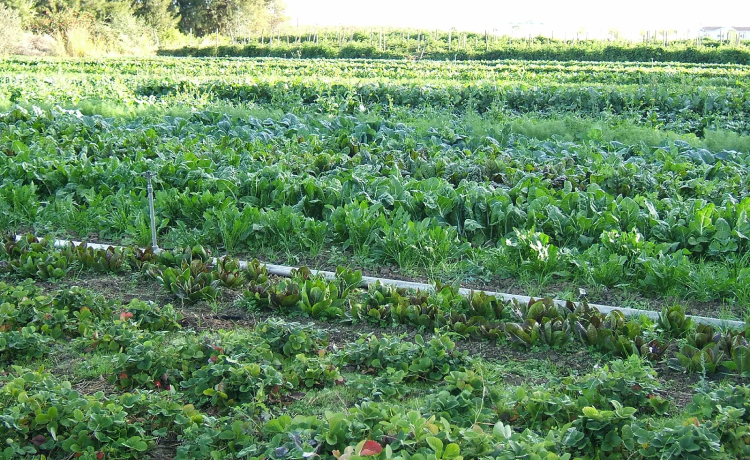
Most resort menus look sustainable. Farm-to-table. Local produce. Organic options. The terms are everywhere.
At Astroport Sariska, this is not marketing. We grow vegetables and fruits right here on our property. Our on-site farm produces fresh produce that goes directly into the Orbit Restaurant’s seasonal menu. The kitchen uses home-grown ingredients mixed with local Rajasthani produce to create meals that reflect the region’s flavor and culture.
We also have an on-site poultry unit and cow dairy. Fresh dairy products come from our own animals, managed sustainably. This means your morning milk, your yogurt, and your paneer have not traveled hundreds of kilometers in a refrigerated truck. They have come from a few hundred meters away.
This dramatically reduces the carbon footprint of every meal served here. It also means fresher, better-tasting food with no preservatives or long-chain cold storage involved.
The farm also functions as a guest experience. Our agro-tourism activities include guided farm tours, hands-on organic farming sessions, and dairy visits. Families with children find these particularly memorable. It is one thing to read about where food comes from. It is another to harvest it yourself before dinner.
Q: Can guests participate in farm activities at Astroport Sariska?
A: Yes. We offer guided farm tours, organic farming sessions, and dairy visits as part of our agro-tourism programme.
4. Rainwater Harvesting and Drip Irrigation: Treating Water Like the Precious Resource It Is

Rajasthan is one of India’s most water-stressed regions. The Aravalli hills receive limited rainfall, and groundwater depletion is a serious issue across Alwar district. Any resort that draws heavily from groundwater without replenishment is actively harming the region’s long-term water security.
We have built two large rainwater harvesting structures on the property. These collect and store monsoon rainfall, reducing our dependence on groundwater pumping significantly. The stored water is used for farming, landscaping, and operational needs throughout the dry months.
For irrigation, we use drip irrigation systems throughout our farm and green areas. Drip irrigation delivers water directly to plant roots with minimal evaporation. Compared to flood irrigation, it uses a fraction of the water to achieve the same or better results.
Together, these two systems mean Astroport Sariska draws far less from the region’s groundwater than a comparable property would. For guests who care about sustainable travel India, this is proof that we take resource stewardship seriously, not just in marketing but in infrastructure.
5. Worm Composting and Biogas: Closing the Waste Loop Completely
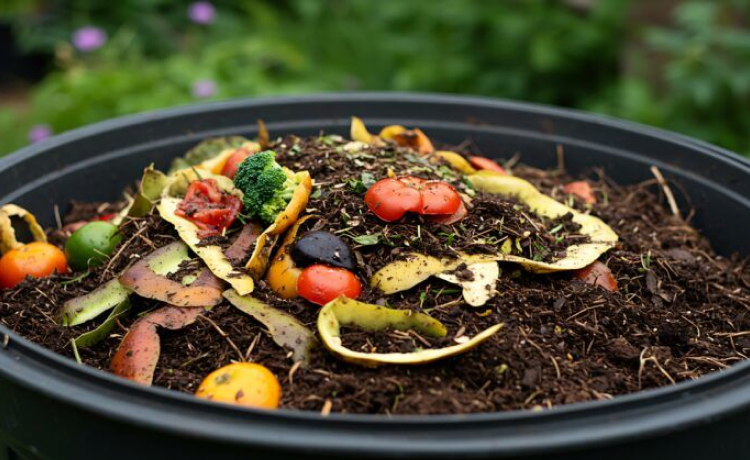
Most hospitality operations produce two large waste streams: organic kitchen waste and agricultural residue. Most resorts send this to a landfill or burn it.
We have built systems to use it instead.
Our wormy compost unit converts organic waste into nutrient-rich worm manure. This manure goes back into the farm as a natural fertilizer. No synthetic chemicals. No external purchase. The waste from today’s kitchen becomes the nutrition for tomorrow’s vegetables. It is a closed loop.
Our biogas plant converts organic waste into clean cooking gas. This fuel powers the staff kitchen, replacing LPG cylinders. The by-product of biogas production, called bio-slurry, is also used as a natural fertilizer in the farm.
What does this mean in practice? Kitchen scraps do not leave the property as waste. They re-enter the system as energy or nutrients. This is circular economy thinking applied directly to a resort’s daily operation.
For guests interested in sustainable travel India, seeing this in action during a farm tour is genuinely eye-opening. Most people have read about circular waste systems in theory. Very few have watched one work in real time.
6. 5,000 Plus Plants and Wildlife Conservation Near Sariska Tiger Reserve
We are located near Tehla Gate, one of the entry points to the Sariska Tiger Reserve. This is not just a scenic backdrop. It is a responsibility.
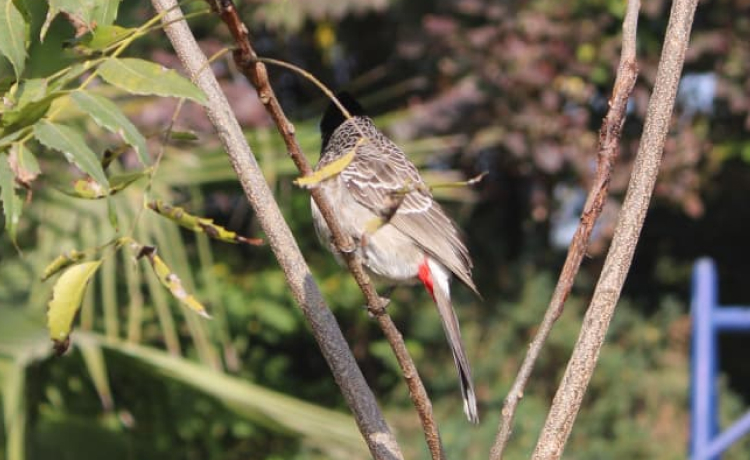
Sariska is home to Bengal tigers, leopards, hyenas, sambar deer, nilgai, and over 200 species of birds. The reserve and its buffer zones are ecologically fragile. Any development nearby that degrades the habitat, adds noise, increases light pollution, or introduces invasive species causes real harm to wildlife.
We have planted more than 5,000 native trees and plants on our property. This green cover creates habitat for local birds and small wildlife. It provides shade that reduces our cooling load. It improves groundwater recharge. And it creates a natural visual buffer between our property and the surrounding landscape.
Our commitment to minimal outdoor lighting also directly supports wildlife. Nocturnal animals like leopards and hyenas are disturbed by artificial light. Our Red Light Policy after sunset means the property stays dark. This protects both the night sky for our guests and the natural behavior of wildlife just beyond our boundary.
We also run a Wildlife Conservation Awareness Programme for guests. This session educates visitors on the ecology of Sariska, the importance of tiger conservation, and how responsible tourism behavior protects the reserve.
Q: How does Astroport Sariska protect wildlife near the Sariska Tiger Reserve?
A: Through minimal outdoor lighting, native plant cover, no-plastic policies, and a Wildlife Conservation Awareness Programme for guests.
7. Dark Sky Conservation: Protecting the Night as a Natural Resource
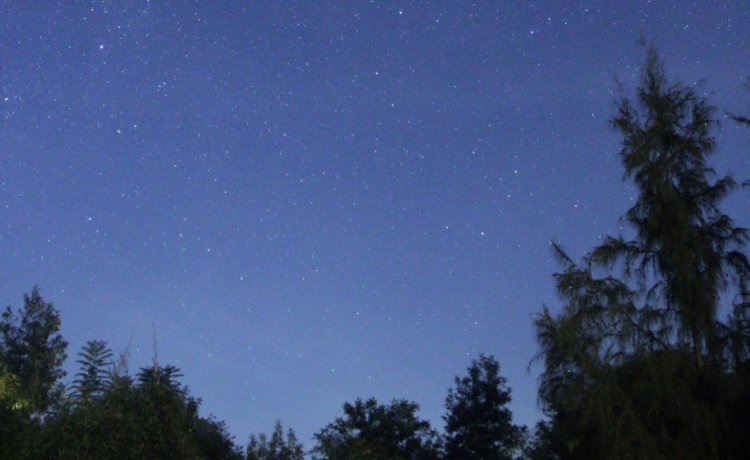
This is the sustainability pillar that is completely unique to Astroport Sariska. It is one that almost no other resort in India talks about. And it may be the most important one we practice.
Light pollution is one of the most overlooked forms of environmental damage in India. Cities like Delhi, Jaipur, and Gurugram pour artificial light into the sky all night. This glow, called skyglow, extends for hundreds of kilometers. It disrupts nocturnal ecosystems. It confuses migratory birds. It suppresses melatonin in humans. And it erases the night sky.
Astroport Sariska sits in a Bortle Class 3 to 4 dark sky zone. This rating means the skies here are among the darkest in northern India. The Milky Way is clearly visible. Deep-sky objects like nebulae and distant galaxies are accessible with professional telescopes.
We actively protect this darkness. Our entire property uses shielded, low-intensity lighting after dark. We enforce a strict Red Light Policy, using only red-filtered lights at night, which are the least disruptive to night vision and to wildlife. We have designed our solar lighting grid to direct light downward, never upward or outward into the sky.
Why does this qualify as sustainable travel?
Because darkness is a natural resource, just like clean water or clean air. Once a dark sky area becomes polluted with artificial light, it takes years or decades to recover. By actively protecting our skies, we are preserving a resource that future visitors, future generations, and the wildlife of Sariska depend on.
We also help guests understand this through our astronomy programmes. When you look through our 16-inch Dobsonian telescope and see Saturn’s rings with your own eyes, you are also learning why it matters to protect the conditions that make that view possible.
Q: What is the Bortle Scale and why does it matter for sustainable travel? A: The Bortle Scale measures night sky darkness from 1 (pristine) to 9 (city core). A Bortle 3 to 4 rating means very low light pollution. Protecting this rating is an act of environmental conservation.
What Sustainable Travel in India Should Actually Look Like
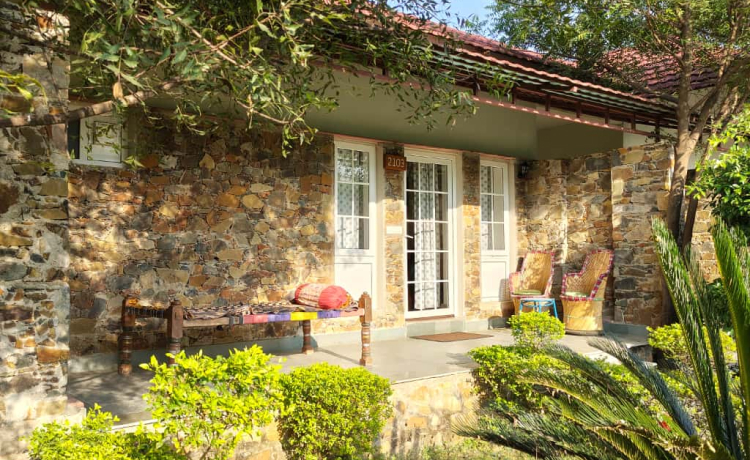
There is a lot of greenwashing in Indian hospitality. Properties use words like eco, organic, and sustainable without the infrastructure to back them up.
Here is a simple framework to evaluate any property you are considering for sustainable travel India:
Energy: Does the property use renewable energy? Is it fully or partially solar?
Waste: Does it have a zero-plastic policy? What happens to organic kitchen waste?
Water: Does it harvest rainwater? Does it use efficient irrigation?
Food: Is any food grown on-site? Is it genuinely organic and local?
Biodiversity: Does the property actively plant native species? Does it reduce light and noise pollution for local wildlife?
Education: Does the property teach guests about sustainability? Do guests leave with a better understanding of the ecosystem?
Astroport Sariska meets every one of these criteria. Not as a checklist exercise, but because these practices are woven into our founding vision: a future where tourism and conservation are not opposites but partners.
Why Rajasthan Is the Right Setting for Sustainable Tourism
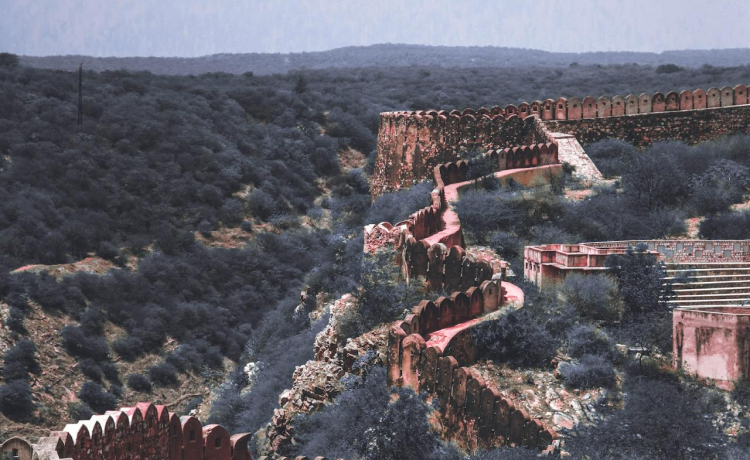
Rajasthan is often associated with desert tourism, forts, and festivals. But its ecological value is enormous and often underappreciated.
The Aravalli hills are among the oldest mountain ranges in the world. They are a critical green corridor for wildlife moving between forests in Rajasthan, Haryana, and Delhi. The Sariska Tiger Reserve protects one of the last viable tiger populations in the Aravallis. The region’s dry climate and sparse vegetation make it uniquely sensitive to the impacts of irresponsible tourism.
This is exactly why sustainable travel India in Rajasthan is not optional. It is essential. When resorts extract water without replenishment, clear native vegetation, or introduce bright lighting into forest buffer zones, the ecological damage accumulates fast.
The Aravalli ecosystem needs tourism that respects it. That is what we built Astroport Sariska to be.
How Your Stay Contributes to Conservation
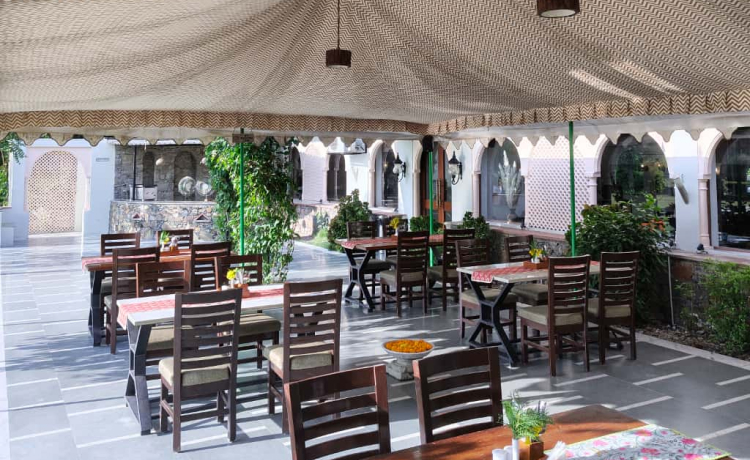
When you book a stay at Astroport Sariska, you are not just buying a holiday. You are making a choice about what kind of tourism model you want to support.
Your stay supports:
Local employment. We hire from the surrounding communities in Tehla and Alwar district. Tourism jobs here reduce the economic pressure that sometimes pushes locals toward activities that harm the forest.
Dark sky preservation. Every low-light, solar-powered stay keeps one more property from adding skyglow to the region.
Wildlife buffer protection. Our green cover and low-impact design add a soft ecological buffer between human activity and the Sariska Tiger Reserve.
Circular waste systems. Your visit adds organic waste to a system that converts it to compost and energy, not landfill.
Astronomy education. The programmes we run for children and adults build a generation of travelers who understand and value the natural world.
This is what we mean when we say tourism and conservation go hand in hand. They are not competing priorities. They strengthen each other when the design is right.
Frequently Asked Questions About Sustainable Travel India and Astroport Sariska
Q: What makes Astroport Sariska a sustainable resort?
A: We run on 100 percent solar power, maintain a zero single-use plastic policy, grow food on an on-site organic farm, harvest rainwater, use drip irrigation, compost all organic waste, operate a biogas plant, and protect dark skies through strict low-light policies.
Q: Is sustainable travel India more expensive?
A: Not necessarily. At Astroport Sariska, sustainable practices are built into operations rather than added as premium extras. Packages range from Rs 8,000 to Rs 15,000 per night and include meals, activities, and guided sessions.
Q: How does Astroport protect the Sariska Tiger Reserve?
A: Through minimal and shielded outdoor lighting, no-plastic operations, native plant cover, and a Wildlife Conservation Awareness Programme that educates guests on responsible behavior near the reserve.
Q: What is the Red Light Policy at Astroport Sariska?
A: After sunset, all outdoor lighting on the property shifts to red-filtered, low-intensity light. Red light does not disrupt night vision for guests or natural behavior in nocturnal wildlife. It also does not contribute to skyglow.
Q: Can children learn about sustainability at Astroport Sariska?
A: Yes. Children can join farm tours, worm composting demonstrations, telescope-making workshops, and wildlife awareness sessions. These are some of the most educational and memorable activities we offer.
Q: What is dark sky conservation and why does Astroport Sariska focus on it?
A: Dark sky conservation is the practice of protecting natural darkness from artificial light pollution. At Astroport Sariska, dark skies are central to our astronomy mission and our ecological responsibility. We protect them through solar power, shielded lighting, and strict no-outdoor-light policies after dark.
Q: How can I be a responsible traveler during my stay?
A: Do not bring single-use plastic onto the property. Join the farm and wildlife awareness sessions. Respect the lighting policies at night. Take your waste back with you if you venture outside the resort boundary. These small choices matter.
Final Thoughts: The Future of Sustainable Travel India Is Being Built Now
The resorts that will matter in 10 years are the ones making the right choices today. Not the ones with the prettiest branding, but the ones with composting units, solar grids, rainwater tanks, native plant corridors, and dark sky policies that protect ecosystems long after guests have checked out.
Sustainable travel India is not a trend. It is a correction. The travel industry needs to move from extraction to regeneration, from impact to stewardship, from consumption to connection.
Astroport Sariska is that correction, built into a single property in the Aravalli hills of Rajasthan.
Come for the stars. Come for the tigers. Come for the food that grew 200 meters from your table. Come because you want your weekend to mean something more than a hotel stay.
We built this place to protect what we love most: the forests, the wildlife, the sky, and the land. When you stay here, you protect it with us.
Book your stay at Astroport Sariska and be part of sustainable travel India done right. Book Now at astroportsariska.com